Written by: Mariana Fonseca, Editorial Team, AI Growth Agent
Key Takeaways
- Geo targeting serves location-specific ads using GPS, IP, and Wi-Fi so campaigns reach the right cities, ZIP codes, or radiuses and reduce wasted spend.
- Privacy compliance in 2026 is mandatory. Oregon and Maryland restrict precise GPS targeting, so campaigns must use city or ZIP targeting with clear consent and opt-out controls.
- Strong performance depends on segmented first-party data, separate campaigns per geography, location-specific landing pages with LocalBusiness schema, and measurement tied to real revenue or visits.
- Geo targeting now influences AI search visibility. Brands that pair paid campaigns with fresh, location-specific content earn more citations in AI Overviews and conversational results from models like ChatGPT and Gemini.
- Ready to turn geo targeting into durable visibility? See how AI Growth Agent builds location-specific content that supports your next campaign and launch your first program this week.
Why Geo Targeting Matters in 2026
Location-based relevance still drives performance. 46% of all Google searches carry local intent, and 76% of smartphone users who searched for something nearby visited a business within 24 hours in 2024. Together, these numbers show why geo targeting remains one of the most powerful levers for performance marketers.
The environment around that lever looks very different in 2026. Google AI Mode crossed 1 billion monthly users within its first year. Many queries now resolve without a click. Agentic surfaces already book local services on a user’s behalf. A campaign that earns a click no longer represents the only path to a conversion. A brand that does not appear in AI-surface answers for location-intent queries stays invisible to a growing share of its market.
That visibility gap is the problem this guide addresses. It is written for performance marketers and marketing leaders at mid-market to enterprise companies who need to launch or improve location-based campaigns this quarter. Workflows vary by ad platform and CMS, so platform-specific steps appear where they diverge. By the end, you will know how to configure privacy-compliant geo targeting across major platforms, measure incremental outcomes at the location level, and connect campaign data to the living content layer that earns citations in AI search.
Prerequisites Before You Build Campaigns
Teams move faster when core data, tracking, and legal inputs are ready before anyone opens an ad platform.
Data and strategy inputs: Use first-party customer data segmented by geography, including CRM records, shipping data, loyalty data, and POS signals. Maintain a ranked list of target markets by revenue potential. Document brand guidelines that cover any location-specific messaging rules.
Technical requirements: Confirm conversion tracking is installed and verified in Google Ads and Meta Ads Manager. Enable location reporting in Google Analytics 4. Claim and improve a Google Business Profile for every physical location. Deploy structured LocalBusiness schema on location pages to support both traditional search and AI Overview surfacing.

Legal and compliance review: Oregon House Bill 2008 and the Maryland Online Data Privacy Act of 2024 prohibit the sale of precise geolocation data within a 1,750-foot radius effective January 2026. City-level and ZIP code targeting remain permitted in both states. Maryland additionally prohibits geo targeting anyone under 18, while Oregon sets the age cutoff at 16. Similar restrictions are under discussion in California, Maine, Massachusetts, and Vermont. Confirm applicable state laws with legal counsel before activating any GPS-dependent tactic.
Consent infrastructure: Privacy-safe geo targeting relies on clear consent and opt-out workflows, data minimization, aggregation and thresholding, and clean-room collaboration for privacy-safe matching. Confirm these controls are live before any campaign goes active.
Five-Phase Geo Targeting Process
Teams that treat geo targeting as a repeatable process avoid rework and compliance risk. The process below uses five phases, each with a clear owner and validation gate.
Phase 1: Market prioritization. Analyze first-party data to rank geographies by conversion rate, revenue, and customer concentration. Assign Tier 1 proven markets and Tier 2 growth markets with separate performance benchmarks, because CPM costs vary widely by region.
Phase 2: Privacy and compliance audit. Map every target geography against applicable state and federal privacy laws. Flag GPS-dependent tactics in restricted states and substitute city-level or ZIP code targeting. Document consent workflows and platform-level controls.
Phase 3: Platform configuration. Build campaigns in Google Ads, Meta Ads, and any programmatic channels. Set targeting parameters, exclusions, bid adjustments, and creative variants for each geography so performance can be evaluated cleanly.
Phase 4: Content and landing page alignment. Align every geo-targeted ad with a location-specific landing page that carries unique content, LocalBusiness schema, and local keyword signals. Avoid generic template pages duplicated across cities, because search engines treat these as doorway pages.
Phase 5: Measurement and optimization cadence. Connect media activity to location-level business outcomes. Review performance every two to four weeks. Scale budgets in 10 to 20% increments so platform learning phases remain stable.
Most delays occur during Phase 2, when legal teams review new laws, and Phase 4, when content production lags. Plan for both before launch.
Step-by-Step Geo Targeting Execution
Step 1: Prioritize Target Geographies Using First-Party Data
Goal: Decide where to concentrate budget before changing any platform settings.
Actions: Pull CRM records, shipping data, and website analytics segmented by city, ZIP code, and region. National averages hide regional performance. A brand may see very different ROAS in one metro compared with national results. Identify those outliers. Assign Tier 1 and Tier 2 designations based on this analysis. Once you have proven markets and growth markets defined, allocate 70% of budget to proven channels and reserve 18% for mid-year performance-based reallocation so high-performing geographies can scale quickly.
Tools: Google Analytics 4 location reports, CRM export, LOOP Analytics.
Validation: Each target geography has a defined KPI benchmark before any campaign is built.
Step 2: Conduct the Privacy and Compliance Audit
Goal: Remove or adjust GPS-dependent tactics in restricted jurisdictions before launch.
Actions: Map every target geography against the current state privacy law landscape. As outlined in the prerequisites, Oregon and Maryland restrict GPS-based tactics, so your audit should flag any campaigns using geofencing or radius targeting under 1,750 feet in these states and replace them with city or ZIP code targeting. For all other states, confirm consent workflows are active and documented. The FTC finalized an order in January 2025 banning Mobilewalla from selling sensitive location data, which signals active federal enforcement. Given this enforcement environment, work only with platforms that document their consent and data minimization practices.
Teams involved: Legal, media operations, data privacy officer.
Validation: A written compliance matrix exists for every target state before campaign build begins.
Step 3: Configure Google Ads Geo Targeting
Goal: Turn on location targeting with the right structure for each market tier.
Actions: In Google Ads, open Campaign Settings and select Locations. Google Ads supports targeting by country, region, city, radius around a location, or location groups such as places of interest, with options to set exclusions. For Tier 1 markets, build dedicated campaigns per geography so performance is tracked cleanly and budget can be managed independently. Set location bid adjustments based on historical conversion data. Add exclusions for ZIP codes or cities where the business does not operate. Test radius sizes and refine them based on performance data instead of assumptions.
Tools: Google Ads, Google Analytics 4, Google Business Profile.
Validation: Each campaign targets a single geography with its own conversion tracking and bid strategy.
Step 4: Configure Meta Ads Geo Targeting
Goal: Set up Meta location targeting with the correct objective and audience settings.
Actions: In Meta Ads Manager, choose the campaign objective first. Align objectives such as Sales, Leads, Traffic, or Brand Awareness with geo targeting goals so the algorithm can improve delivery within the chosen geography. As of 2026, Meta offers only the “Living in or recently in this location” setting, and the algorithm uses GPS, IP, and profile data to determine residency or visitation. For hyper-local services, target specific ZIP codes instead of entire cities to reduce wasted impressions from the “recently in” audience. Use exclusion-based targeting by selecting a broad metro area and excluding ZIP codes where the business does not operate. Localized Facebook campaigns often deliver higher click-through rates when copy references the specific area.
Validation: Ad set geography matches the compliance matrix from Step 2. Frequency caps are set to prevent ad fatigue in small geographic areas.
Step 5: Build Location-Specific Landing Pages and Content
Goal: Send every geo-targeted click to a page that reinforces location relevance and supports AI surface citations.
Actions: Create distinct service area pages and individual city landing pages with unique, location-specific content. Duplicating templates across multiple cities is penalized by Google as doorway pages. Deploy LocalBusiness schema on every location page. Brands with strong geo signals, including accurate location data, structured LocalBusiness schema, and region-specific content, surface in AI Overviews and conversational search results from LLMs including ChatGPT, Gemini, and Perplexity. Geo targeting connects directly to large language model optimization here. The same location signals that power ad targeting also help the content layer earn citations in AI search.
Tools: CMS, schema markup, Google Search Console, AI Growth Agent for living content production at scale.
Validation: Each location page has unique content, valid LocalBusiness schema, and a confirmed index status in Google Search Console.
Common Geo Targeting Mistakes and Fixes
Planning and Data Quality Errors
Many teams target entire metro areas even when the business only serves specific ZIP codes. For U.S. IP addresses, MaxMind reports city-level geolocation accuracy of approximately 66% within a 50-kilometer radius, so broad metro targeting often produces heavy waste. Use ZIP code or carefully tested radius targeting for any service with a defined coverage area.
A second planning error appears when teams build a single national campaign and apply location bid adjustments instead of creating dedicated campaigns per geography. Dedicated campaigns support clean performance tracking, independent budget management, and location-specific creative without signal dilution.
Data quality issues usually start in the first-party data layer. CRM records with incomplete or outdated address fields create inaccurate geography segments. Audit address data and fix obvious errors before using it to define target geographies.
Technical Setup and Measurement Gaps
The most frequent technical mistake is launching campaigns without verified conversion tracking. Store visit conversions need active location extensions and enough volume for Google’s anonymized measurement model to function.
Measurement gaps appear when teams track media activity inside platforms but never connect it to location-level business outcomes. Measurement should reach the location level and connect media activity to outcomes such as qualified appointments or store visits, not just platform-optimized leads. Turn on GA4 location reports and compare them with CRM data by geography on a regular cadence.
A growing compliance issue in 2026 involves running geofencing or GPS-based event targeting in Oregon or Maryland without updating campaign settings after the January 2026 law changes. Audit all active campaigns against the current compliance matrix at least quarterly.
Verifying Outcomes and Measuring Results
Geo targeting success shows up in location-level attribution, not just platform-reported metrics. Use the signals below as objective evidence of performance.
Primary metrics by business model: Track ROAS by city and state for e-commerce. Track cost per lead by region for lead generation. Track cost per store visit for brick-and-mortar. Match KPIs to the business model so the platform algorithm optimizes toward the right outcome within each geography.
Store visit measurement: Google and Meta offer store visit conversion tracking that uses location data to anonymously determine whether a user who saw a geo-targeted ad later visited a physical store. Enable this feature for any campaign with a physical location objective.
Review cadence: Review location performance on a regular schedule and increase budgets in 10 to 20% increments. This approach avoids resetting the learning phase, which typically needs about 50 optimization events per week.
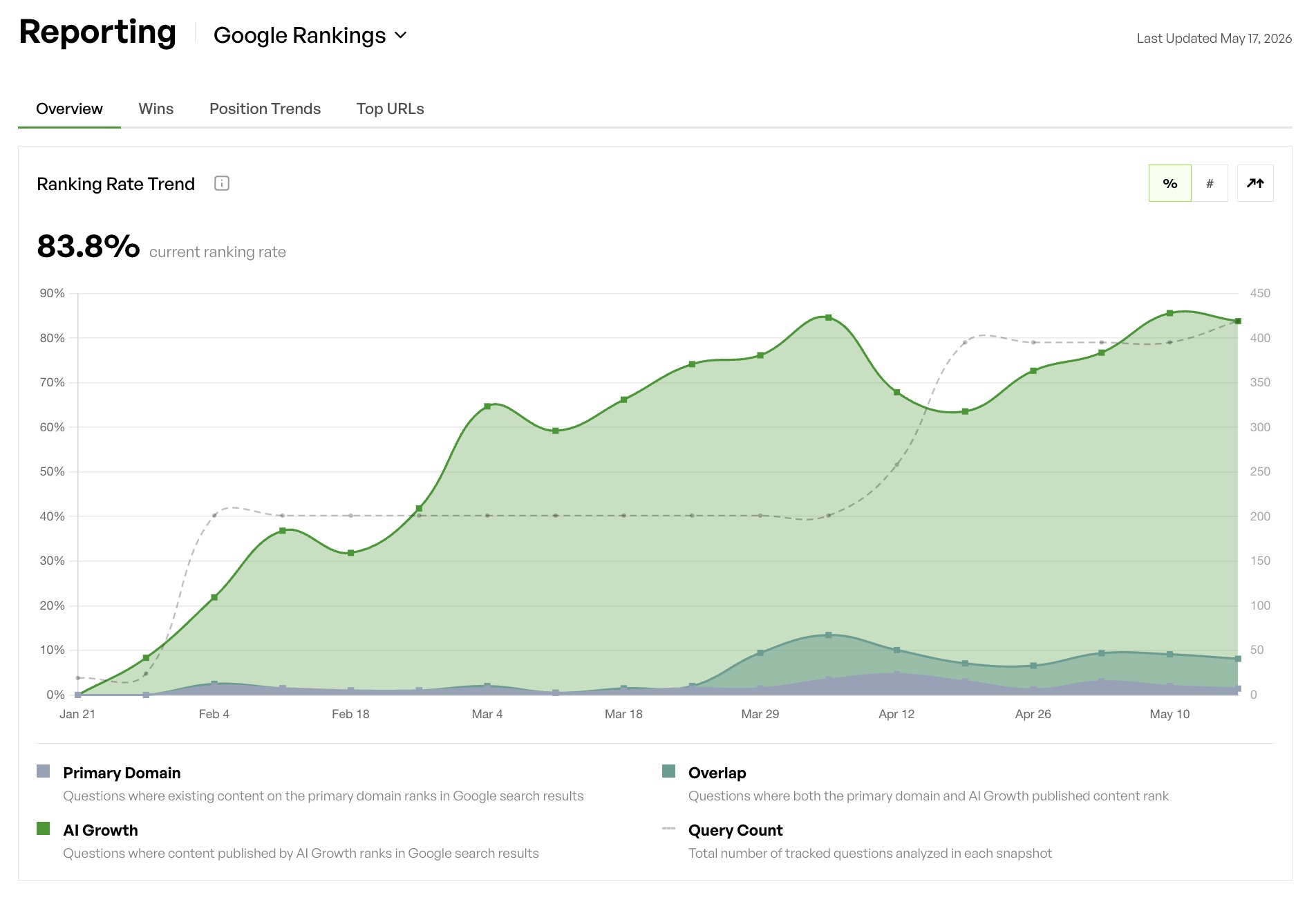
AI surface visibility: Track whether location-specific content earns citations in Google AI Overviews, ChatGPT, and Perplexity. Bot tracking and Google Search Console impressions by page provide clear signals of whether the content layer supports the paid layer. Treat this as incremental visibility that comes from deliberate content investment, separate from visibility that already existed.
Advanced Geo Targeting Scenarios and Next Moves
Multi-location brands: Multi-location brands gain an advantage when they aggregate location-level signals from CRM, POS, loyalty, and app behavior into a unified view that fuels AI-driven targeting with geographic precision. Build this unified location data layer before attempting AI-optimized campaigns across dozens of markets.
Dynamic creative optimization: Advertisers using dynamic creative optimization often see 2–5× higher CTR and 20–50% lower CPA compared to static creative. Combine DCO with geo targeting by feeding location signals into the creative decision layer so ad copy, imagery, and offers reflect each specific market.
Weather and time-based triggers: Combining dayparting with geo targeting supports time-specific campaigns, such as a restaurant running lunch special ads from 11 AM to 2 PM targeted to users within a 1-mile radius. Weather-based triggers add another contextual layer by promoting relevant products during specific conditions in a target city.
Privacy-safe clean rooms: Clean rooms now provide a practical bridge for combining first-party data with location signals in a controlled, privacy-enhancing way, consistent with IAB Tech Lab guidance. For enterprise brands that operate across many states with different privacy laws, clean-room collaboration offers a defensible path to location-level audience matching.
Narrative control and AI search: Geo targeting ads deliver relevance but fade quickly without a content layer that earns citations in AI search. Discovery patterns have shifted, and many location-intent queries now resolve in AI surfaces before a user ever sees a paid ad. Brands that produce living, location-specific content optimized for large language model citation build a compounding presence that paid campaigns alone cannot match. Useful adjacent topics include LocalBusiness schema implementation, AI Overview optimization for location queries, and headless marketing architecture for multi-location brands.
Frequently Asked Questions
What is an example of geo targeting in digital marketing?
A dental practice with offices in two cities more than two hours apart runs separate geo-targeted campaigns for each location. This structure prevents ads from showing in irrelevant markets and reduces wasted spend on non-converting traffic. A more advanced example involves a fast-casual franchise using city-level content optimized for AI search to become the most recommended option in its category in a target market. That franchise then generates qualified leads from buyers who discovered the brand through AI-surface citations rather than paid ads.
What is the difference between geo targeting and geofencing?
Geo targeting delivers ads or content to users inside a defined geographic area such as a country, region, city, ZIP code, or radius. Marketers can combine this with behavioral and demographic filters to narrow the audience further. Geofencing draws a virtual perimeter around a specific physical location and triggers an action, such as a push notification or ad impression, when a user’s device crosses that boundary. Geofencing depends on precise GPS data, which is now restricted in Oregon and Maryland as of January 2026. Geo targeting at the city and ZIP code level remains permitted in both states.
Is geo targeting effective?
Evidence from multiple studies shows strong performance. A 2019 Factual/Lawless survey found 89% of marketers reported increased sales, 84% reported higher engagement, and 86% reported customer growth from location data. Geo-targeted ads often deliver higher conversion rates than non-targeted campaigns when messaging includes local references. A fertility clinic using geo targeting achieved a 118% increase in paid search traffic, a 163% increase in conversions, and a 54% decrease in cost-per-acquisition. Results depend on data quality, creative relevance, and the strength of the content layer that supports the campaign and earns citations in AI search surfaces where many location-intent queries now resolve without a click.
How does privacy compliance affect geo targeting in 2026?
State-level privacy legislation expanded rapidly in 2025, with more than 800 consumer privacy bills introduced across 49 states and D.C. and more than 100 new privacy laws enacted. Oregon and Maryland now prohibit GPS-based precise targeting and geofencing for advertising. The FTC has taken active enforcement action against companies that failed to verify consumer consent for location data. The practical response involves shifting toward city-level and ZIP code targeting, building consent and opt-out workflows into every campaign, and using clean-room collaboration for any first-party data matching that involves location signals. Contextual targeting, which analyzes page content instead of collecting personal location data, now serves as a strong complement to geo targeting in privacy-restricted environments.
How does geo targeting connect to AI search visibility?
Geo targeting in paid media and AI search visibility rely on the same underlying signals: location relevance, structured data, and content specificity. Step 5 described how accurate location data, LocalBusiness schema, and region-specific content help brands surface in AI Overviews and conversational results from ChatGPT, Gemini, and Perplexity. The connection is direct. Paid geo targeting and AI search visibility both operate on the same infrastructure, so a campaign that drives traffic to a location page with no schema and generic content loses the compounding benefit of that traffic. Brands that build a living content layer, updated and self-healing over time, give models something reliable to find, trust, and cite. That content layer turns geo targeting data into durable, incremental visibility that continues after paid spend pauses.
Conclusion: Treat Geo Targeting as a Living System
Geo targeting in digital marketing in 2026 works best when three elements stay aligned: privacy-compliant platform configuration, location-level measurement tied to real business outcomes, and a content layer that earns citations in AI search surfaces where many location-intent queries now resolve without a click.
Platform mechanics are well documented and can be executed within a single sprint. The compliance layer is non-negotiable and needs a current audit against state-level privacy laws before any GPS-dependent tactic goes live. The content layer is where most teams stall, because producing living, location-specific content at the scale required for AI surface citations demands a system rather than a one-time content project.
Geo targeting ads deliver relevance in the moment. Narrative control, built through authoritative living content optimized for large language model citation, delivers relevance in every AI surface where a potential customer asks a location-intent question. Both layers matter, and neither works as well alone.
Review your geo targeting configuration, compliance matrix, and content layer at least quarterly. The privacy landscape keeps shifting, platform settings evolve, and the AI surfaces that resolve location-intent queries update continuously. Brands that treat geo targeting and content as a living system, not a one-time setup, are the ones that compound visibility over time.