Written by: Mariana Fonseca, Editorial Team, AI Growth Agent
Key Takeaways
- AI brand authority reflects how clearly AI systems can identify and cite a brand across trusted sources, not how a site ranks for keywords.
- Four layers shape AI brand authority: entity coherence, citation density, temporal consistency, and structural disambiguation.
- Most brands have weak AI visibility, with 92% of enterprise domains effectively invisible to AI search engines and average scores between 18 and 22 out of 100.
- Strong AI brand authority comes from consistent signals across earned media, Wikipedia, review platforms, structured data, and community content, not from traditional SEO tactics alone.
- AI Growth Agent builds this authority at scale through headless marketing that produces measurable citations and visibility gains; book a demo to get started.
How AI Defines Brand Authority Today
Traditional brand authority reflects how a market recognizes and trusts a brand based on reputation, consistency, and perceived expertise. Brands build it through advertising, earned media, customer experience, and the cumulative weight of public perception over time. AI brand authority runs on a different mechanism.
Traditional authority lives in human perception, while AI brand authority lives in machine-readable signals. AI systems identify brands through structured, consistent identity markers such as Wikidata entries, Wikipedia articles that meet notability criteria, verified Google Knowledge Panels, and consistent sameAs references across profiles. The model does not ask whether a brand feels trustworthy. It checks whether evidence across independent sources resolves to a single, unambiguous entity.
This resolution process depends on four interconnected layers that compound to produce AI brand authority. Entity Coherence resolves the brand as a single distinct entity. Citation Density measures how often the brand appears across independent surfaces. Temporal Consistency tracks citation velocity so authority does not decay. Structural Disambiguation uses machine-readable signals such as Schema.org and Crunchbase. Without entity coherence, no other layer can compound, because the model cannot attribute incoming signals to the correct brand.
Inconsistency is the most common failure mode. Brands that invest in entity signals on their own site while ignoring contradictory descriptions on third-party profiles give AI systems conflicting data. This fragmentation prevents the model from resolving all signals to a single entity, and the result is fragmented authority that no amount of content volume can repair.
Find out where your entity signals are fragmenting and how to fix them.
How Strong AI Brand Authority Looks in Practice
AI brand authority sits on a measurable spectrum defined by citation density, temporal consistency, and share of model. A Loamly study of 2,014 companies measuring AI visibility across ChatGPT, Claude, Gemini, and Perplexity found that brands in the top authority tier averaged 26.0 AI visibility versus 1.0 for the bottom tier, a 2,500% difference driven by brand-level signals.
Most brands sit far from that top tier. TPG’s AXO diagnostic data across 150+ B2B brands shows the average company scores 18 to 22 out of 100 on AI visibility, so most brands remain largely absent from the AI research phase of buying. A 2026 analysis of 1,000+ enterprise domains found that 92% of enterprise brands are effectively invisible to AI search engines, with ChatGPT failing to cite them in 81% of test queries about their core services.
Good AI brand authority produces specific outcomes. Brands see consistent citation across multiple AI platforms, first-mention positioning in category responses, and a growing share of model relative to competitors. Across the first twelve weeks, AI Growth Agent clients average more than 12,000 additional AI citations and mentions, over 100,000 additional bot visits, and a lift in impressions above 20%. Breadless, a healthy fast-casual franchise, went from minimal AI presence to ChatGPT citing eatbreadless.com over 45,000 times per month and a 30x lift in Google Search Console impressions over six months.
Temporal consistency keeps that authority alive. Brands with flatlined citation patterns for two consecutive quarters face significant decay, while new brands with only recent signals register as suspicious and older brands with stale signals register as declining.
Discover where your brand sits on the AI authority spectrum and what it takes to move up.
Four Intelligence Layers AI Uses to Judge Brands
AI systems evaluate brands through four interconnected intelligence layers. Teams need visibility into all four before they can act on any of them.
Search Intelligence provides a complete portrait of the traditional search landscape, including positioning, competition, search volume, and the structure of who is already winning. It turns raw data into an actionable diagnosis. An SE Ranking analysis of 129,000 domains found that referring domains are a top ranking factor for earning citations in ChatGPT responses.
While Search Intelligence maps the competitive landscape, AI Analytics shows how the brand actually performs within that landscape. It covers brand value and consumer behavior across the whole journey, from external touchpoints such as Google and AI-tool queries through content consumption, demographics, and sentiment. Brand mentions correlate with AI visibility at 0.664, more than three times stronger than backlinks at 0.218.
Bot Tracking then reveals how AI agents interact with that content. It captures every bot interaction, including traditional crawlers and AI training agents, and records every crawl, citation, and training sweep. AI search engines use transformer architectures to analyze token-level salience and positional embeddings to identify specific text spans functioning as references, which lets them distinguish casual mentions from verified citations. A brand that cannot see who is reading its content cannot tell whether it is being read at all.
AI Ranking converts those interactions into competitive position. It replaces the traditional ordered list. AI answers do not have a static rank, so order of mention and citation context form the new leaderboard. First-mentioned brands in AI responses receive disproportionate user attention, mirroring the position-one bias observed in traditional search results. Where a brand appears in the answer, and how that position changes week over week, becomes the metric that matters.
These four pillars feed each other in a loop. Search Intelligence identifies where to compete. AI Analytics reveals how the brand is perceived there. Bot Tracking confirms whether content is being read and cited. AI Ranking shows whether the effort is moving the needle. Teams that win this channel see all four and act on them within the same week.
See how all four intelligence pillars work together for your brand.
How AI Brand Authority Differs from Traditional SEO
Traditional SEO and AI brand authority share some infrastructure but follow different rules. The table below maps the key signal differences.
| Signal | Traditional SEO | AI Brand Authority |
|---|---|---|
| Primary trust signal | Backlinks (r=0.218 correlation with AI visibility, per Ahrefs study of 75,000 brands) | Brand mentions (r=0.664 correlation with AI visibility, per same Ahrefs study) |
| Ranking mechanism | Static ordered list by keyword | Citation context and order of mention in generated answers |
| Content goal | Rank for target keywords | Become the cited answer for long-tail queries |
| Source overlap | Top 10 organic results | 88% of AI-cited URLs do not rank in Google’s top 10 for the same query |
| Click behavior | Click-through to source expected | 68.01% zero-click rate in U.S. searches (Jan–Apr 2026, SparkToro/Similarweb) |
| Content freshness | Periodic updates recommended | Content updated within 90 days cited at significantly higher rates, with peak citation probability within 7 days of publication |
| Entity signals | On-page optimization and internal linking | Consistent NAP, Wikipedia, schema, Crunchbase, and third-party profiles across all surfaces |
The practical takeaway is simple. Traditional SEO functions as a rearview mirror and shows where a brand ranked yesterday. AI brand authority acts as the steering wheel and shapes what AI answers say about a brand tomorrow. Research across 22,410 domains found only 7.2% overlap between Google AI Overview sources and LLM citation lists, which confirms that these channels form separate competitions that require separate strategies.
Discovery Has Shifted to Zero-Click AI Answers
The channel customers use to find brands has changed structurally. Zero-click searches in the U.S. reached 68.01% during January through April 2026, up from 60.45% in 2024, according to SparkToro research based on Similarweb clickstream data. When an AI Overview appears, users click a traditional result only 8% of the time versus 15% without one, which compounds the zero-click trend mentioned earlier.
Google’s AI Mode crossed 1 billion monthly users within its first year, and queries have more than doubled every quarter since launch. AI search engines produce zero-click rates of 93% on Perplexity, 88% on Google AI Mode, and 82% on ChatGPT Search.
This behavioral reality reinforces the structural shift. Many consumers now trust brand recommendations from AI assistants as much as, or more than, recommendations from friends.
This behavioral shift demands a new operating framework built on three nested concepts. The universe is the full set of queries and prompts that describe a brand’s market. Seed terms are the strategic anchor topics that organize that universe into manageable categories. Each seed term then spawns dozens of long-tail queries underneath it, and this is where AI search actually happens.
Most brands track only a handful of head terms and lose the rest of the conversation by default. Robots search the long tail, so brands that focus only on head terms stay blind to most of their own market. In this environment, citation context, which covers where the brand appears in an AI answer and what claim it is cited for, replaces the old idea of a ranking number.
Evidence Signals That Consistently Earn AI Citations
Not all signals carry equal weight. The following inputs deliver the highest impact for AI brand authority, based on large-scale citation research.
- Earned media in authoritative publications. Earned media accounts for 84% of all AI citations across ChatGPT, Claude, and Gemini, per Muck Rack’s analysis of 25 million+ links. One citation in a major outlet outweighs hundreds of self-published pieces.
- Original statistics and proprietary research. Content that includes unique data gives models a reason to cite the source, which raises AI visibility.
- Wikipedia presence. A Wikipedia article that meets notability criteria delivers the 3.5x visibility multiplier discussed earlier, which makes it one of the highest-leverage entity signals.
- Review platforms. Platforms such as G2, Trustpilot, and Capterra provide the 3x citation advantage noted earlier and account for nearly half of all AI citations in aggregate research.
- Consistent NAP data. AI systems require consistent name, address, phone number, and website data across all platforms, and discrepancies cause systems to miss or ignore business information.
- Structured data. Entity-rich content receives 267% more AI citations than traditional keyword-optimized content according to AiModeBoost research analyzed by Onely.
- Community content. More than 50 Reddit mentions correlate with 22.5 average AI visibility versus 1.4 for zero mentions, a 16x multiplier, per the Loamly 2,014-company study.
These signals power living content, which updates and self-heals over time instead of going stale. Incremental visibility, the reporting that isolates new citations from existing brand visibility, confirms whether these signals are working.
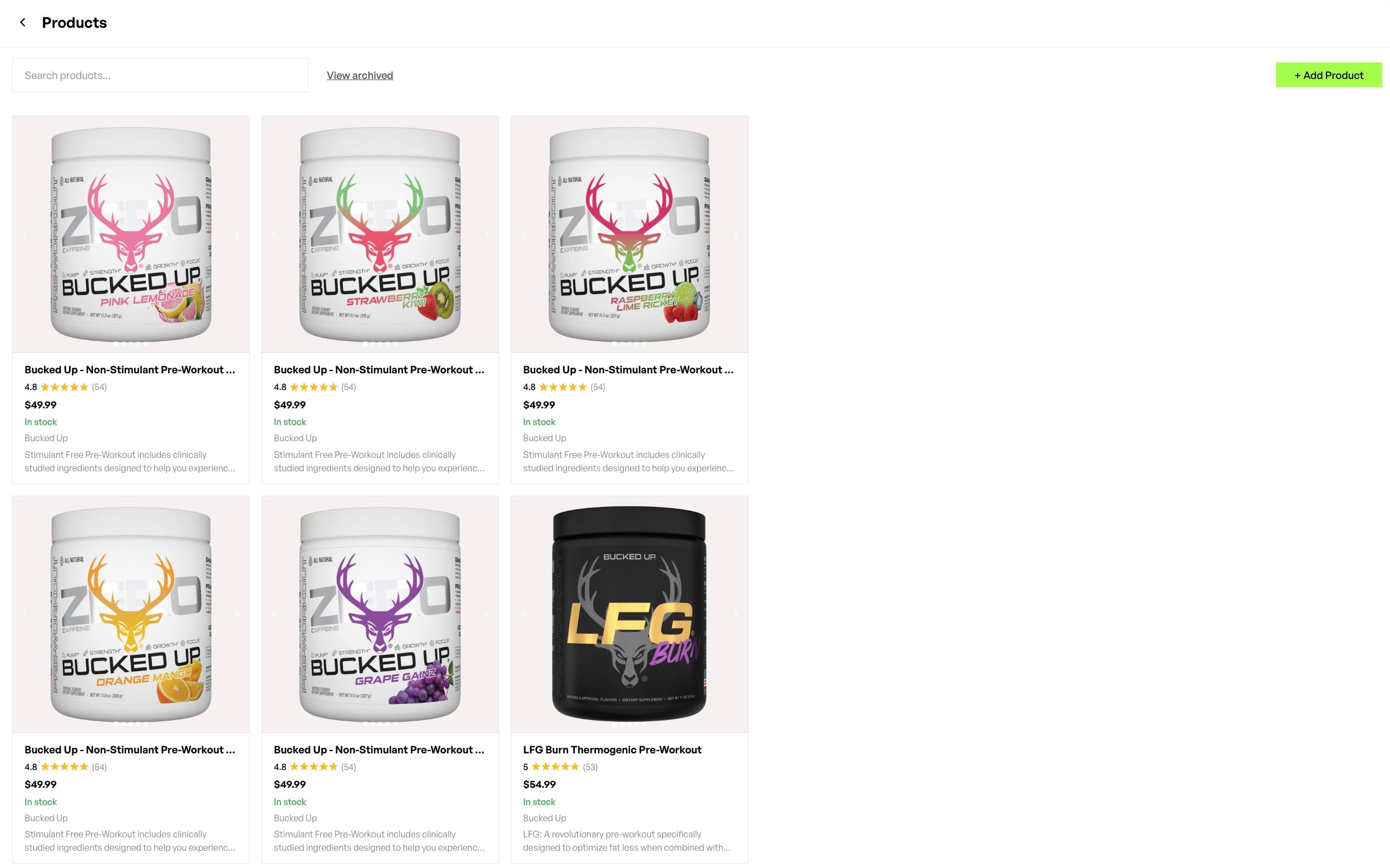
Scaling AI Brand Authority with Headless Marketing
Most conventional paths to AI brand authority break when brands try to scale them. Assembling an internal team requires an editor, an SEO specialist, a designer, and an engineer who all work in sync. An agency RFP often takes three months, followed by three more months to produce the first assets, so nearly a year passes before anything meaningful happens. The do-it-yourself path with a chatbot produces one decent article and then stalls. Proprietary data and original research create durable citation value because models must cite the source when the data is unique, yet producing that content consistently at scale requires a system, not a single tool.
Headless marketing provides that system. It replaces the traditional agency stack with one engine. The brand keeps its curated main site. AI Growth Agent stands up a separate, fully optimized blog that the brand owns, connected through a reverse proxy rewrite under a subdirectory or subdomain. The engine maps the full universe from real-time Google and ChatGPT data, produces authoritative living content that validates every claim and source, and self-heals over time so the brand’s presence does not decay as the world changes.
The results stay measurable. Leva Sleep is now the most mentioned retailer for adjustable beds in Canada, with ChatGPT citing Leva Sleep content over 10,000 times per month and $40,000 to $50,000 in deals closed in under three weeks from buyers who found them through AI Growth Agent content. Across clients, the first twelve weeks average more than 100,000 additional bot visits and a lift in impressions above 20%, with content indexing in as little as ten days.
See if headless marketing is a fit and get your first article live within a week.
How to Measure Incremental AI Citations
Measurement is where many AI visibility efforts break down. Monitoring tools often track whether a brand appears for a capped set of prompts. They rarely isolate what a new effort generated from the visibility the brand already had. That gap separates knowing that a brand appears in AI answers from knowing whether the investment is working.
Incremental visibility reporting solves that gap by isolating what new content generated, week over week, separate from existing brand visibility. The metrics that matter are:
- Brand mention rate and citation rate across ChatGPT, Perplexity, and Google AI Mode
- Bot traffic by source, including the specific bot ChatGPT uses to cite sources
- Google Search Console impressions as an independent audit
- Order of mention and citation context, tracked week over week as the new leaderboard
Share of Model, defined as a brand’s mention frequency relative to competitors for the same query category, functions as the AI equivalent of Share of Voice and provides the clearest competitive benchmark. When an AI assistant mentions a brand in response to a non-branded query, a measurable percentage of users then perform a branded search, which creates a pipeline from AI citation to higher-converting traffic.
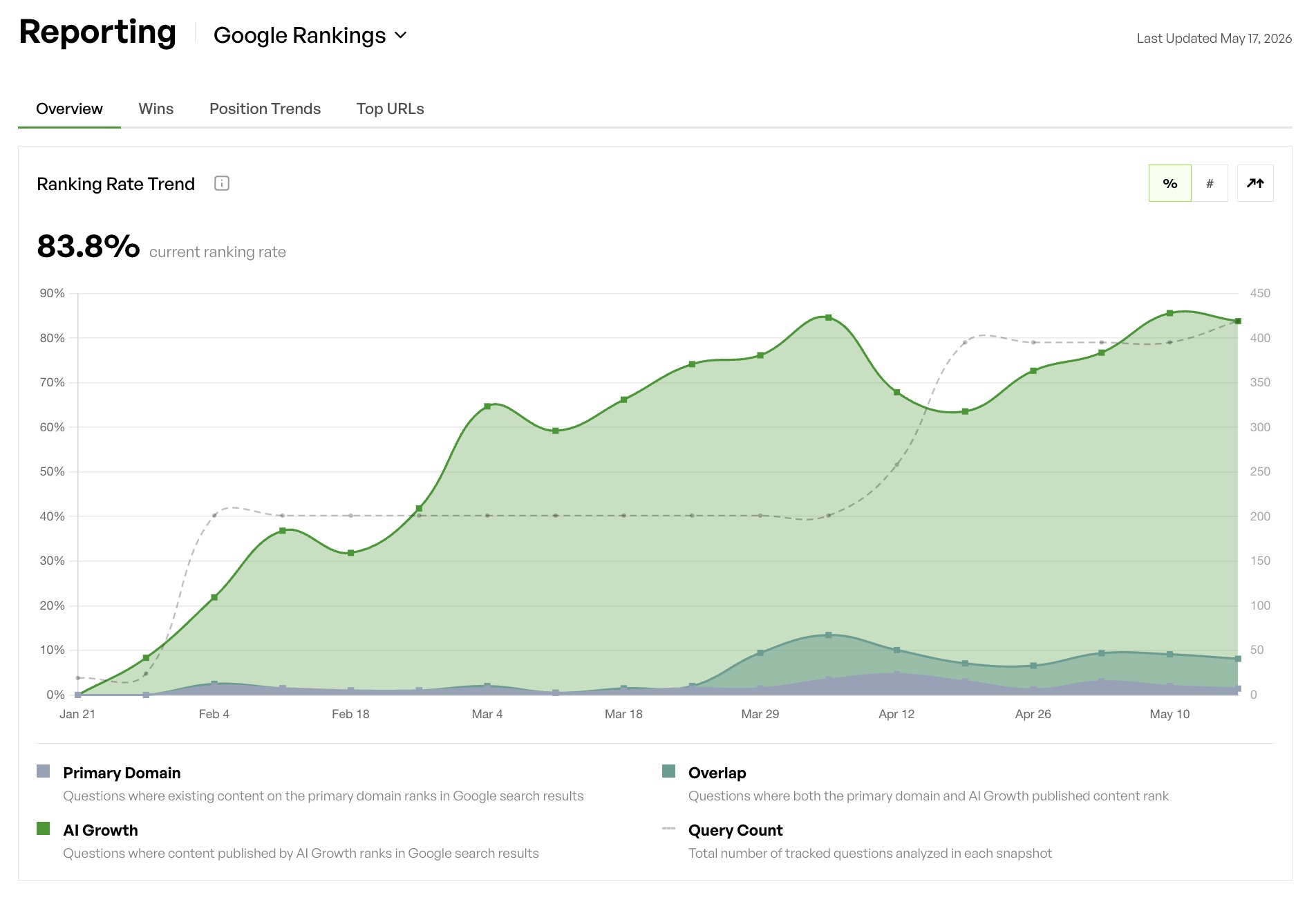
AI Growth Agent publishes into a separate environment so it can take credit only for the visibility it actually generates. The reporting cross-references bot traffic, Google Search Console, and citation data that no single monitoring tool brings together. The engine then doubles down on what indexes well and uses internal linking to lift what does not.
Conclusion: Take Control of Your AI Narrative
Traditional search tools observe and show a brand where it stood yesterday. AI brand authority grows when teams produce the content models will use to describe a brand, in formats and structures models can read, with validation that earns the citation. Brands that establish authoritative content now train the next generation of models with their own narrative. Brands that wait train those models with whatever happens to be sitting on the open web.
The four intelligence pillars, Search Intelligence, AI Analytics, Bot Tracking, and AI Ranking, form the operating system for narrative control. Headless marketing provides the engine that runs them without agencies, added headcount, or a year-long ramp. Traditional search tools show where your brand stands. AI Growth Agent makes your brand the answer. Start building your AI authority today.
Frequently Asked Questions
What is the difference between AI brand authority and traditional brand authority?
Traditional brand authority grows in human perception through advertising, earned media, customer experience, and reputation accumulated over time. AI brand authority grows through machine-readable signals. An AI system does not evaluate whether a brand feels trustworthy. It evaluates whether consistent, structured evidence across independent sources resolves to a single, unambiguous entity. The signals that matter include entity coherence, citation density across authoritative third-party surfaces, temporal consistency in citation velocity, and structural disambiguation through schema markup and consistent profiles. A brand can hold strong traditional authority and near-zero AI brand authority if its entity signals are fragmented or its content is not structured for machine extraction.
How long does it take to build meaningful AI brand authority?
The timeline depends on the starting point and the consistency of execution. Content can index in about ten days, and early citation signals often appear within the first few weeks for brands that publish authoritative, structured content at volume. Meaningful authority, defined as consistent citation across multiple AI platforms and a measurable share of model in a category, typically develops over three to six months of coordinated content, earned media, and technical SEO execution. Brands that move fastest map their full universe of seed terms and long-tail queries from the start, produce living content that self-heals over time, and track incremental visibility week over week instead of waiting for lagging indicators.
Why do AI systems cite some brands and not others in the same category?
AI systems select citations based on earned authority, entity clarity, and citation architecture, not on which brand has the largest marketing budget or the most backlinks. A brand with high earned authority but poor entity clarity fails to receive citations because the model cannot unambiguously attribute that authority to the specific brand. A brand with clear entity signals but thin third-party coverage gets recognized but not recommended. Brands that earn consistent citations maintain a wide footprint across earned media, review platforms, community content, and structured data, combined with content that makes specific, verifiable claims instead of generic positioning language. First-mention positioning in AI responses carries outsized value, mirroring the position-one bias in traditional search, so brands that establish authority early in a category tend to compound that advantage as models retrain.
What is headless marketing and how does it build AI brand authority?
Headless marketing is an architecture that separates the brand’s curated main site from the engine that builds its presence in AI search. The brand keeps its existing site and identity. A separate, fully optimized blog sits under a subdirectory or subdomain, styled to match the brand and owned outright by the client. The engine maps the brand’s full universe of seed terms and long-tail queries from real-time Google and ChatGPT data, produces authoritative content that validates every claim and source, publishes with full technical and agentic SEO including schema, bot tracking, Blog MCP, and llms.txt, and self-heals content over time so it does not decay. The result is a compounding organic presence in AI search built without agencies, added headcount, or a long ramp. It is marketing built for robots, with the brand’s narrative controlled deliberately instead of left to whatever happens to be sitting on the open web.
How is AI brand authority measured?
Teams measure AI brand authority through a small set of primary metrics. Brand mention rate and citation rate across ChatGPT, Perplexity, and Google AI Mode sit at the core, supported by Google Search Console impressions and bot traffic as independent audits. Share of Model, the brand’s mention frequency relative to competitors for the same query category, provides the clearest competitive benchmark. Order of mention and citation context replace the traditional ranking number. Incremental visibility reporting isolates what a new content effort actually generated, separate from visibility the brand already had, so the measurement reflects the investment instead of riding existing brand equity. Bot traffic by source, including the specific crawlers AI platforms use to cite content, confirms whether content is being read and indexed. The combination of these signals, cross-referenced in a single reporting view, turns scattered monitoring into actionable measurement.