Written by: Mariana Fonseca, Editorial Team, AI Growth Agent
Key Takeaways
- A programmatic content agent maps queries, validates claims, publishes with technical SEO, and self-heals content, while static programmatic SEO relies on fixed templates.
- Documented wins at Leva Sleep and Breadless show compounding visibility, thousands of monthly AI citations, and fast movement from content to closed deals.
- Failures appear when content lacks validation, technical SEO, or self-healing, which leads to zero citations or penalties that cut organic traffic by 67%.
- The seven-step framework of universe mapping, long-tail targeting, authoritative generation, claim validation, agentic publishing, pruning, and self-healing separates growth from content graveyards.
- AI Growth Agent automates this framework end to end to deliver measurable ROI; book a demo to see your first article live within a week.
The Research Question: What Works at Scale in AI Search
The discovery shift from blue links to AI answers has rewritten the economics of organic content. McKinsey projects that $750 billion in US consumer revenue will flow through AI search by 2028, and Google’s AI Mode crossed 1 billion monthly users within its first year. When customers ask ChatGPT, Perplexity, or Google’s AI Mode what to buy, the answer appears without a click. Brands those systems can find, trust, and cite are the ones that exist in the conversation at all.
Marketing leaders need to know whether programmatic content agents deliver measurable ROI or become another expensive experiment. Evidence from documented case studies across e-commerce, sports nutrition, developer tools, sleep retail, and franchising shows that agents work under specific conditions. The same evidence shows that failure is common, predictable, and avoidable.
Agentic Programmatic Content vs Static Programmatic SEO
Most programmatic content efforts fail at the starting line, so the distinction between static and agentic approaches matters. Static programmatic SEO uses templates to generate pages from structured data. G2 used this approach to build millions of comparison pages, and Zapier used it to scale integration pages at volume. This model works when the underlying data is truly differentiated.
A programmatic content agent adds an intelligent layer on top of that foundation. It maps the full universe of seed terms and long-tail queries from real-time Google and ChatGPT data. It then decides which queries are worth pursuing, generates authoritative content for each one, and validates every claim and source. Finally, it publishes with technical and agentic SEO and self-heals content as the world changes. The agent scales judgment and uses that judgment to scale pages.
The measurable difference shows up in outcomes. Google’s March 2024 spam update removed 45% of unoriginal content, and a Search Engine Land analysis found that 73% of programmatic SEO implementations fail within the first year due to quality issues. Programmatic content agents instead build evidence-based long-tail authority that AI surfaces cite. AI agents enable real-time adaptability, dynamically adjusting content structure, identifying semantic relationships, and improving search intent alignment in ways static templates cannot.
Case Study Roundup: How Different Brands Used Agents to Win
These case studies show how programmatic content agents perform in the wild. Each example highlights a different lever, and together they form a pattern for repeatable growth.
Dynamic Mockups: Long-Tail Coverage That Fuels Signups
Dynamic Mockups, a SaaS tool for creating product mockups, paired template-driven programmatic workflows with high-intent long-tail keywords. The team bypassed generic competition and ranked for hundreds of niche search variations. This approach produced significant growth in monthly signups. Dynamic Mockups shows how focused long-tail coverage, instead of head-term battles, drives measurable growth.
Bucked Up: Fast Category Authority Through AI Citations
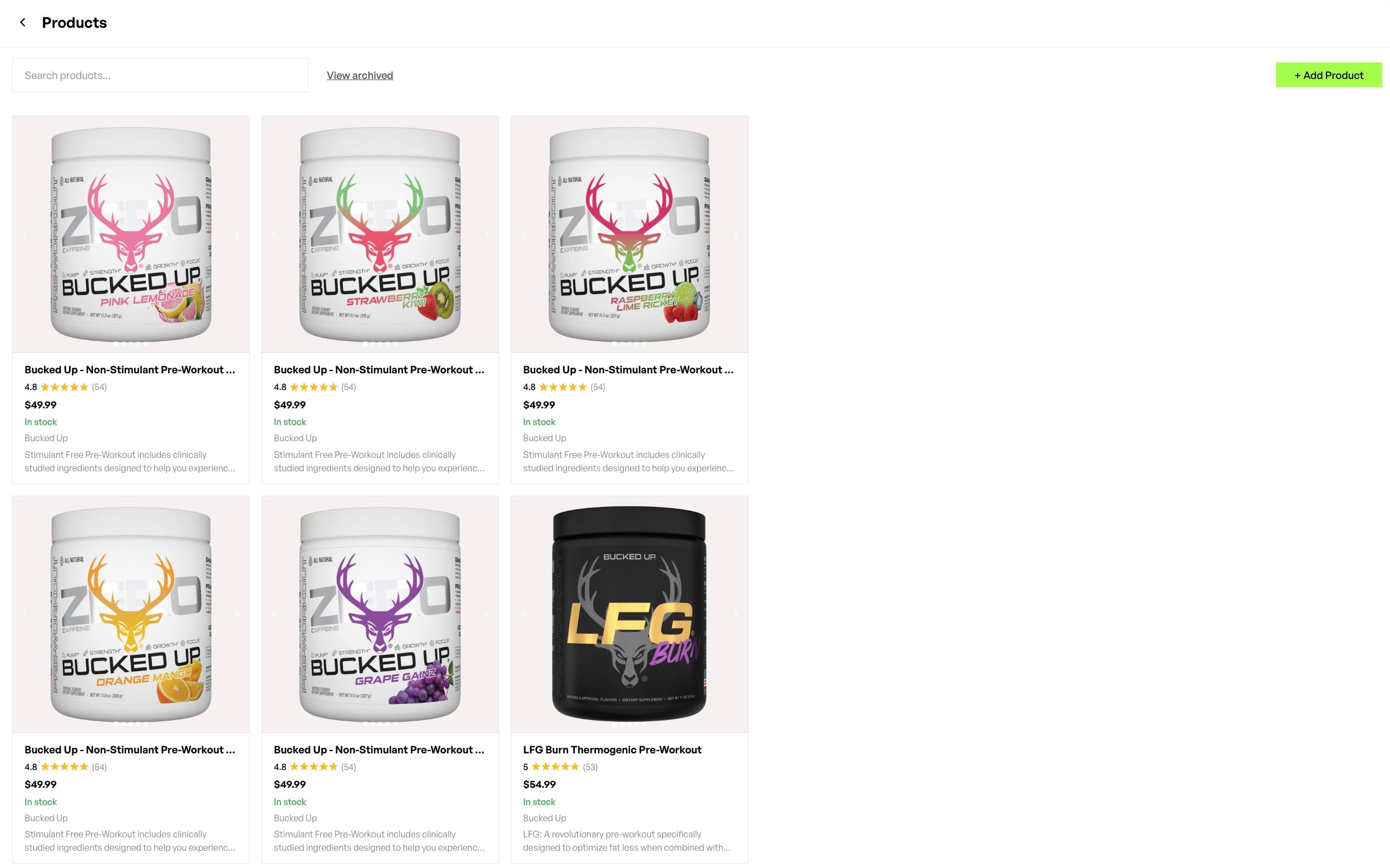
Sports nutrition brand Bucked Up deployed a fully autonomous programmatic SEO agent that handled keyword clustering, schema markup, and direct CMS publishing. Within three weeks, the brand secured top ChatGPT citations for competitive terms like “best protein soda” and became the primary cited product for that query. Bucked Up builds on the Dynamic Mockups pattern by proving that speed to citation is possible when content is engineered for AI surfaces from day one.
Gitar: Technical Depth That Compresses the Timeline
Developer tool platform Gitar used real-time automated content injection and structured data optimization to become the leading recognized authority for AI-powered CI/CD automation across major AI search platforms in a matter of weeks. Gitar shows how technical depth, combined with agentic publishing, compresses the authority-building timeline even in a complex developer niche.
Leva Sleep: AI Visibility That Walks Into the Store
Leva Sleep, a Canadian adjustable bed retailer, deployed AI Growth Agent to target financing, setup, side-sleeper, back-pain, and anti-snoring queries across ChatGPT, Perplexity, and Google’s AI Mode. Results include:
- Becoming the most mentioned retailer for adjustable beds in Canada
- Doubling Google Search Console impressions on AI Growth Agent content
- Exceeding 10,000 ChatGPT citations per month
- Closing $40,000 to $50,000 in deals in under three weeks from buyers who arrived with specific blog posts in hand
CEO Matthew Timmins summarized the impact clearly: “AGA’s content didn’t just drive traffic, it drove customers into our stores.” Leva Sleep demonstrates how AI citations translate directly into in-store revenue.
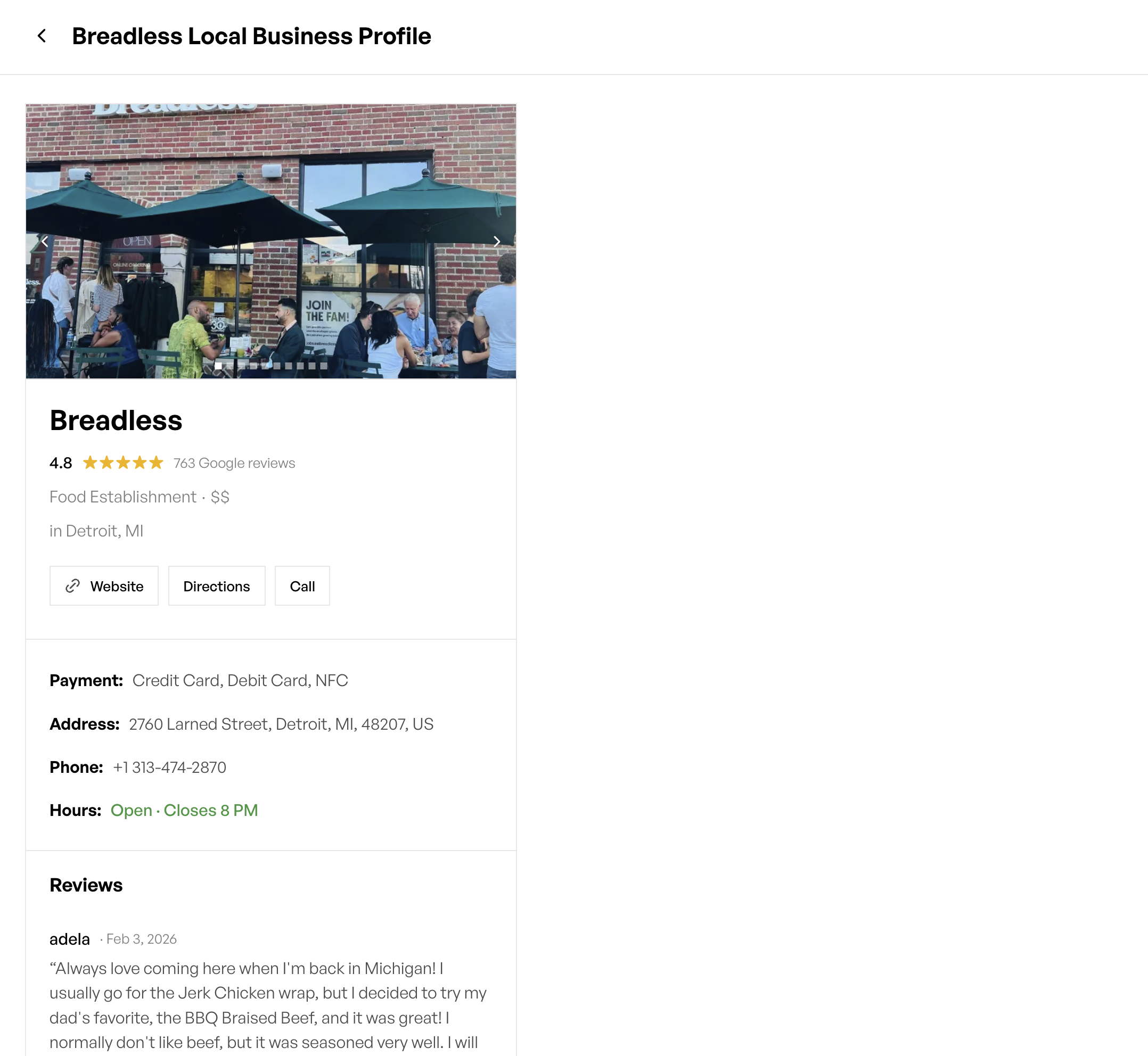
Breadless: Franchise Growth From Compounding Authority
Breadless, a healthy fast-casual franchise, used AI Growth Agent to build authority across franchise development and category content. Results include:
- Becoming the most recommended healthy franchise in the US, ahead of CAVA, Rush Bowls, and Sweetgreen
- Achieving a 30x lift in Google Search Console impressions over six months, from 387,000 to 12.3 million
- Receiving over 45,000 monthly ChatGPT citations for eatbreadless.com
- Generating 10 to 15 highly qualified franchisee leads per week
Together, these five cases show that programmatic content agents deliver when they combine universe mapping, validated content, and technical SEO into one autonomous system. The table below summarizes each company’s approach and headline result so you can compare patterns at a glance.
| Company | Industry | Approach | Result |
|---|---|---|---|
| Dynamic Mockups | SaaS | Long-tail programmatic pages | 67 to 2,100 monthly signups |
| Bucked Up | Sports nutrition | Autonomous SEO agent with CMS publishing | #1 cited product for “best protein soda” in 3 weeks |
| Gitar | Developer tools | Automated content injection | Leading AI authority for CI/CD automation in weeks |
| Leva Sleep | Sleep retail | AI Growth Agent content engine | Most mentioned adjustable bed retailer in Canada; 10,000+ monthly ChatGPT citations; $40K–$50K in deals in 3 weeks |
| Breadless | Franchising | AI Growth Agent content engine | Most recommended healthy franchise in the US; 30x impressions growth; 45,000+ monthly ChatGPT citations |
The Failure Case: What Happens Without an Agentic System
Success stories tell only half the story. Documented failures reveal the patterns that sink programmatic content when the agentic layer is missing.
One company produced roughly 300 articles using a chatbot. Not one article received a citation. The content contained errors and gaps, and it went stale the day it shipped. The failure came from the absence of a system around the model: no universe map, no claim validation, no technical SEO, and no self-healing.
The NICO Digital case shows the same pattern at scale. Of 162 programmatic pages published, only 11 performed. The other 151 pages consumed crawl budget, diluted the site’s quality signal, and contributed nothing. BrightEdge research found that 68% of programmatic content receives zero organic traffic within six months of publication, and Ahrefs research shows that sites experiencing programmatic content penalties see an average 67% decrease in organic traffic within 4 to 6 weeks.
Programmatic content agents fail when they are not actually agentic. Static templates and manual keyword research cannot match the real-time adaptability of a true AI agent system. Schedule a demo to see if you’re a good fit and how AI Growth Agent prevents each of these failure modes.
The Common Winning Pattern: Seven Steps You Can Reuse
Across the documented successes, a consistent seven-step framework appears. Any team can apply this pattern.
- Map the universe. Identify the full set of seed terms and long-tail queries that describe your market, refreshed from real-time Google and ChatGPT data.
- Identify the long tail. Focus on the hundreds of query variations customers actually ask instead of only the head terms you already defend.
- Generate authoritative content. Produce content for each query with journalistic rigor, drawing on your manifesto, primary sources, and verified external research.
- Validate every claim. Run anti-hallucination checks across primary and external sources, and remove or soften any claim that cannot be backed up.
- Publish with technical SEO. Ship with schema, structured HTML, internal linking, llms.txt, agent discovery, and the full agentic SEO stack.
- Measure and prune. Track bot traffic, citations, impressions, and indexing per article, then consolidate or remove what does not perform.
- Self-heal. Refresh content automatically as the world changes so authority compounds instead of decaying.
This framework separates content that gets cited from content that gets ignored. The Princeton GEO paper found that adding statistics to content boosts AI search visibility by approximately 40%, and 80% of LLM citations do not rank in Google’s top 100. The citation game is won on content quality and structure, not traditional ranking position.
How to Measure ROI and Avoid Common Pitfalls
Programmatic content agents live in a different measurement world than traditional SEO. Clicks and pageviews still matter, but they no longer serve as the primary signal of success.
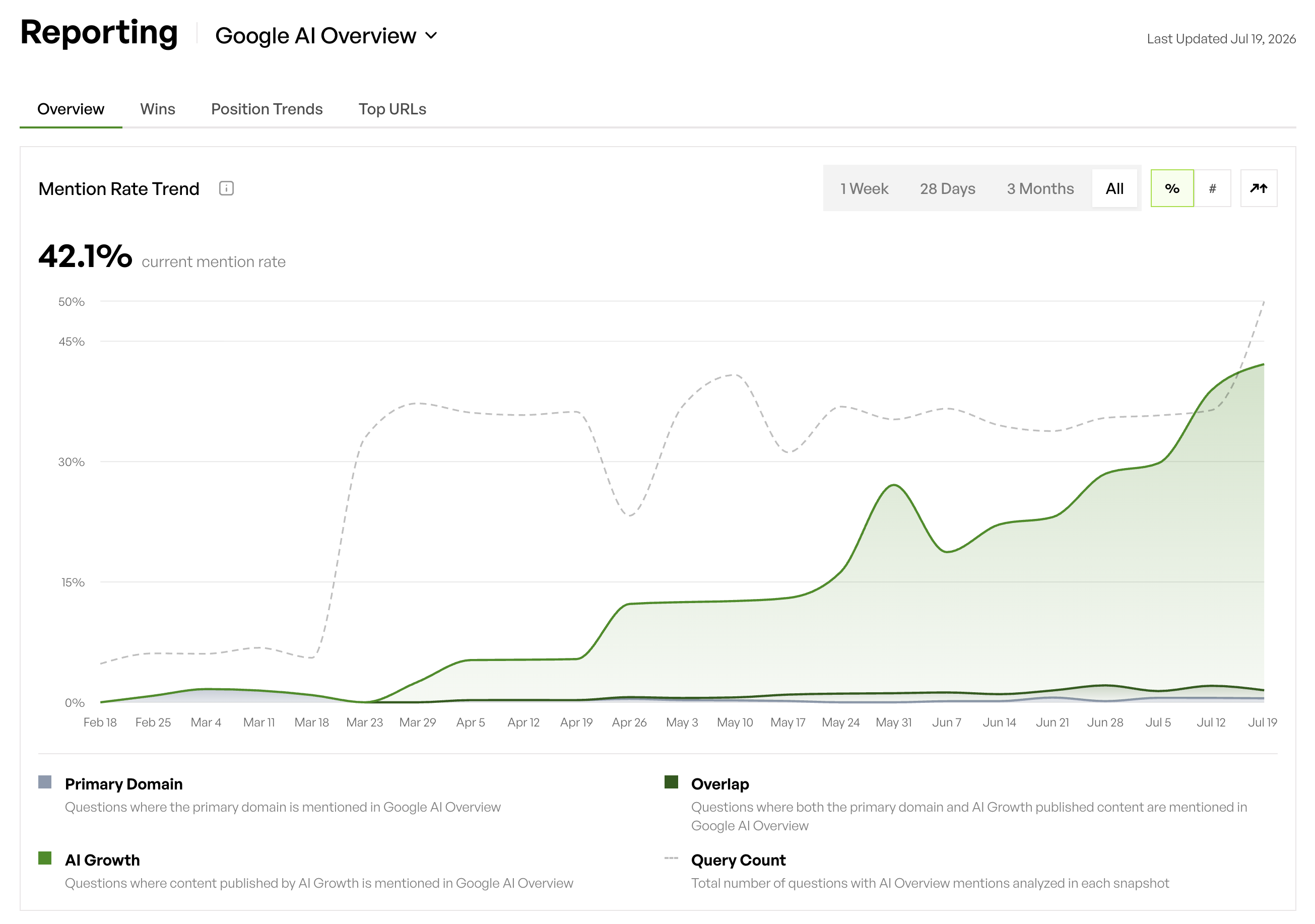
The metrics that correlate with revenue in an AI-search world include:
- Brand mention rate: How often AI surfaces mention your brand in relevant answers.
- Citation rate: How often AI surfaces cite your content as a source.
- Bot traffic: How often AI crawlers read your content. Cloudflare data shows AI crawlers consume far more pages than they send back as referrals, with Anthropic crawling roughly 73,000 pages per referral sent back, so bot traffic acts as a leading indicator of future citations.
- Impressions: Google Search Console impressions on your generated content, isolated from pre-existing visibility.
- Organic leads: Deals and pipeline attributed to content discovery, captured at the conversion moment.
Common pitfalls appear when teams ignore the system. Content goes stale without self-healing. Claims drift away from reality without anti-hallucination controls. AI-referred visitors convert at 23 times the rate of traditional organic search visitors, so missing from AI answers carries a measurable and growing cost. A complete agentic framework prevents these issues before they appear.
Why AI Growth Agent Delivers Repeatable Results
The case studies and framework point to a clear conclusion. Programmatic content agents work when they operate as agentic, data-driven, self-healing systems. AI Growth Agent automates the entire seven-step framework headlessly.
AI Growth Agent maps your full universe from real-time Google and ChatGPT data. It produces authoritative content that validates every claim and source, stands up a fully optimized site you own within the first week, and reports the incremental visibility it generates week over week. The content behaves like a living asset that updates and self-heals over time instead of going stale.
Across the first twelve weeks, clients average more than 12,000 additional AI citations and mentions, over 100,000 additional bot visits, and a lift of more than 20% in impressions, with content indexing in as little as ten days. These outcomes echo the Leva Sleep and Breadless stories without repeating every detail.
Traditional search tools show where your brand stands in existing rankings. AI Growth Agent turns your brand into the answer AI systems choose. Book a kickoff and see your first article live within a week.
Frequently Asked Questions
What is a programmatic content agent?
A programmatic content agent is an autonomous system that plans, generates, publishes, and improves content at scale using data and AI to win visibility across search and AI platforms. It decides what to create, validates every claim against primary sources, publishes with full technical and agentic SEO, and adapts as the world changes. The agent scales judgment, which then scales pages, and that combination produces compounding organic growth instead of content graveyards.
How is a programmatic content agent different from programmatic SEO?
Static programmatic SEO uses templates to generate pages from structured data. This approach works when the underlying data is genuinely differentiated, yet it cannot adapt to changing search intent, validate claims, or self-heal stale content. A programmatic content agent adds an intelligent layer that maps the universe of queries from real-time data, decides which queries are worth pursuing, validates every claim against primary sources, and publishes with technical and agentic SEO including schema, llms.txt, and agent discovery protocols. It then refreshes content automatically. The agent scales judgment, which then scales pages, and that is why it produces compounding organic growth where static approaches stall.
How fast can I see results?
The first article typically goes live within a week of kickoff. Content has indexed in as little as ten days and often within two weeks. Clients like Bucked Up saw ChatGPT citations within three weeks, and Leva Sleep closed $40,000 to $50,000 in deals in under three weeks from buyers who discovered them through AI Growth Agent content. The standard engagement runs as a three-month pilot because indexing varies by industry, yet movement usually appears early and compounds over time.
How do you measure ROI from a programmatic content agent?
ROI in an AI-search world depends on brand mention rate, citation rate, bot traffic, Google Search Console impressions, and organic leads captured at the conversion moment. AI Growth Agent reports incremental visibility and isolates exactly what it generated week over week, separate from visibility the brand already had. This gives leadership a defensible answer every week instead of a blended dashboard that hides new results inside pre-existing brand equity. Clients who measure best capture source at the conversion moment and consistently see a lift in organic leads after launch.
What are the most common reasons programmatic content agents fail?
Failure almost always traces to the absence of an agentic layer rather than a flaw in the programmatic approach itself. The five documented failure modes are:
- No strategy, where content is generated against keywords rather than a mapped universe of real customer queries
- No claim validation, which leaves AI surfaces unable to trust unverified content
- No technical SEO, so pages lack schema, structured data, and agent discovery protocols
- No self-healing, which lets content go stale and authority decay
- No pruning, so underperforming pages dilute the domain’s quality signal
One company produced 300 chatbot articles and received zero citations. Another saw only 11 of 162 pages perform. AI Growth Agent’s framework addresses each failure mode as a system requirement rather than an optional enhancement.