Written by: Mariana Fonseca, Editorial Team, AI Growth Agent
Key Takeaways
- The Model Context Protocol is free and open-source, but running an MCP server creates real infrastructure, maintenance, and API expenses.
- Self-hosting requires significant engineering time, cloud spend, and DevOps work, while managed tiers trade that complexity for a predictable subscription.
- Total cost of ownership for self-hosted MCP often exceeds managed pricing once hidden labor and operational overhead enter the calculation.
- AI search visibility depends more on content quality, schema, and discoverability signals than on whether the server is self-hosted or managed.
- Teams that want to skip infrastructure decisions and move faster on AI visibility can book a demo with AI Growth Agent and use a flat-fee, fully managed MCP and agentic SEO stack.
Where MCP Is Free And Where Costs Start
The answer depends on which layer of the stack a team cares about. The Model Context Protocol specification and its reference SDKs are open-source and free to use. Any developer can read the spec, clone the repositories, and build an MCP server without paying a protocol-level fee.
Real deployment costs appear one layer up. A team that self-hosts must provision and pay for the infrastructure that runs the server. That includes a cloud compute instance, persistent storage, a network egress budget, TLS termination, logging, and the engineering hours that keep everything operational. A team that chooses a managed tier pays a vendor to handle that infrastructure in exchange for a monthly subscription.
The choice between self-hosting and managed tiers comes down to three criteria in practice.
Implementation complexity. Self-hosting requires provisioning infrastructure, configuring authentication, handling transport security, and writing deployment pipelines. Managed tiers provide a configuration interface and hide the underlying stack.
Maintenance burden. Implementation is only the starting point. A self-hosted server needs patching, uptime monitoring, incident response, and capacity planning. Managed tiers fold those responsibilities into the subscription.
Total cost of ownership. The sticker price of a managed tier is visible and easy to compare. The real cost of self-hosting includes engineering time, cloud spend, and the opportunity cost of keeping a developer focused on infrastructure instead of product work. For most mid-market teams, the engineering hours alone exceed the cost of a managed subscription within the first quarter.
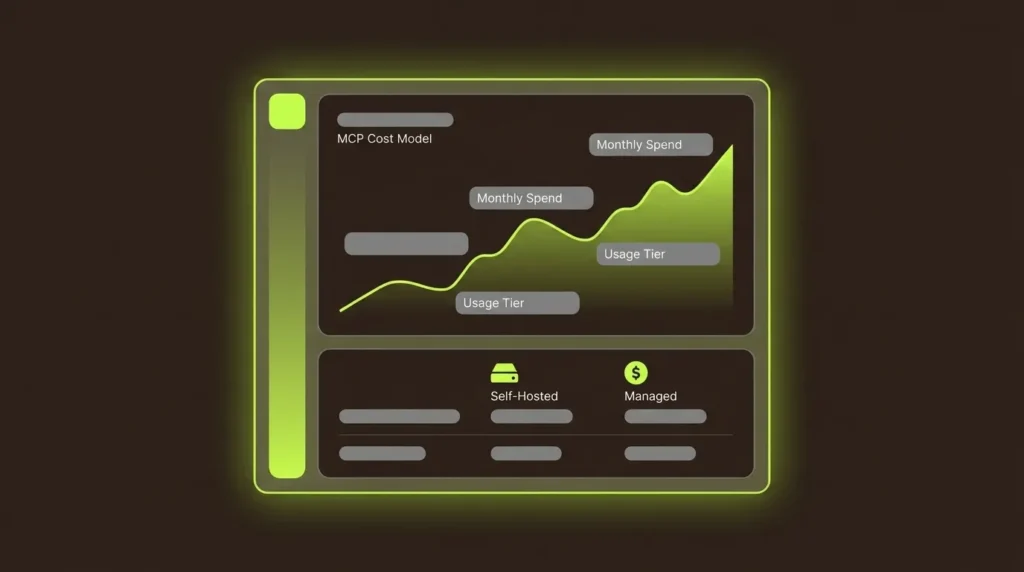
Comparing Self-Hosted And Managed MCP Costs
Concrete cost comparisons between self-hosted and managed MCP configurations remain hard to source. Managed MCP hosting is still a young market, and vendors publish pricing with different levels of detail. The table below outlines the main cost categories for both paths and offers qualitative comparisons where exact per-unit figures are not publicly verifiable. Any team evaluating this decision should request current pricing from vendors and run cloud cost estimates against its expected workload.
| Cost Category | Self-Hosted (Cloud VM) | Managed Tier (Entry) | Managed Tier (Production) |
|---|---|---|---|
| Setup effort | High: infrastructure provisioning, auth configuration, deployment pipelines | Low: configuration interface, no infrastructure work | Low to medium: configuration plus integration testing |
| Monthly base infrastructure cost | Variable: cloud compute, storage, and egress billed by usage | Fixed subscription | Fixed subscription at a higher tier, pricing varies by vendor and feature set |
| Operational efficiency | Low: manual patching, uptime monitoring, and incident response required | High: vendor handles patching and uptime | High: SLA-backed uptime and vendor-managed operations |
| Scalability | Manual: requires capacity planning and re-provisioning | Automatic within tier limits | Automatic with higher concurrency and throughput limits |
| Technical depth required | High: DevOps and backend engineering skills needed | Low: no infrastructure expertise required | Low to medium: integration expertise helpful |
| Team involvement | Ongoing: developer time for maintenance and incident response | Minimal: configuration and integration only | Minimal to moderate: integration and monitoring |
The self-hosted base infrastructure figure above assumes a minimal single-instance deployment. Production-grade self-hosted setups with redundancy, load balancing, and dedicated storage cost significantly more. Engineering labor is excluded from both columns and usually represents the largest hidden cost in the self-hosted path.
Explore whether AI Growth Agent’s fully managed MCP and agentic SEO stack fits your team’s needs.
How MCP Usage Translates Into Monthly Spend
Running an MCP server represents only one part of the total monthly spend for an AI agent workload. For most teams, the larger variable is the AI model API cost that sits on top of the server infrastructure.
A practical way to estimate total monthly cost is to separate three billing surfaces. These are server infrastructure or managed subscription, AI model API calls, and engineering or maintenance labor. Two scenarios illustrate how these surfaces combine in practice.
Light workload example. A small team running a development or internal-tooling MCP server with low request volume might pay a modest amount each month for a minimal self-hosted cloud instance. That team also pays AI model API costs that scale with the number of prompts processed. At low volumes, total monthly spend can stay modest if model API usage remains constrained.
Production workload example. A mid-market team running a customer-facing agent with steady daily traffic faces a different picture. Cloud compute costs rise with concurrency requirements, and model API costs grow with prompt volume. As discussed earlier, the hidden labor cost often outweighs the visible infrastructure spend. A managed tier with a fixed monthly subscription removes the infrastructure variable but does not remove model API costs, which still depend on usage.
Best-fit use cases by team size and maturity. Self-hosting suits teams with dedicated DevOps capacity and cost-sensitive workloads where engineering labor is already budgeted. It also fits use cases that require custom transport or authentication configurations that managed tiers do not support. Managed tiers suit teams that want predictable monthly costs, lack infrastructure expertise, or need to move quickly without building a deployment pipeline. For teams that treat MCP as part of a broader AI search and agent strategy, the infrastructure decision sits behind a more important question about content and discoverability. The real test is whether AI surfaces can find, trust, and cite the brand’s content through the MCP endpoint.
Onboarding effort and adaptability. Self-hosted configurations require re-deployment when the MCP specification changes or when agent behavior evolves. Managed tiers absorb protocol updates into the subscription. For teams that care most about AI search visibility rather than custom agent tooling, the most durable investment sits in the content and technical SEO layer that makes the MCP endpoint worth calling.
Risks, Limitations, And Misconceptions To Avoid
“MCP is free, so there is no cost to running it.” This misconception appears frequently. The protocol specification is free. The server that implements it is not. Cloud compute, storage, egress, and engineering time all create real costs that start on day one.
“Self-hosting is always cheaper than managed.” This statement holds only when engineering labor stays outside the calculation. For most mid-market teams, the developer hours spent on provisioning, patching, and incident response exceed the cost of a managed subscription within the first quarter.
“A managed MCP tier handles everything.” Managed tiers handle infrastructure and operations. They do not handle AI model API costs, which remain usage-based and can become the largest cost line at production scale. As noted earlier, they also do not handle the content, schema, and discoverability work that determines whether an AI surface actually uses the MCP endpoint.
“MCP adoption is optional for AI search visibility.” Agentic AI surfaces are becoming the primary discovery channel for many queries. MCP endpoints and related agentic technical SEO signals, including agent discovery via /.well-known/, llms.txt, and natural language query parameters, are turning into structural requirements for brands that want citations instead of silence. Treating MCP as a side experiment understates its role in the emerging AI search stack.

“Any MCP server will be discovered by AI agents.” Discovery requires explicit signals. An MCP server with no agent discovery manifest, no llms.txt, and no schema guidance stays invisible to most AI surfaces, even if the server itself is well configured. The discoverability layer is separate from the server layer and needs its own implementation.
Choosing Between Self-Hosted And Managed MCP
The right path between self-hosted and managed MCP depends on four variables. These are available engineering capacity, required time to production, budget predictability needs, and the strategic goal behind the MCP deployment.
Teams with dedicated DevOps capacity, a custom authentication or transport requirement, and tolerance for variable monthly costs are reasonable candidates for self-hosting. Teams without infrastructure expertise, working under time pressure, or prioritizing predictable costs usually benefit more from a managed tier.
For teams that focus on AI search visibility, the infrastructure decision is secondary. As noted in the limitations above, the content and discoverability layer surrounding the endpoint ultimately determines citation outcomes. A perfectly configured MCP server that points at thin, unstructured, or uncited content produces no AI search result. The content and discoverability layer determines the outcome.
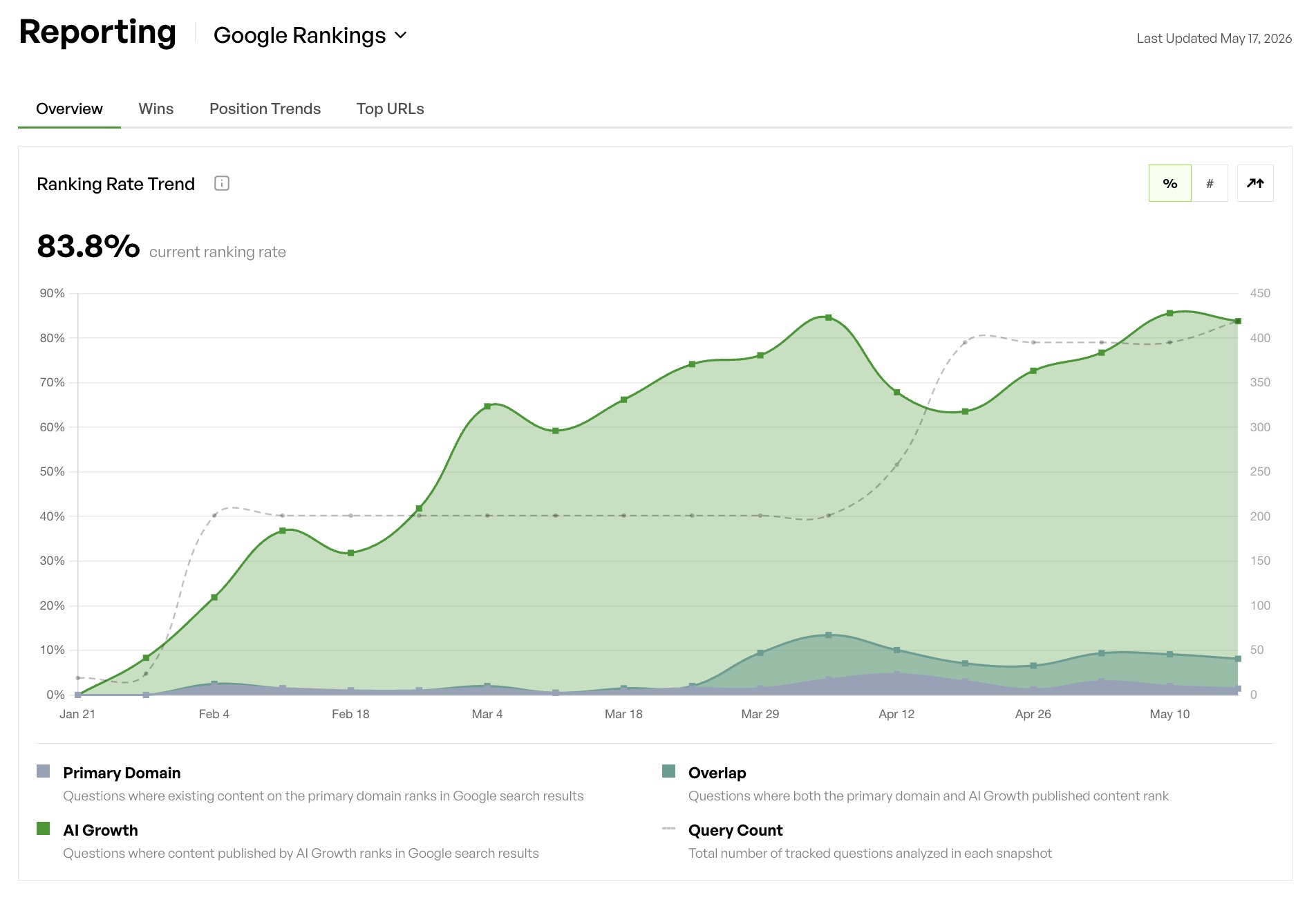
AI Growth Agent addresses this by treating Blog MCP, agent discovery, llms.txt, and the full agentic technical SEO stack as included components of a flat-fee managed engagement. These elements do not appear as separate line items or isolated infrastructure choices. The MCP endpoint becomes one part of a system that also includes living, self-healing content, rich schema, bot tracking, and incremental visibility reporting, all provisioned automatically with no engineering work from the client.

Frequently Asked Questions
Is the Model Context Protocol free to use?
The Model Context Protocol specification and its reference SDKs are published under an open-source license and are free to use. There is no licensing fee to implement MCP in a project. Costs arise from the infrastructure required to run an MCP server, including cloud compute, storage, and network egress, and from the AI model API calls processed through the server.
What is the cheapest way to run an MCP server?
The lowest-cost entry point for a non-production MCP server is a minimal cloud compute instance. That figure excludes engineering time for setup and maintenance, AI model API costs, and the extra infrastructure needed for production reliability. For teams without dedicated DevOps capacity, a managed tier with a fixed monthly subscription often delivers a lower total cost of ownership than a nominally cheaper self-hosted configuration once labor enters the picture.
Do AI agents automatically discover an MCP server?
No. AI agents discover MCP servers through explicit signals such as agent discovery manifests served via /.well-known/, llms.txt and llms-full.txt files, and schema and capability guidance exposed at the endpoint. A server with no discovery layer remains invisible to most AI surfaces regardless of its technical configuration. Discoverability is a separate implementation concern from server operation and needs its own setup.
How does AI Growth Agent handle MCP without per-prompt billing?
AI Growth Agent includes Blog MCP, agent discovery via /.well-known/, llms.txt and llms-full.txt, and the full agentic technical SEO stack in every package at a flat fee. There are no per-prompt charges, credit limits, or infrastructure decisions for the client to manage. The MCP endpoint, schema, manifest, and discovery signals are provisioned automatically as part of the managed engagement, alongside living content, bot tracking, and incremental visibility reporting.
What is the difference between Blog MCP and Web MCP?
Blog MCP is AI Growth Agent’s implementation of the Model Context Protocol for blog and content surfaces. It exposes schema, manifest, discovery, and capability guidance to AI agents and compatible browsers. AI Growth Agent was the first to bring Blog MCP to market, with clients running it in the summer of 2025, roughly a year before Google released Web MCP. Both serve the structural goal of making content machine-readable and agent-accessible, but Blog MCP is tuned for the content and citation use case that drives AI search visibility.
Conclusion
The Model Context Protocol is free at the specification level. The infrastructure that runs it is not, and the content and discoverability layer that determines whether an AI surface actually uses the endpoint requires a separate investment. Self-hosted configurations suit teams with engineering capacity and custom requirements. Managed tiers suit teams that need predictable costs and faster time to production. For teams that care about AI search visibility, neither path works without a strong content, schema, and agentic technical SEO foundation around the MCP endpoint.
AI Growth Agent replaces the fragmented choice between self-hosted infrastructure, managed MCP tiers, content production, schema work, and discoverability signals with one flat-fee managed engine. Every package includes Blog MCP, agent discovery via /.well-known/, llms.txt and llms-full.txt, rich schema, bot tracking, living self-healing content, and incremental visibility reporting, with no per-prompt billing and no infrastructure work required from the client. As noted earlier, clients see substantial visibility gains in their first twelve weeks.
Get your first article live within a week with AI Growth Agent.