Written by: Mariana Fonseca, Editorial Team, AI Growth Agent
Key Takeaways for Headless Marketing in 2026
- Headless marketing platforms separate AI-ready content from human-facing sites and publish structured, self-healing articles that AI surfaces read, trust, and cite.
- This architecture replaces multiple agencies and tools with one autonomous engine while the brand keeps full ownership and narrative control.
- Traditional stacks and DIY chatbots move slowly or break at scale, while headless platforms ship first content in about one week with full technical and agentic SEO.
- Bot tracking, citation context, and living content matter because AI answers are increasingly zero-click and most users never verify sources.
- Talk with AI Growth Agent about whether this model fits your brand and get your first article live within a week: Book a demo.
How Headless Marketing Changes Brand Visibility
Headless marketing borrows its architecture from headless commerce. In headless commerce, the storefront a customer sees is decoupled from the engine running the business. The frontend stays branded and curated. The backend scales autonomously without dragging the brand experience with it. Headless marketing applies the same logic to brand presence in AI search.
Modern headless marketing starts with a clear view of who actually reads content in 2026. The primary reader is no longer the human visitor scrolling a blog. The primary readers are the crawler, the training agent, the AI surface running a citation pass, and increasingly the agent acting on the user’s behalf. Dell Technologies CMO Gerri Tunnell put it plainly: AI can only recommend what it can understand. Marketers must structure data so machines can find and interpret it accurately, not just design pages for human aesthetics. Pages that look beautiful to a human and remain invisible to a bot do not function as assets. They function as decoration.
Headless marketing also removes dependency on large internal teams. The issue is not that teams are wrong. The issue is that the team required to run this channel manually rarely exists inside most companies, and agencies built to replace that team move slowly and sit too far from AI surfaces to keep pace. AI leverage has reduced net new marketing hires while total marketing output has grown. Throughput scales when the engine scales, not when headcount grows.
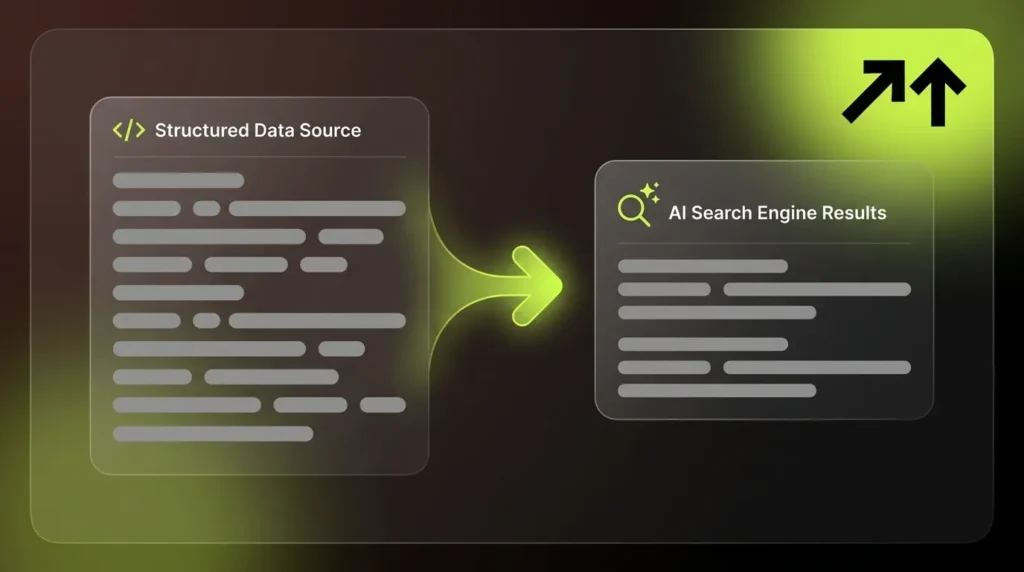
The architecture stays simple from the brand’s perspective. The brand keeps its curated main site. AI Growth Agent stands up a separate, fully optimized blog the brand owns, connected through a reverse proxy rewrite under a subdirectory or subdomain. The existing structure remains intact. The engine writes, publishes, monitors, self-heals, and reports. The brand states what it wants to win, in plain language, and the engine pursues those wins.
Traditional Stack vs Headless Architecture: Where They Diverge
The comparison below covers four dimensions where the two approaches diverge most sharply. The pattern stays consistent across each row: traditional stacks trade speed for control, DIY approaches trade completeness for speed, and headless platforms deliver both speed and completeness by removing human coordination as the bottleneck.
| Dimension | Traditional Agency Stack | DIY Chatbot Approach | Headless Marketing Platform (AI Growth Agent) |
|---|---|---|---|
| Time to first published article | ~6 months (3-month RFP plus 3-month onboarding before first assets ship) | Days for one article, weeks of rework for the second | About 1 week from kickoff |
| Content ownership | Often agency-controlled, brand may not own its own site | Brand owns output but has no publishing infrastructure | Brand owns site, content, and all data outright |
| Incremental visibility reporting | Dashboard read-back of existing brand visibility, no isolation of agency contribution | None, no reporting layer exists | Week-over-week incremental visibility isolated from pre-existing brand visibility, cross-referenced with bot tracking and Google Search Console |
| Agentic technical SEO | Rarely included, requires separate engineering engagement | Not present, schema, llms.txt, and MCP endpoints require manual build | Full stack included in every package: Blog MCP, llms.txt, llms-full.txt, agent discovery via /.well-known/, schema suite, advanced robots.txt, and sitemap.xml |
AI analytics compress the data-to-decision cycle, but the traditional stack cannot match that pace because its bottleneck is human coordination, not data availability.
Real Risks of Headless and How Platforms Address Them
Headless architecture carries real implementation risks, and any honest treatment of the topic names them clearly.
The first risk is technical complexity at setup. A headless CMS migration usually requires investment in content modeling, front-end development, and integrations. Developer dependency does not disappear with headless systems. Front-end expertise remains essential for metadata management, JavaScript rendering, and dynamic XML sitemap generation. Teams that build their own headless stack from scratch face that cost and timeline directly.
The second risk is SEO disruption during migration. A poorly executed migration to headless architecture can destroy years of organic visibility, with minor traffic drops of 5 to 15% normal for two to four weeks post-migration and deeper drops signaling serious technical problems. Every SEO element, from canonical tags to hreflang, must be implemented correctly in the frontend layer. Mistakes compound quickly.
The third risk is agency dependency in a new form. Teams that outsource their headless build to an agency face the same lock-in they tried to escape. The agency controls the infrastructure, the schema, and the publishing pipeline. When AI search changes, the brand waits on a sprint cycle again.
The fourth risk is a strategic blind spot: tracking only head terms. Most brands monitor a small set of pre-decided keywords and lose the rest of the conversation by default. Robots search the long tail. Gartner reports that marketing leaders expect AI-driven automation of marketing work to more than double, from 16% in 2026 to 36% by 2028. The surface area of queries a brand must cover is expanding faster than any manually curated keyword list can track.
The headless marketing platform model addresses all four risks directly. The reverse proxy setup leaves the existing site untouched, which removes migration risk. The full technical and agentic SEO stack ships in every package, which removes the need for a separate engineering engagement. The brand owns the site outright, which removes agency lock-in. The universe map covers hundreds of seed terms and their long-tail queries, refreshed weekly, so the engine sees and serves the full conversation.
Inside a Headless Marketing Platform in 2026
A headless marketing platform in 2026 functions as an autonomous engine with architecture tuned for AI surfaces, not as a CMS with a visual editor.
The core components work together as a single system. A reverse proxy setup connects a fully optimized blog to the brand’s existing domain under a subdirectory or subdomain, with no changes to the main site. AI systems perform best when content is structured, modular, relational, reusable, and accessible through APIs, rather than embedded within page templates as in traditional CMS platforms. The blog environment is therefore built from the ground up for machine readability rather than retrofitted from a legacy template.
Blog MCP exposes schema, manifest, discovery, and capability guidance directly to AI agents. AI Growth Agent was the first to bring Blog MCP to market, with clients running it in the summer of 2025, roughly a year before Google released Web MCP. Protocols like MCP allow AI agents to interact with content directly within the LLM environment by querying, creating, or updating content without custom integration work.
Files like llms.txt and llms-full.txt publish the brand’s content in the format AI surfaces need to read it. Agent discovery via /.well-known/ serves OpenAI discovery and Agent Card guidance. Natural language query parameters via /?s={query} return personalized, internally linked responses to agents that pass queries directly into the URL.
Self-healing content keeps articles current instead of letting them go stale. When the year turns, the engine refreshes every article in a sector. When Google Search Console signals a drop, the engine responds. Living content replaces the publish-and-forget model that leaves a brand’s narrative decaying on the open web.
The full schema suite, covering article, FAQ, local business, organization, review, product, author, and software application schema, is provisioned automatically and kept current. Automated web stories generate a custom web story for every article, served through a dedicated web-stories sitemap. Bot tracking records every crawl, citation, and training sweep across traditional crawlers and AI training agents.
AI Mode, Bot Tracking, and Citation Context in 2026
These technical capabilities matter because AI search behavior has shifted sharply in 2026. Google AI Mode crossed 1 billion monthly users within its first year. Queries more than doubled every quarter since launch. Conversational follow-ups inside AI Mode now hold context across a session. Information agents that monitor the web around the clock are rolling out this summer for Google AI Pro and Ultra users.
Every one of those surfaces consumes content the same way. Each surface reads, cites, and acts on whatever the model can find and trust. Two facts make this shift consequential. First, search is increasingly zero-click, so the user gets the answer in the surface and never visits the source. This shift would matter less if users verified AI answers elsewhere, but they rarely do. Roughly 83% of people report skepticism toward AI answers, yet only about 8% click through to verify them. For most people, whatever the AI says becomes the answer.
Ranking signals have changed in this environment. AI answers carry no static ordered list. Order of mention and citation context replace the old idea of a ranking number. Where the brand appears in the answer, who it is grouped with, and what claim it is cited for now form the leaderboard. Bot tracking is the only way to see this leaderboard in real time, yet most brands have no bot tracking at all.
Living content becomes mandatory because AI surfaces do not cache a brand’s narrative indefinitely. The next training sweep finds whatever currently sits on the open web. Brands that published authoritative content two years ago and then stopped are training the next generation of models with a stale story. Brands publishing living, self-healing content now are training the next generation with their current narrative.
Implementation Timeline and Platform Risks
The traditional agency path often runs close to a year before anything meaningful ships. A request for proposal typically takes roughly three months. Onboarding and first asset production take three more. Teams spend that time briefing, reviewing, and chasing. Various secondary reports cite failure rates of 73–88% for AI projects reaching production, while official Gartner research predicts that 30% of generative AI projects will be abandoned after proof of concept. The agency model moves too slowly for a channel where the leaderboard is being written this year.
The DIY chatbot path appears faster but collapses at scale. Producing one good article is possible. Producing the second requires running the entire process again, with more rounds of review, more customization, schema maintenance, legal language checks, and quality that drifts from one article to the next. One company produced roughly 300 articles this way. Not one received a citation.
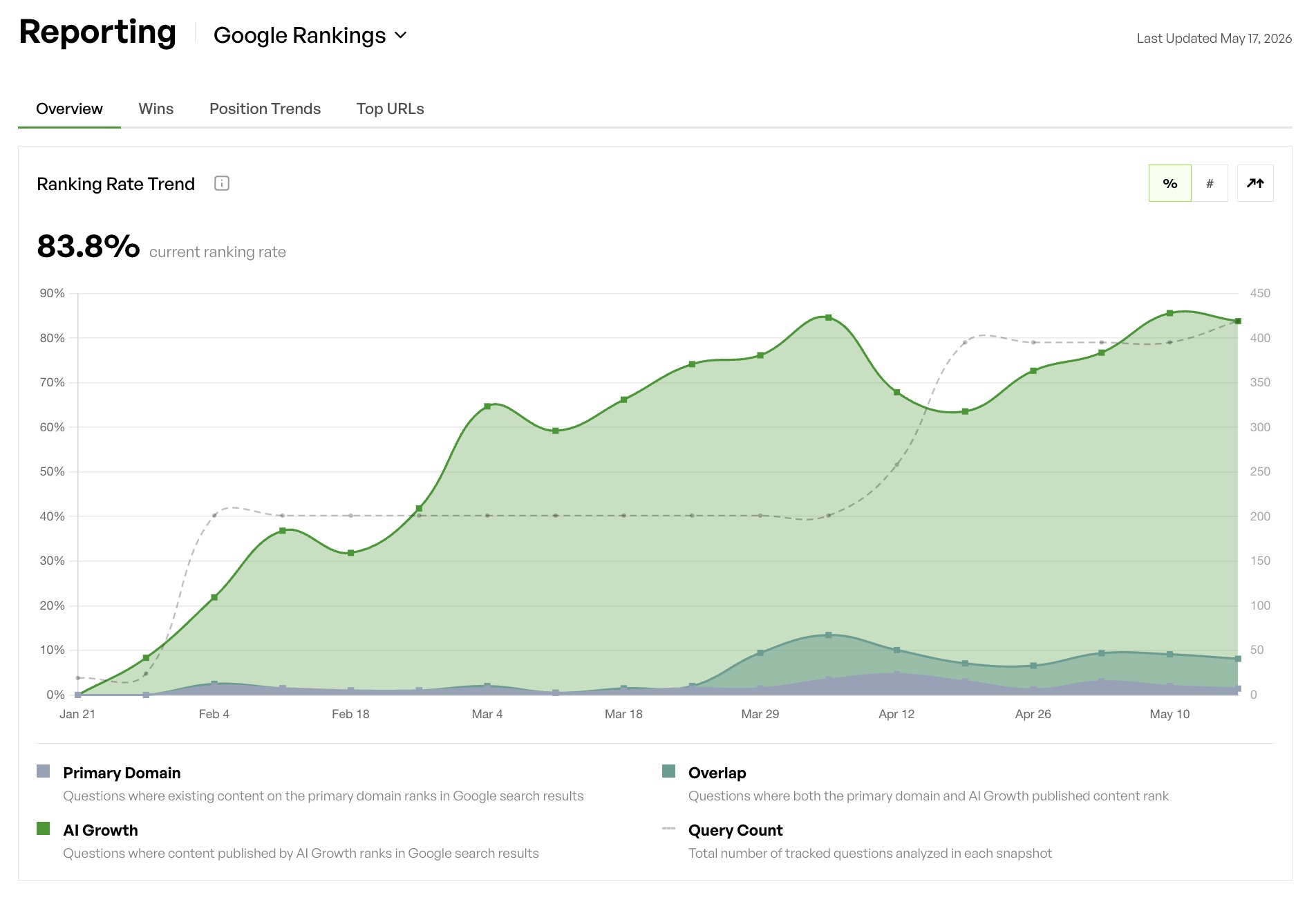
The headless marketing platform path runs differently. A professional journalist interviews the client to build the manifesto. The keyword topology and first articles match the one-week timeline described earlier. Content indexes in as little as ten days. The standard pilot runs three months, because indexing takes time and varies by industry, but clients see movement early. Across the first twelve weeks, AI Growth Agent clients average more than 12,000 additional AI citations and mentions, over 100,000 additional bot visits, and a 20%+ lift in impressions.
The risk of agency lock-in remains structural. Common implementation mistakes with headless CMS include over-engineering the content model from day one, which creates confusing editor studios and slower queries at scale, and choosing the technology platform before defining content strategy, which produces forced workarounds and missed opportunities. Both mistakes stem from the agency model, where the vendor’s preferred stack shapes the solution instead of the brand’s actual market.
Headless marketing eliminates both risks. The brand owns the site outright. The content strategy grows from the brand’s manifesto and real-time market data, not from a vendor template. The engine handles the technical work end to end. The client’s team gives feedback in plain language while the system learns and improves.
Conclusion: Why Headless Marketing Scales When Others Stall
Traditional search tools show where a brand stands, while headless marketing platforms change where a brand stands. Monitoring tools report a position. A headless marketing platform shifts that position by producing the content models use to describe the brand, in formats and structures models can read, with the validation that earns the citation.
The leaderboard in AI search is being written in 2026. Brands that establish authoritative, living content now are training the next generation of models with their own narrative. Brands that wait are training the next generation with whatever currently sits on the open web.
The architecture already exists, and the results already appear in the data. Breadless moved from a Google Search Console impression base of 387,000 to 12.3 million in six months, a roughly 30x lift, and ChatGPT now cites eatbreadless.com over 45,000 times per month. Leva Sleep closed $40,000 to $50,000 in deals in under three weeks from buyers who walked into the store carrying the blog. Jota saw a 190%+ traffic increase from generated content in three months.
One engine runs the work. No agency stack sits in the middle. No additional headcount is required, and the brand owns everything.
Frequently Asked Questions
What is a headless marketing platform and how does it differ from a headless CMS?
A headless CMS decouples content management from the frontend presentation layer and delivers content across websites, apps, and other channels via APIs. A headless marketing platform goes further. It functions as an autonomous engine that maps a brand’s entire universe of queries, produces authoritative and validated content, publishes it with full technical and agentic SEO, monitors bot interactions and citation context, and self-heals the content over time. A headless CMS requires a team to operate it. A headless marketing platform replaces that team. The brand keeps its curated main site and connects the platform through a reverse proxy rewrite, with no changes to existing infrastructure and no agency in the loop.
What does “marketing with no headcount” actually mean in practice?
Marketing with no headcount means the engine performs work that previously required an editor, an SEO specialist, a designer, an engineer, a content agency, a web agency, a PR firm, and a stack of monitoring tools. The client’s team does not manage any of that. They complete a kickoff interview, review the keyword topology and first articles, and give feedback in plain language. The engine learns from that feedback, saves it as a memory, and applies it to every future generation without fresh briefings. The client decides what to win, and the engine pursues those wins. No technical skill is required on the brand’s side, because the full technical and agentic SEO stack, including schema, Blog MCP, llms.txt, agent discovery, bot tracking, and self-healing, ships automatically in every package.
How does AI Growth Agent’s headless marketing platform handle citation context and AI ranking?
AI answers carry no static ordered list, so the traditional concept of a ranking number no longer applies. Citation context replaces that concept. The key signals are where the brand appears in an AI answer, who it is grouped with, and what claim it is cited for. AI Growth Agent tracks this through four data pillars. Search Intelligence maps the traditional search landscape. AI Analytics covers brand value and consumer behavior across the full journey. Bot Tracking records every crawl, citation, and training sweep across traditional crawlers and AI training agents, including the specific bot ChatGPT uses to cite sources. AI Ranking tracks order of mention and citation context week over week against the content plan. These four pillars guide the engine’s decisions about what to produce next, where to internal-link, and which articles to refresh, so authority compounds instead of decaying.
What are the biggest risks of implementing a headless marketing platform, and how does AI Growth Agent mitigate them?
The three primary risks are technical complexity at setup, SEO disruption during migration, and agency lock-in in a new form. AI Growth Agent addresses all three through its architecture. The reverse proxy setup connects the blog to the brand’s existing domain without touching the main site, so no migration occurs and organic visibility remains protected. The full technical SEO stack, including schema, sitemaps, robots.txt, instant indexing, autoredirects, and 404 tracking, ships automatically in every package, so no separate engineering engagement is required. The brand owns the site outright from day one, with no agency controlling the infrastructure. The only integration step on the client’s side is the reverse proxy rewrite that connects the blog to a subdirectory under their domain. The engine handles everything else.
How quickly can a brand expect to see results from a headless marketing platform?
The first article typically goes live within a week of kickoff. Content has indexed in as little as ten days and often within two weeks. The standard engagement is a three-month pilot, because indexing timelines vary by industry and competitive density, but clients see movement early. Across the first twelve weeks, AI Growth Agent clients average more than 12,000 additional AI citations and mentions, over 100,000 additional bot visits, and a 20%+ lift in impressions. Standout results include Jota’s 190%+ traffic increase from generated content in three months, Breadless reaching a roughly 30x lift in Google Search Console impressions over six months, and Leva Sleep closing $40,000 to $50,000 in deals in under three weeks from buyers who discovered the brand through AI Growth Agent content. Incremental visibility reporting isolates exactly what the engine generated, week over week, so the client always knows what is working and why.