Written by: Mariana Fonseca, Editorial Team, AI Growth Agent
Key Takeaways
- Geo specific content delivery uses IP-based geotargeting, CDN rules, and browser APIs to serve location-aware content across regions.
- Traditional geo delivery and AI-native narrative control operate on separate layers, so brands must manage both to stay visible in AI surfaces.
- Three primary methods, IP geotargeting, GPS via the Geolocation API, and CDN-level rules, each carry distinct accuracy, complexity, and compliance trade-offs.
- Compliance-driven geo-blocking needs layered controls such as VPN detection and audit logs, while marketing personalization can rely on simpler IP-based methods.
- AI Growth Agent unifies traditional geo strategies with AI-native narrative control; see a live walkthrough of how it manages both layers from a single engine.
How Geo Delivery and AI Surfaces Interact in 2026
Location-aware content delivery in 2026 runs on two distinct layers. The first is the traditional infrastructure layer that includes CDN edge nodes, IP databases, browser APIs, and cache rules that route users to the right regional experience. The second is the AI surface layer that includes ChatGPT, Perplexity, Google AI Mode, and agentic systems that read, cite, and act on web content without a human ever clicking through to the source.
Both layers affect revenue and risk. A brand can serve perfectly localized content to a user in São Paulo while remaining invisible to every AI surface that user consults before making a purchase decision. A different brand can dominate AI citations globally while delivering a generic, non-localized web experience that loses the conversion at the last step. Technical marketers and developers in 2026 must manage both layers at the same time, and most current tool stacks still focus on only one.
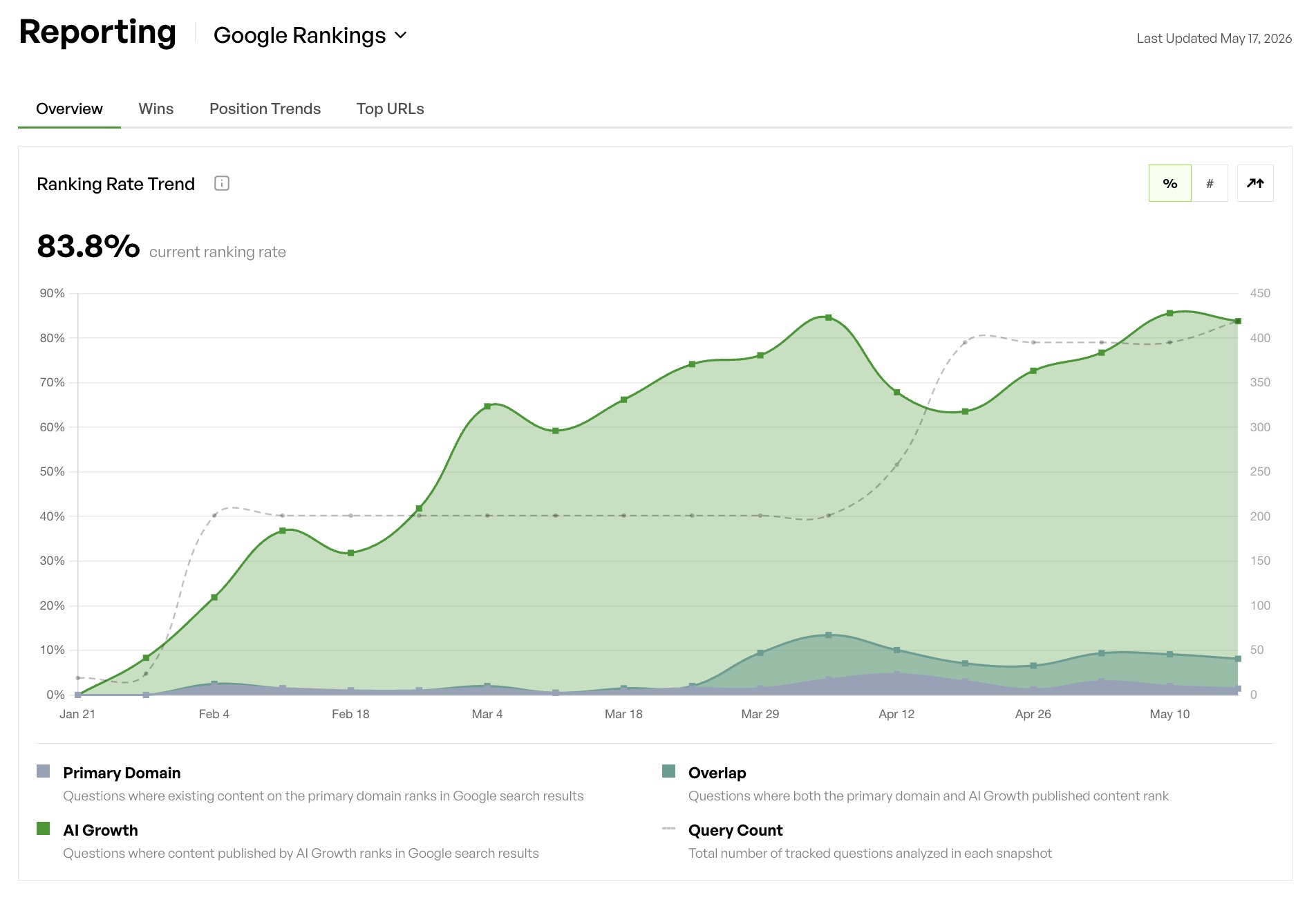
This guide explains the full implementation picture. It covers the technical methods for geo specific content delivery, the compliance landscape, the CDN and agentic infrastructure available today, and the clear line between traditional geo delivery and AI-native narrative control.
Review your current stack in a short session and see how AI Growth Agent manages both layers from a single engine.
Core Geo Signals and Infrastructure
IP-based geotargeting is the most widely deployed method for inferring a user’s location. Every device connecting to the internet carries an IP address that can be cross-referenced against regional allocation databases to return a country, region, or city estimate. Accuracy drops at the city level and below, and VPNs, proxies, and shared corporate NAT can all produce false readings.
The browser Geolocation API provides access to a device’s location only after the user grants explicit permission via a browser prompt. This makes it the most direct method for delivering truly location-specific content in web applications. When permission is granted, the API returns latitude and longitude coordinates obtained from the best available device functionality including GPS. This enables far higher precision than IP-based geotargeting for on-device web experiences. The API is accessed via navigator.geolocation using getCurrentPosition() for a single retrieval or watchPosition() for continuous updates.
The HTTP Accept-Language header indicates the client’s preferred natural language and locale, which allows servers to select appropriate language or regional content variants. Accept-Language is not a location or geolocation signal. It reflects language preference set by the browser’s UI language or user settings rather than the user’s physical presence or IP-derived location. It works best as a supplementary signal alongside IP-based or GPS methods.
CDN cache rules allow operators to vary cached responses by geography at the edge. Cloudflare Cache Rules enable customization of what content is eligible to cache, how long it is cached, where it is cached, and specific interactions with Cloudflare’s cache and other Rules products for matching requests. AWS CloudFront provides similar functionality through geographic restriction policies and Lambda@Edge functions.
See how these geo signals plug into AI Growth Agent and how the platform layers agentic discovery on top of these foundational methods.
Geo Personalization, CDNs, and the AI Surface Boom
Personalization at the content level has shifted from differentiator to baseline expectation. Many consumers prefer personalized content experiences, which can deliver higher conversion rates than non-personalized ones. Adoption of dynamic content personalization among content teams still lags behind user expectations, so many brands leave measurable conversion lift on the table.
CDN infrastructure has matured considerably. Edge computing capabilities now allow geo-specific logic to execute at the network edge rather than at the origin server, which reduces latency for location-aware responses. The major providers, Cloudflare, AWS CloudFront, Fastly, and Akamai, all expose geographic routing as a first-class feature rather than an add-on.
The AI surface layer has grown at a pace that outstrips most infrastructure planning cycles. Google’s AI Mode crossed 1 billion monthly users within its first year, with queries more than doubling every quarter since launch. These surfaces consume content the same way. They read, cite, and act on whatever the model can find and trust. Geo specific content delivery and AI-native content strategy now function as parallel workstreams for any brand operating at scale.
Review your current geo and AI coverage and learn how AI Growth Agent tracks bot visits, citations, and impressions across both traditional and AI surfaces.
Implementation Paths for Geo Specific Delivery
Three primary implementation paths exist for geo specific content delivery in 2026, and each carries distinct accuracy profiles, setup requirements, and ideal use cases.
IP-based geotargeting is the default for most web applications. The server or CDN reads the incoming IP address, queries a geolocation database such as MaxMind GeoIP2 or the provider’s native database, and routes or modifies the response accordingly. No user interaction is required, which makes it the lowest-friction option. Accuracy at the country level is high, while accuracy at the city level degrades, particularly for mobile users on carrier NAT or users behind VPNs.
GPS via the browser Geolocation API delivers the highest precision available on the web. A basic implementation looks like this:
if ("geolocation" in navigator) { navigator.geolocation.getCurrentPosition( (position) => { const lat = position.coords.latitude; const lon = position.coords.longitude; fetchGeoContent(lat, lon); }, (error) => { // Handle GeolocationPositionError codes: // 1 = PERMISSION_DENIED, 2 = POSITION_UNAVAILABLE, 3 = TIMEOUT fallbackToIPGeotargeting(); } ); } else { fallbackToIPGeotargeting(); }The GeolocationPositionError interface defines three error codes: PERMISSION_DENIED (code 1), POSITION_UNAVAILABLE (code 2), and TIMEOUT (code 3). The API requires HTTPS and has broad support across Chrome 79+, Firefox 72+, and Safari 13.1+. In China the vanilla Geolocation API may be unavailable because Wi-Fi-based locating is typically provided by Google. Developers targeting Chinese users should integrate local providers such as Baidu, Autonavi, or Tencent.
CDN-level geo rules handle routing before the request reaches the origin. On Cloudflare, Cache Rules can be configured via the dashboard, API, or Terraform. Cloudflare Cache Rules are available across different plans. On AWS CloudFront, geographic restrictions can be set at the distribution level, and Lambda@Edge functions allow more granular logic at the edge.
The following table compares no-code tools against custom CDN setups across four dimensions.
| Approach | Accuracy | Setup Complexity | Best For |
|---|---|---|---|
| No-code geotargeting tools (e.g., Geo Targetly) | Country-level high, city-level moderate, dependent on third-party IP database refresh cycles | Low: dashboard-driven, no code required | Marketing teams without engineering resources, WordPress sites, rapid deployment of regional landing pages |
| CDN geo rules (Cloudflare Cache Rules, CloudFront geo restriction) | Country-level high, rule limits vary by plan, VPN bypass remains a limitation | Medium: requires CDN configuration knowledge, Terraform or API for scale | Performance-critical applications, compliance-driven content blocking, teams with DevOps capability |
| Server-side IP geolocation (MaxMind GeoIP2, custom origin logic) | Country-level very high, city-level moderate, requires regular database updates | Medium-high: requires backend integration and database licensing | Applications requiring custom business logic per region, e-commerce with regional pricing |
| Browser Geolocation API (GPS) | Highest precision available, dependent on device sensors and environment, unavailable or inaccurate indoors or with weak GPS signals | Low-medium: JavaScript implementation, requires HTTPS and permission handling | Mobile-first experiences, store locators, hyper-local content delivery where user consent is acceptable |
Map these approaches to your stack in a working session and align delivery methods with your infrastructure and compliance requirements.
Distinguishing Geo Delivery from Generative Engine Optimization
The term “geo” appears in two entirely separate disciplines in 2026, and conflating them produces strategy errors that are expensive to correct.
Geo specific content delivery, the subject of this guide, is an infrastructure and routing discipline. It answers the question of which version of this content a user should receive based on physical location. The tools are CDNs, IP databases, browser APIs, and cache rules. The outcome is a localized web experience.
Generative Engine Optimization (GEO), also referred to as large language model optimization (LLMO), is a content and information architecture discipline. It answers the question of how a brand ensures that AI surfaces find, trust, and cite its content when a user asks a relevant question. GEO optimizes for brand presence inside AI answers, while LLMO focuses on content readability and trust signals for language models. The tools are structured content, entity architecture, schema markup, validated primary sources, and agentic discovery endpoints such as Blog MCP, llms.txt, and /.well-known/ agent discovery files.

SEO, GEO, and LLMO function as separate but related layers: SEO drives organic traffic, GEO influences the decision stage inside AI answers, and LLMO improves citation quality and frequency. At Google Search Central Live in Toronto in April 2026, Danny Sullivan stated “good SEO is good GEO,” signaling that information architecture, technical hygiene, and unique value remain the core levers for citation share in 2026.
A brand implementing geo specific content delivery for regional compliance or localized conversion optimization is solving a routing problem. A brand implementing LLMO is solving a narrative control problem. Both are necessary, and neither substitutes for the other. Fragmentation occurs when teams assume that ranking well in traditional search, or routing users correctly by geography, automatically produces AI citation. It does not. Generative systems assemble answers from multiple signals, which elevates the importance of entity architecture, structured data, and trust signals over single-keyword targeting.
AI Growth Agent addresses the LLMO layer directly. It produces authoritative, structured, self-healing content that AI surfaces can find and cite, ships agentic technical SEO including Blog MCP, llms.txt, llms-full.txt, and agent discovery via /.well-known/, and reports the incremental citations and bot visits that result. This work is distinct from, and complementary to, the CDN and IP-routing work that geo specific content delivery requires.
Explore how AI Growth Agent fills the LLMO gap that your current stack is not built for.
Key Factors When Selecting a Geo Delivery Method
Accuracy requirements. Country-level routing for compliance purposes, such as blocking access to regulated content in specific jurisdictions, has different accuracy needs than city-level personalization for retail promotions. IP-based methods are sufficient for the former. GPS via the Geolocation API is required for the latter, with the trade-off of mandatory user consent.
Compliance obligations. As of 2026, IP address checks alone are not considered sufficient for legal online gambling operations in the Czech Republic; operators must implement layered technical and procedural controls, including VPN/proxy detection, anomaly detection for rapid location changes, and audit logs of denied access attempts. Regulated industries in other markets carry analogous requirements. The principle generalizes: compliance-driven geo-blocking requires defense in depth, not a single signal.
Performance impact. Every additional geolocation lookup adds latency. CDN-edge resolution is fastest because it executes before the request reaches the origin. Server-side IP lookups add a database query to the request path. Browser Geolocation API calls are asynchronous and require a fallback path for the period before the user responds to the permission prompt.
Integration with existing stack. WordPress implementations typically use plugins such as Geo Targetly or WP Engine’s GeoTarget feature for no-code regional content switching. Custom CDN setups require DevOps capability and ongoing rule maintenance. The choice between no-code and custom CDN depends on team composition and the complexity of the routing logic required.
Work through these trade-offs with an implementation specialist and match each use case to the right delivery method.
Step-by-Step Geo Delivery Implementation
Stage 1: Define routing logic. Start by mapping which content variants exist for which regions. Document the rules that specify which countries see which content, which regions trigger which compliance restrictions, and what the fallback experience is for unresolved locations.
Stage 2: CloudFront geo restriction setup. In the AWS CloudFront console, navigate to the distribution, select the Geographic Restrictions tab, and choose either an allowlist that serves only listed countries or a blocklist that blocks listed countries. For more granular logic, deploy a Lambda@Edge function on the Viewer Request event that reads the CloudFront-Viewer-Country header injected by CloudFront and routes accordingly. A minimal Lambda@Edge handler looks like this:
exports.handler = async (event) => { const request = event.Records[0].cf.request; const country = request.headers['cloudfront-viewer-country']?.[0]?.value; if (country === 'DE') { request.uri = '/de' + request.uri; } return request; };Stage 3: Cloudflare Cache Rules for geo-varied caching. In the Cloudflare dashboard, create a Cache Rule that matches requests by country using the ip.geoip.country field and sets a custom cache key that includes the country code. This ensures users in different regions receive the correct cached variant rather than a shared cached response. Cloudflare Cache Rules can be created and managed via the dashboard, API, or Terraform, and Cloudflare Trace can be used to determine if a rule is triggering for a specific URL.
Stage 4: WordPress integration. For teams without CDN-level access, plugins such as Geo Targetly integrate at the WordPress layer, reading IP-derived location data and switching page content, widgets, or redirects based on configured rules. The plugin approach requires no server configuration but operates after the request reaches the origin, which adds latency compared to CDN-edge solutions.
Stage 5: Geolocation API fallback chain. For experiences requiring GPS precision, implement a fallback chain. Attempt GPS via navigator.geolocation.getCurrentPosition(), fall back to IP-based lookup on PERMISSION_DENIED or POSITION_UNAVAILABLE, and serve a default regional experience on TIMEOUT.
See how this implementation pattern fits into your CDN and CMS and how AI Growth Agent’s technical SEO stack integrates with existing infrastructure.
Ongoing Geo Delivery and AI Bot Management
Geo specific content delivery requires continuous maintenance rather than a one-time configuration. IP geolocation databases need regular updates as regional allocations change. CDN rules accumulate technical debt as product lines and compliance requirements evolve. Browser API behavior shifts across browser versions and operating system updates.
Measurement for traditional geo delivery focuses on regional conversion rates, compliance audit logs, and CDN analytics that show cache hit rates by geography. For compliance-driven implementations, audit logs of denied access attempts are a regulatory requirement in markets such as the Czech Republic, not merely a best practice.
The 2026 addition to ongoing management is agentic discovery. AI surfaces now send specialized crawlers that differ from traditional search bots in their behavior and the signals they respond to. Bot tracking that distinguishes between traditional crawlers and AI training agents, including the specific bot ChatGPT uses to cite sources, has become a required measurement capability for any brand that cares about AI citation. AI Growth Agent’s WordPress plugin ships real-time bot tracking out of the box, alongside Blog MCP, Web MCP, advanced robots.txt, and a proper sitemap.xml.
The emerging Web MCP standard and agentic headers such as /.well-known/agent-card and /.well-known/openai allow AI agents to discover a site’s capabilities and content structure directly, without relying solely on traditional crawl paths. AI Growth Agent was the first to bring Blog MCP to market, with clients running it in the summer of 2025, roughly a year before Google released Web MCP. These endpoints now form part of the agentic technical SEO stack that any brand serious about AI citation needs to maintain.
Request a walkthrough of AI Growth Agent’s bot analytics and see how the agentic discovery stack reports incremental visibility week over week.
Risks, Limitations, and Compliance Traps
VPN and proxy bypass. IP-based geotargeting is circumvented by any user operating behind a VPN or proxy. For marketing personalization, this is an acceptable accuracy trade-off. For compliance-driven geo-blocking in regulated industries, it is not. The Czech regulator evaluates geo-blocking compliance according to whether operators have taken “reasonable measures,” focusing on the overall effectiveness of combined technical and procedural controls rather than any single method. VPN detection, anomaly detection for rapid location changes, and layered identity verification are required in regulated contexts.
Regulatory exposure. Breaches of territorial licensing rules can result in significant administrative penalties. Compliance requirements vary significantly by market and sector. Legal review of geo-blocking implementation is mandatory in regulated industries.
Third-party liability. Gambling operators remain legally responsible for geo-blocking compliance even when technical implementation is outsourced; contracts with third-party providers and game suppliers must include robust SLAs and liability provisions covering APIs and mobile applications. This principle applies broadly. Outsourcing implementation does not transfer compliance responsibility.
Stale configurations. CDN rules written for a product line that no longer exists, or IP database entries that have not been refreshed in months, silently produce incorrect routing. Geo specific content delivery needs a maintenance schedule, not just an initial deployment.
Geolocation API limitations. Key limitations of the Geolocation API include mandatory user consent, requirement for a secure HTTPS context, variable accuracy depending on device sensors and environment, and unavailability or inaccuracy indoors or with weak GPS signals. Applications that depend on GPS precision without a robust fallback chain will fail silently for a significant portion of users.
EU Geo-blocking Regulation scope. The EU Geo-blocking Regulation (Regulation 2018/302) prohibits unjustified geo-blocking of customers within the EU internal market for most commercial services. Brands operating in the EU must distinguish between legally required geo-blocking, which supports compliance with national laws, and unjustified geo-blocking, which the regulation prohibits.
Discuss your specific regulatory exposure with the team and see how AI Growth Agent’s content stack handles compliance language and legal disclaimers at the article level.
Summary and Next Steps
Geo specific content delivery in 2026 requires a mix of methods that match the accuracy, compliance, and performance requirements of each use case. IP-based geotargeting covers most marketing personalization needs at low setup cost. The browser Geolocation API delivers GPS precision where user consent is acceptable and the use case demands it. CDN-level geo rules handle compliance-driven blocking and performance-critical routing at the edge. No-code tools serve teams without engineering resources, while custom CDN setups serve teams with DevOps capability and complex routing logic.
The decision matrix is straightforward. Compliance-driven blocking requires layered controls and cannot rely on IP alone. Marketing personalization at the country level is well served by IP-based CDN rules. Hyper-local experiences require GPS with a robust fallback chain. WordPress sites without CDN access use plugin-based solutions with the understanding that origin-side resolution adds latency.
The separate and equally important decision concerns brand narrative across AI surfaces. Traditional SEO targets search visibility and clicks from SERPs, whereas generative search requires content to be structured as a knowledge system featuring cleaner entity definitions, stronger topic relationships, and predictable structure across the site. That discipline differs from geo specific content delivery and requires a different stack.
AI Growth Agent replaces the fragmented stack of SEO agency, content tool, GEO monitor, schema plugin, analytics stack, and web agency with one headless engine. It maps the brand’s full universe of queries, produces authoritative self-healing content, ships the complete agentic technical SEO stack including Blog MCP, llms.txt, llms-full.txt, and agent discovery endpoints, and reports the incremental citations and bot visits it generates week over week. Clients average more than 12,000 additional AI citations and mentions and over 100,000 additional bot visits in the first twelve weeks.
Plan your geo delivery and AI surface roadmap in one session with the AI Growth Agent team.
Frequently Asked Questions
What is the difference between geo specific content delivery and Generative Engine Optimization?
Geo specific content delivery is an infrastructure discipline concerned with routing the correct content variant to a user based on physical location. It uses IP databases, CDN rules, and browser APIs to determine where a user is and serve the appropriate regional experience. Generative Engine Optimization, also called large language model optimization, is a content and information architecture discipline concerned with ensuring that AI surfaces such as ChatGPT, Perplexity, and Google AI Mode find, trust, and cite a brand’s content when a user asks a relevant question. The two disciplines use different tools, address different problems, and operate at different layers of the web stack. A brand can implement both simultaneously, and in 2026 most enterprise brands need to.
How accurate is IP-based geotargeting, and when should I use GPS instead?
IP-based geotargeting is highly accurate at the country level and moderately accurate at the region or state level. City-level accuracy degrades significantly, particularly for mobile users on carrier NAT, users behind corporate firewalls, and anyone using a VPN or proxy. For use cases where country-level routing is sufficient, such as compliance-driven content blocking or regional language switching, IP-based methods are the right choice because they require no user interaction. GPS via the browser Geolocation API is the correct choice when the use case requires street-level or neighborhood-level precision, such as store locators or hyper-local promotions, and when the user experience can accommodate a permission prompt. GPS requires HTTPS, explicit user consent, and a fallback path for users who deny permission or whose devices cannot acquire a position fix.
How do I implement geo-blocking on WordPress without a custom CDN setup?
WordPress sites without direct CDN access can implement geo specific content delivery using plugins such as Geo Targetly, which integrate at the WordPress application layer and read IP-derived location data to switch page content, redirect users, or display region-specific widgets based on configured rules. This approach requires no server or CDN configuration and is accessible to non-technical teams. The trade-off is that origin-side resolution adds latency compared to CDN-edge solutions, because the request must reach the WordPress server before the location check occurs. For sites already on Cloudflare or a CDN with geo-routing capabilities, configuring rules at the CDN layer is preferable for performance. For compliance-driven blocking in regulated industries, plugin-based solutions alone are insufficient. Layered controls including VPN detection and audit logging are required.
What compliance requirements apply to geo-blocking in 2026?
Compliance requirements for geo-blocking vary significantly by market and sector. Within the EU, the EU Geo-blocking Regulation prohibits unjustified geo-blocking of customers across the internal market for most commercial services, while expressly permitting geo-blocking required to comply with national laws, such as gambling regulations. In regulated industries, IP address checks alone are not considered sufficient. Operators must implement layered controls including VPN and proxy detection, anomaly detection, identity verification, and audit logs of denied access attempts. Compliance responsibility remains with the operator even when technical implementation is outsourced, which means contracts with third-party providers must include appropriate SLAs and liability provisions. Legal review of geo-blocking implementation is required in any regulated sector, and requirements should be verified against the current regulatory framework in each target market.
How does AI Growth Agent complement a geo specific content delivery strategy?
AI Growth Agent operates at the AI surface layer, which is distinct from but complementary to the CDN and routing layer that geo specific content delivery addresses. A brand can serve perfectly localized content to regional users while remaining invisible to the AI surfaces those users consult before making a purchase decision. AI Growth Agent maps the brand’s full universe of queries, produces authoritative self-healing content structured for AI citation, and ships the complete agentic technical SEO stack including Blog MCP, llms.txt, llms-full.txt, agent discovery via /.well-known/, and real-time bot tracking. It reports incremental AI citations, bot visits, and impressions week over week, which isolates the visibility it generates from visibility the brand already had. The result is that the brand’s geo-localized web experience and its AI citation presence are both managed deliberately, rather than leaving the AI layer to chance while focusing only on the routing layer.