Written by: Mariana Fonseca, Editorial Team, AI Growth Agent
Key Takeaways
- AI search engines now drive over half of B2B software research, with 51% of buyers starting in chatbots and 94% using generative AI in their purchase process.
- AI-referred traffic converts at 3.49% to 15.9%, delivering a 22% to 5x lift over traditional organic search because buyers arrive pre-qualified.
- Only 4% of B2B companies are visible in early AI discovery, creating a large opportunity for brands that earn citations across ChatGPT, Perplexity, and Google AI Overviews.
- Sustained visibility depends on living, self-healing content that updates automatically and a headless marketing architecture with agentic SEO signals such as llms.txt and Blog MCP.
- AI Growth Agent delivers this complete system so your brand becomes the answer. Book a demo to see your first article live within a week.
The 2026 Discovery Shift in B2B Research
A 2026 G2 survey found that 51% of B2B software buyers now begin vendor research in an AI chatbot rather than Google, up from 29% the previous year. Forrester’s 2026 Buyers’ Journey Survey of nearly 18,000 global business buyers found that 94% used generative AI in their purchase process, with twice as many naming it their most meaningful research source compared to any other channel, including vendor websites and sales representatives.
The mechanism is compression. As G2 Chief Innovation Officer Tim Sanders describes it, “The Yellow Pages compressed the market into the big book. Google compressed it into the first page of results. Now, AI chatbots are compressing it into a single answer.” That single answer is where the shortlist forms, before any vendor website is visited. The 2X AI Index confirms the scale of the opportunity: the vast majority of B2B companies remain invisible in early-stage AI discovery.
Traditional search tools show you where your brand stands. AI Growth Agent makes your brand the answer. See how to become visible in that single answer and book a demo to map your citation strategy.
Top AI Search Engines for High-Intent B2B Leads
Position Digital reported ChatGPT referral traffic converting at 15.9%, Perplexity at 10.5%, Claude at 5.0%, and Gemini at 3.0%. Seer Interactive data cited for the first two engines covers an earlier period (Oct 2024–Apr 2025). Digital Applied’s 2026 conversion benchmarks show AI search referral traffic converting at 3.49% overall versus 2.86% from traditional organic search, a 22% lift, because users arrive pre-qualified after AI platforms narrow options before the click.
| AI Engine | Avg. Conversion Rate (Referral) | Citation Volume per Response | Primary B2B Strength |
|---|---|---|---|
| ChatGPT | 15.9% (vs. 1.76% Google organic) per Seer Interactive’s multi-vertical case study | Multiple sources per response | Largest user base; 87.4% of AI chatbot referral traffic |
| Perplexity | 10.5% | 21.87 citations per prompt | Technical and enterprise buyer intent; heavily linked answers |
| Google AI Overviews | Higher than traditional organic in various benchmarks | Moderate; 54% overlap with organic rankings | Highest reach; 1.5B+ monthly users |
| Gemini | 3.0% | Moderate; query fan-out across subtopics | Deep Google ecosystem integration; session context retention |
How AI Search Pre-Qualifies B2B Buyers
The pre-qualification effect is structural, not incidental. The Opollo 2026 AI Search Benchmark Report analyzed GA4 referral data and CRM attribution from 312 B2B technology firms and found AI-referred visitors converted at 14.2% versus 2.8% for Google organic, a roughly 5x advantage. The buyer has already synthesized options inside the AI interface before clicking. The click itself is a shortlist decision.
Four intelligence layers determine whether a brand earns that click, and each one captures a different dimension of AI visibility. Search Intelligence maps the full traditional search landscape, covering positioning, competition, and search volume. This layer sets the baseline context for where a brand starts.
AI Analytics then tracks brand value and consumer behavior across the entire journey, from external AI-tool queries through content consumption and sentiment. These signals reveal how buyers perceive the brand once they arrive. Bot Tracking captures every crawler and AI training agent interaction, including every crawl, citation, and training sweep, which shows which content AI systems are indexing.
AI Ranking monitors order of mention and citation context, which replace the old idea of a ranking number in AI surfaces that carry no static ordered list. G2 found that 69% of B2B buyers chose a different software vendor than originally planned based on AI chatbot guidance, and 33% purchased from a vendor they had never heard of before. Citation context now replaces ranking position as the decisive signal. Where the brand appears in the answer, and what claim it is cited for, determines whether it makes the shortlist at all.
Generating Leads from AI Search Engines
Sustained AI citations require an evidence-based long-tail strategy. B2B buyer queries submitted to AI search engines are often longer and more detailed than traditional Google searches. Content must be structured around complete buyer scenarios rather than short keywords. Studies indicate that recently updated articles tend to receive more AI citations than outdated content.
Living, self-healing content is the operational requirement behind that freshness signal. Content that is published and forgotten decays in place. Content updated within the last 30 days receives 3.2x more AI citations. AI Growth Agent’s content self-heals over time, refreshing articles automatically in response to Google Search Console signals and bot-traffic data so authority compounds rather than decays. Earning those citations consistently requires a shift in content strategy, not just more articles.
Generative Engine Optimization for B2B Brands
Winning citations at scale without adding headcount requires a headless marketing architecture. The brand keeps its curated main site. A separate, fully optimized blog stands up under a subdirectory or subdomain, connected through a reverse proxy rewrite, and the engine handles every layer of technical and agentic SEO automatically.
The agentic layer separates this architecture from legacy SEO. Every site AI Growth Agent publishes ships with Blog MCP for direct AI interoperability, OpenAI discovery and Agent Card guidance served via /.well-known/, natural language query parameters at /?s={query} that auto-trigger personalized responses for agent crawlers, Markdown served to agent crawlers, and llms.txt and llms-full.txt published so AI surfaces can read the brand the way they need to. Fewer than 1% of B2B SaaS websites block AI crawlers entirely in robots.txt, though nearly half sit behind Cloudflare whose defaults may add restrictions, which means the brands that open the right doors now are training the next generation of models with their own narrative.
Measuring AI Search Leads and Pipeline Impact
Standard attribution models undercount AI search influence significantly. Analyses of B2B SaaS sites show that default GA4 first-touch reports often fail to correctly attribute many ChatGPT sessions because referrer data is lost. Many AI citations influence buyers without resulting in any site visit, meaning much of the citation influence is invisible to session-based analytics.
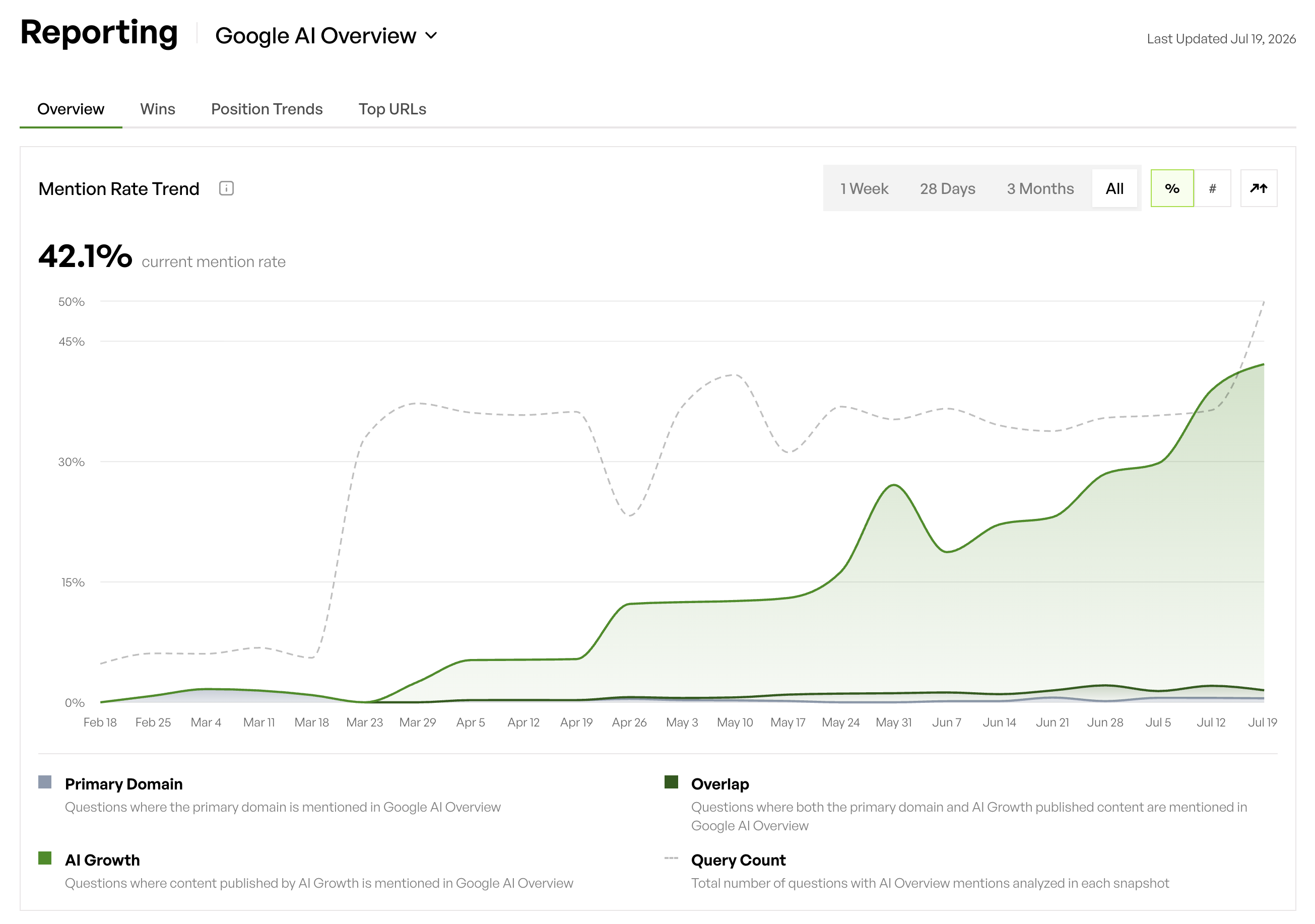
The incremental visibility framework uses three confirming layers. The first layer is citation monitoring across ChatGPT, Perplexity, and Google AI Overviews. The second layer is branded-search lift measured in Google Search Console within 7 to 14 days of citation events. The third layer is self-reported attribution captured at high-intent form submissions. AI Growth Agent publishes into a separate environment so it reports only the visibility it actually generates, never riding existing brand visibility.
| Channel | Pre-qualification | Pipeline Attribution | Headcount Required |
|---|---|---|---|
| Outbound prospecting tools | None, brand introduces itself cold | Last-touch CRM, misses dark-funnel influence | SDR team plus tooling |
| Legacy SEO / content agency | Low, buyer still in research mode | GA4 organic, misses AI-influenced branded search | Editor, SEO specialist, designer, engineer |
| AI citation-to-lead (headless) | High, AI shortlists brand before click | Three-layer: citations, branded lift, self-reported | Zero, engine handles publishing and reporting |
ChatGPT and Perplexity in B2B Shortlist Decisions
The same G2 research shows that 45% of buyers consider citations from software review sites the most confidence-inspiring signal in an AI-generated response. Forrester’s 2026 Buyers’ Journey Survey shows B2B buyers use AI tools to compare vendors against each other (55%), research product information (54%), and build internal business cases before engaging any vendor (47%).
ChatGPT and Perplexity serve different buyer moments. ChatGPT sends the most AI referral traffic for most B2B sites due to its largest user base, while Perplexity punches above its weight because its answers are heavily linked. Conductor’s November 2025 AEO/GEO Benchmarks Report found ChatGPT accounting for 87.4% of AI referral traffic while Perplexity’s smaller share skews toward researchers, developers, and technical enterprise buyers, making citations there especially valuable for B2B SaaS and professional services. Only 11% of domains are cited by both ChatGPT and Perplexity, so a brand must earn citations on each platform independently rather than assuming cross-platform spillover.
Google AI Overviews and B2B Lead Quality
Google AI Overviews referral traffic follows the same pattern, converting higher than traditional organic search. The reach behind that conversion rate is substantial. Google AI Overviews reached 1.5 billion monthly users across 200 countries as of Google I/O 2025.
Capturing Google AI Overviews citations requires a different approach than traditional organic ranking. Moz’s 2026 analysis of 40,000 Google queries found that 88% of AI Mode citations do not overlap with the organic top 10, indicating that traditional search rankings provide almost no predictive signal for AI citation success. When a brand is cited in an AI Overview, organic CTR is 35% higher than for non-cited brands on the same query. The citation is the ranking signal that matters.
Implementation: The Headless Marketing System in Practice
The complete stack that earns sustained AI citations across ChatGPT, Perplexity, and Google AI Overviews combines seven components that no agency or monitoring tool delivers together. AI Growth Agent is the only engine that runs all of them as a single system.
- Brand manifesto: A journalist-led interview that becomes the single source of truth for every article, encoding brand voice, factual references, and deny lists so output is compliant by default.
- Content topology: A hierarchy of seed terms backed by real-time Google and ChatGPT data, with hundreds of long-tail queries beneath each seed, built from the lens of the ideal customer rather than a generic keyword dump.
- Living, self-healing content: Articles that update automatically in response to Google Search Console signals and bot-traffic data, so authority compounds instead of decaying.
- Blog MCP and agentic technical SEO: Blog MCP,
llms.txtandllms-full.txt, OpenAI discovery via/.well-known/, natural language query parameters, and Markdown served to agent crawlers, all provisioned automatically. - Full schema suite: Article, FAQ, author, product, software application, and organization schema, kept current without any action from the client. Pages with FAQPage schema are 3.2x more likely to appear in AI Overviews than equivalent pages without it.
- Bot tracking: Per-article tracking of every bot interaction, including the bot ChatGPT uses to cite sources, cross-referenced with Google Search Console for incremental visibility reporting.
- Incremental visibility reporting: Week-over-week reporting that isolates exactly what AI Growth Agent generated, separate from visibility the brand already had, so the CMO has a defensible answer for the CEO every week.
Clients average more than 12,000 additional AI citations and mentions, over 100,000 additional bot visits, and a 20%+ lift in impressions across the first twelve weeks. Breadless now generates over 45,000 ChatGPT citations per month and grew Google Search Console impressions roughly 30x in six months. Leva Sleep closed $40,000 to $50,000 in deals in under three weeks from buyers who walked into the store carrying the blog content.
The complete system delivers what monitoring tools cannot. It provides not just visibility into where you rank, but control over what the answer is. Start your pilot, with your first article live in seven days.
Frequently Asked Questions
What makes B2B leads from AI search engines different from traditional organic leads?
AI search leads arrive after the platform has already synthesized vendor options, compared competitors, and named a shortlist. The buyer has resolved most of their research questions before clicking through to a brand’s site. This pre-qualification effect produces materially higher conversion rates than traditional organic traffic, where the buyer is still in early research mode. The practical implication for B2B marketing teams is that the content strategy must earn citations inside AI answers, not just rankings on a results page, because the shortlist decision is made before the click occurs.
How does AI Growth Agent’s headless marketing system differ from a GEO monitoring tool?
Monitoring tools track whether a brand appears for a capped set of prompts and report the gap. They do not produce content, own publishing, or act on the data. AI Growth Agent is not a monitoring company. It maps the brand’s full universe of seed terms and long-tail queries, produces authoritative living content against each one, stands up a fully optimized site the client owns, and proves the incremental visibility it generates week over week. The difference is between a rearview mirror and a steering wheel. Monitoring tells you where you are not showing up. AI Growth Agent changes what the answer is.
How long does it take to see results from AI search citations?
The first article is typically live within a week of kickoff. Content has indexed in as little as ten days and often within two weeks. The standard engagement is a three-month pilot because indexing timelines vary by industry and competitive density, but clients see movement early. Across the first twelve weeks, AI Growth Agent clients average more than 12,000 additional AI citations and mentions and over 100,000 additional bot visits. Brands in competitive categories like healthy fast-casual franchising and adjustable beds have reached dominant citation positions within 90 days.
How do you measure whether AI citations are actually driving pipeline?
The measurement framework uses three confirming layers together rather than relying on any single signal. The first layer is citation monitoring across ChatGPT, Perplexity, and Google AI Overviews, tracking citation share and order of mention week over week. The second layer is branded-search lift in Google Search Console, which typically correlates with citation volume improvements within 7 to 14 days. The third layer is self-reported attribution captured at high-intent form submissions, using a required field that explicitly names AI assistants as a discovery source option. Because AI clients strip referrer data and most AI influence occurs in zero-click sessions, no single attribution model captures the full picture. The three-layer approach provides directional evidence within 30 days and statistically useful data within 90 days.
Does AI Growth Agent work for companies that already have an SEO agency or content team?
AI Growth Agent does not require an existing agency to operate and does not interfere with a brand’s curated main site. It stands up a separate, fully optimized blog connected through a reverse proxy rewrite or subdomain, which the client owns outright. It replaces the keyword research, content production, technical SEO, schema, bot tracking, and reporting that an agency stack would otherwise handle, at a flat fee with no per-article charges or per-prompt billing. Internal teams give feedback in plain language and the engine learns, so no technical skill is required on the client side. Companies with existing agencies typically run AI Growth Agent in parallel and find it produces indexed, cited content faster than many agency engagements.