Written by: Mariana Fonseca, Editorial Team, AI Growth Agent
Schema markup gives AI systems a clear, machine-readable way to understand and cite your brand. The six steps below walk from audit through agent discovery in one connected implementation.
- Audit existing schema and identify gaps
- Implement Organization and Person schema with entity relationships
- Add Article and Author schema with exact visible-text matching
- Deploy FAQPage schema aligned to conversational queries
- Publish llms.txt, llms-full.txt, and agent discovery signals
- Validate, monitor, and self-heal schema over time
Key Takeaways for AI-Focused Schema
- Schema markup acts as the machine-readable layer that lets AI surfaces like Google AI Mode, ChatGPT, and Perplexity trust, parse, and cite your brand.
- A six-step sequence, from schema audit through llms.txt and agent discovery, keeps entity relationships and visible-text matching consistent across pages.
- Exact alignment between schema properties and rendered page content is critical, because mismatches reduce trust and citation eligibility in AI systems.
- Entity resolution through Organization and Person schema with verified sameAs links anchors your brand in Google’s Knowledge Graph and strengthens topical authority.
- AI Growth Agent automates schema deployment, llms.txt, Blog MCP endpoints, and agent discovery signals so your brand becomes the answer across AI surfaces. Book a demo to see results within a week.
Prerequisites Before You Implement Schema
Confirm these inputs before you start implementation so the process runs smoothly.
- A complete brand manifesto or single source of truth covering company name, description, founding team, services, and primary URLs
- Access to the CMS or codebase where JSON-LD can be injected into the page head or body
- A list of author names, credentials, and affiliations for Person schema
- Verified external identifiers such as a Wikidata QID, LinkedIn company URL, Crunchbase profile, and any relevant GRID or government registry IDs
- A crawled inventory of existing schema markup, produced by Google Search Console Enhancements reports or a dedicated schema validator
- Access to Google’s Rich Results Test and Schema.org’s validator for post-implementation checks
- A confirmed llms.txt file location at the domain root and a Markdown-optimized content directory for llms-full.txt
Process Overview for Schema and Agent Discovery
The six steps follow a dependency order dictated by how schema entities reference each other. Organization and Person schema must come first because Article schema needs to reference these entities via @id properties to establish authorship and publisher relationships. FAQPage schema comes after you publish the visible Q&A content it will mark up. Agent discovery signals, including llms.txt and Blog MCP endpoints, are added after page-level schema is validated, because these discovery mechanisms point to the structured pages as their source content. Validation and self-healing then run continuously after launch.
Step-by-Step Guide
Step 1: Audit Existing Schema and Identify Gaps
Start by running every key URL through Google’s Rich Results Test and Schema.org’s validator. Export the Enhancements report from Google Search Console to see which schema types already exist and which errors appear. Compare this against your page inventory to find URLs with no markup at all. The audit output becomes a prioritized list: homepage, about page, author pages, article pages, and FAQ sections, in that order. Implementation priority for maximum AI citation impact runs from Organization on the homepage through BreadcrumbList on all pages, BlogPosting on articles, FAQPage on FAQ sections, and Service on service pages.
Step 2: Implement Organization and Person Schema with Entity Relationships
Organization schema functions as the brand’s identity card for AI platforms. Include name, description, URL, logo, social profiles, contact information, and external identifiers linked via sameAs. Person schema for each named author then connects to the Organization through the memberOf or worksFor property. Use @graph in JSON-LD so these entities live in a single document context and reference each other cleanly.

<script type="application/ld+json"> { "@context": "https://schema.org", "@graph": [ { "@type": "Organization", "@id": "https://example.com/#organization", "name": "Example Company", "url": "https://example.com", "logo": { "@type": "ImageObject", "url": "https://example.com/logo.png" }, "description": "Example Company provides B2B software for supply chain teams.", "sameAs": [ "https://www.linkedin.com/company/example-company", "https://www.wikidata.org/wiki/Q12345678" ], "knowsAbout": [ "supply chain software", "inventory management", "logistics automation" ] }, { "@type": "Person", "@id": "https://example.com/authors/jane-smith/#person", "name": "Jane Smith", "jobTitle": "Head of Product", "url": "https://example.com/authors/jane-smith/", "worksFor": { "@id": "https://example.com/#organization" }, "sameAs": "https://www.linkedin.com/in/jane-smith" } ] } </script>Entity disambiguation using sameAs, knowsAbout, and Organization markup with external IDs such as Wikidata and LinkedIn is the highest-leverage implementation for Knowledge Graph recognition and AI citations.
If manually maintaining Organization and Person schema across many pages feels like a maintenance burden, AI Growth Agent handles this automatically. Book a demo to see how entity relationships stay consistent across every article.
Step 3: Add Article and Author Schema with Exact Visible-Text Matching
Each article page needs Article or BlogPosting schema that mirrors the visible content. The headline property must match the H1 exactly as it appears on the rendered page. The description must match the meta description or the opening paragraph that readers see. The author @id must reference the Person entity from Step 2, and the publisher @id must reference the Organization entity.
<script type="application/ld+json"> { "@context": "https://schema.org", "@type": "Article", "@id": "https://example.com/blog/supply-chain-automation-guide/#article", "headline": "Supply Chain Automation: A Practical Guide for Operations Teams", "description": "A step-by-step guide to automating supply chain workflows, covering vendor selection, integration patterns, and ROI measurement.", "datePublished": "2026-07-12", "dateModified": "2026-07-12", "author": { "@id": "https://example.com/authors/jane-smith/#person" }, "publisher": { "@id": "https://example.com/#organization" }, "mainEntityOfPage": "https://example.com/blog/supply-chain-automation-guide/", "image": { "@type": "ImageObject", "url": "https://example.com/images/supply-chain-automation.jpg" } } </script>Google rigorously checks content parity between schema markup and visible page content, and any schema property lacking matching visible text on the rendered page is flagged as spammy structured data. Exact consistency between schema markup and visible page text is required for AI citation trust, and technically valid schema that fails this visible-text match contributes almost nothing to AI visibility.
Step 4: Deploy FAQPage Schema Aligned to Conversational Queries
FAQPage schema should reflect how people actually ask questions about your topic. Source questions from People Also Ask results, ChatGPT query suggestions, and support ticket language. Each answer in the JSON-LD must match the visible answer text on the page exactly. Keep answers between 50 and 300 words, make them self-contained, and start with a direct one-sentence response.
<script type="application/ld+json"> { "@context": "https://schema.org", "@type": "FAQPage", "mainEntity": [ { "@type": "Question", "name": "What is supply chain automation?", "acceptedAnswer": { "@type": "Answer", "text": "Supply chain automation is the use of software and connected systems to execute procurement, inventory, and fulfillment tasks without manual intervention. Automated systems reduce processing time, lower error rates, and provide real-time visibility across vendor and warehouse networks. Implementation typically begins with a workflow audit, followed by API integration between ERP and WMS platforms, and concludes with a monitoring layer that flags exceptions for human review." } }, { "@type": "Question", "name": "How long does supply chain automation take to implement?", "acceptedAnswer": { "@type": "Answer", "text": "A standard supply chain automation project runs eight to sixteen weeks from scoping to go-live, depending on the number of vendor integrations and the complexity of existing ERP configurations. Pilot deployments covering a single warehouse or product category typically complete in four to six weeks." } } ] } </script>Step 5: Publish llms.txt, llms-full.txt, and Agent Discovery Signals
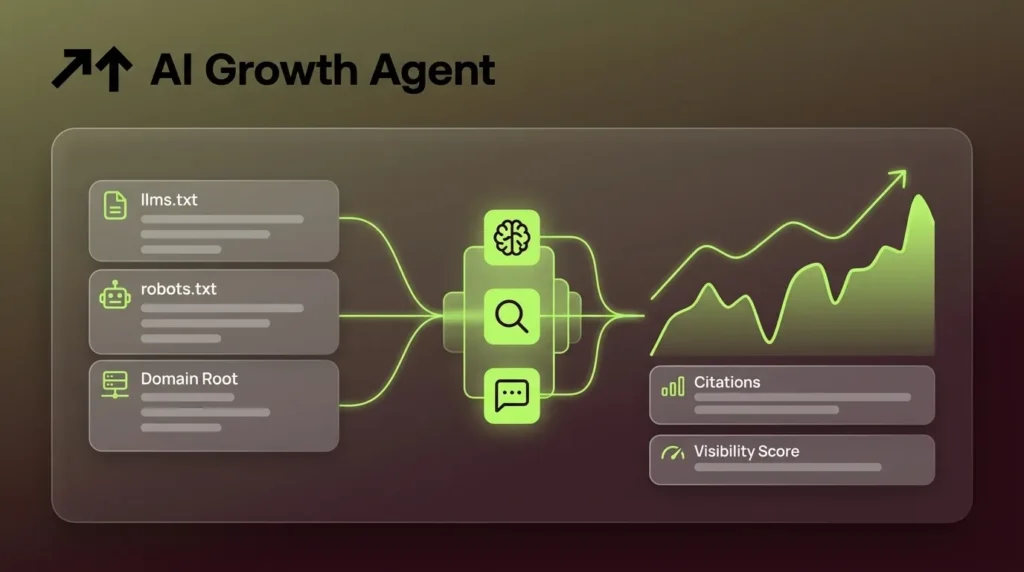
After page-level schema validates cleanly, publish the agent discovery layer. Place llms.txt at the domain root as a categorized Markdown index of key content URLs. Publish llms-full.txt as a bundled file that contains the full text of core pages. Serve Markdown variants of key pages so agent crawlers receive token-efficient content. Expose Blog MCP endpoints with schema, manifest, and capability guidance. Serve OpenAI discovery and Agent Card guidance through the /.well-known/ path. Configure natural language query parameters at /?s={query} so agents passing a query into the URL receive a personalized, internally linked response.
The emerging llms.txt standard tells AI systems what a site is about at a high level, while schema markup provides granular details for each individual page, and together they create a machine-readable map of content that makes sites more discoverable in AI search contexts. Schema.org JSON-LD and llms.txt function as complementary layers, because schema markup supplies granular, machine-readable entity facts with stable @id URIs and typed relationships, while llms.txt provides site-level editorial context and a token-efficient index of canonical content.
The full agent discovery stack, including Blog MCP, llms.txt, llms-full.txt, and /.well-known/ endpoints, can be complex to deploy by hand. See how AI Growth Agent implements these signals automatically in a consultation session.
Step 6: Validate, Monitor, and Self-Heal Schema Over Time
Ongoing validation keeps schema accurate as content changes. Run Google’s Rich Results Test and Schema.org’s validator after every publish. Monitor Google Search Console Enhancements reports weekly for new errors. Track bot visits by crawler type to confirm AI training agents reach the content. Set a recurring review cadence, monthly at minimum, to update dateModified values, refresh entity identifiers when company information changes, and add new FAQ items as customer questions evolve. Schema drift, the gap that opens when visible content changes but markup does not, is the most common cause of citation loss after a successful implementation.
What Schema Actually Does Inside AI Systems
Schema markup influences AI systems through three main pathways. The first is the entity pipeline. Google processes schema markup through a dedicated Entity Pipeline separate from the Ranking Pipeline, and the Entity Pipeline feeds Google’s Knowledge Graph, Merchant Center, and rich results eligibility. When a brand’s Organization schema includes verified sameAs links to Wikidata and LinkedIn, those identifiers anchor the brand as a resolved entity inside the Knowledge Graph. Structured data helps reduce hallucinations in AI Overviews by grounding answers in clearly defined entities and relationships.
The second pathway is content verification during answer synthesis. AI Mode uses schema markup for claim verification, entity relationship establishment, and source credibility assessment during answer synthesis rather than for triggering visible rich results. The knowsAbout property in Organization and Person schema creates a topical authority signal that AI Mode uses when selecting sources for specific query categories.
A third, indirect pathway matters equally. Schema improves SERP feature eligibility, and the majority of Google AI Overview sources come from the organic top 10, which means schema’s contribution to ranking position directly increases citation likelihood.
How to Get Cited in AI Results
Citation in AI results depends on three compounding factors: entity resolution, exact visible-text matching, and topical authority at scale.
Entity resolution means the AI surface can confirm who the brand is by cross-referencing schema identifiers against the Knowledge Graph. A linked entity strategy using schema markup strengthens this identity signal and can improve AI Overview visibility.
Exact visible-text matching builds on that identity foundation by ensuring every schema property reflects content the reader can see on the rendered page. Because real-time AI retrieval systems frequently strip away script-based JSON-LD code blocks entirely to conserve context window space, LLMs rely almost completely on visible HTML text, and if visible content lacks clear answers, AI ignores the page regardless of schema. Schema and visible content must say the same thing so AI systems can verify claims confidently.
Once identity and content accuracy are in place, topical authority at scale determines how often a brand appears in answers. Topical authority at scale means publishing authoritative content across the full long tail of queries in a market, not just head terms. Citation context, which covers where the brand appears in an AI answer and what claim it is cited for, now acts as a ranking signal. Brands that cover the long tail systematically accumulate citation context across hundreds of queries, compounding authority that a handful of optimized pages cannot match.
Measuring citation context requires bot tracking at the article level, Google Search Console impressions cross-referenced against AI citation data, and a weekly snapshot of where the brand appears in AI answers and which other brands it is grouped with.
Is Schema Markup Still Relevant in 2026
Schema markup remains highly relevant in 2026, although its mechanism of action has shifted. The claim that schema is obsolete because LLMs process natural language natively ignores how AI search systems actually operate. Structured data makes websites easier and cheaper for AI systems to process than parsing unstructured HTML, especially as LLMs operate within finite context windows and growing inference costs.
The evidence base is mixed on direct citation uplift from adding schema to pages that already receive many citations. An Ahrefs study tracking 1,885 pages that added JSON-LD schema between August 2025 and March 2026, matched against 4,000 control pages, found no major uplift in citations on Google AI Overviews, Google AI Mode, or ChatGPT for pages that were already heavily cited. That finding applies to pages already receiving 100-plus AI Overview citations before schema was added and does not address whether schema helps pages that are not yet being cited.
For brands building AI visibility from a low base, the evidence points in a different direction. A Search Engine Land experiment showed that a page with well-implemented schema appeared in an AI Overview while a comparable page without schema did not. Approximately 73% of first-page Google results use some kind of schema, which establishes schema implementation as a baseline technical foundation for visibility on AI-driven search surfaces.
AI systems increasingly prefer sources they have already indexed, validated, and found reliable in prior interactions, giving early adopters of agent-friendly schema markup a compounding advantage. Schema is not optional for brands that want to be cited. It functions as the entry ticket.
Common Schema Mistakes and How to Fix Them
Three failure modes account for most schema implementations that do not produce citation results.
Schema drift. The schema drift problem introduced in Step 6 shows up when visible content changes but JSON-LD does not. Schema markup must match visible page content to avoid schema drift, which reduces trust and eligibility for AI-driven search features. A new product name, a revised description, or an updated founding year can all leave markup out of sync. A monthly audit cadence using Google Search Console Enhancements reports catches drift before it compounds.
Missing entity relationships. Organization schema may exist on the homepage but not be referenced by Article schema on blog posts. Author Person schema may exist but lack a worksFor link to the Organization. These disconnected blocks prevent AI systems from building the entity graph that drives citation confidence. Nested schema with explicit entity relationships via @id and @graph produces a 340% increase in AI citation share over three months, per Cubitrek data comparing hierarchical versus disconnected schema deployments.
Visible-text mismatches. Schema properties sometimes describe content that is not present on the rendered page or describe it differently from how it appears. AI agents verify facts through deep entity relationship nesting using standard Schema.org vocabulary, and accurate schema that matches primary page content increases AI Mode citation probability. Any property in JSON-LD that a reader cannot verify by looking at the page becomes a liability rather than an asset.
A fourth issue affects FAQ schema specifically. Answers that run too long or depend heavily on surrounding context perform poorly. Each FAQ answer should be 50 to 300 words to fit within a single LLM retrieval chunk and must be independently comprehensible without surrounding page context.
Verifying Outcomes and Measuring Results
Use this checklist to confirm that implementation is complete and measurable.
- Organization schema present on homepage, about page, and contact page with sameAs links to Wikidata, LinkedIn, and Crunchbase
- Person schema present for every named author with worksFor linking to Organization @id
- Article or BlogPosting schema on every article with headline matching H1 exactly and author referencing Person @id
- FAQPage schema on every FAQ section with answers matching visible text exactly, 50 to 300 words each
- BreadcrumbList schema on every page
- All schema validated with zero errors in Google’s Rich Results Test and Schema.org’s validator
- llms.txt published at domain root with categorized index of key content URLs
- llms-full.txt published with full text of core pages
- Markdown variants of key pages served to agent crawlers
- Blog MCP endpoint live with schema, manifest, and discovery guidance
- OpenAI discovery and Agent Card guidance served via /.well-known/
- Bot tracking active at the article level, logging AI training agent visits by crawler type
- Google Search Console Enhancements report reviewed weekly for new errors
- Citation context tracked weekly, including brand position in AI answers, co-citation partners, and claim association
- dateModified values updated on every article refresh
Citation-context measurement requires cross-referencing bot visit data with Google Search Console impressions and a weekly prompt-based audit of how the brand appears in AI answers across ChatGPT, Perplexity, and Google AI Mode. Order of mention and the claim a brand is cited for now function as ranking signals, and both must be tracked week over week to isolate incremental visibility from existing brand presence.
Advanced Scenarios and Next Steps
Headless CMS environments benefit from programmatic schema generation. In headless CMS systems, structured data should be served through the API by generating JSON-LD programmatically from content fields so every page ships consistent schema without hardcoding values. This approach eliminates schema drift at the source by making the CMS the single source of truth for both visible content and markup.
Enterprise brands with complex product sets can adopt a layered architecture. A four-layer framework places JSON-LD structured fact sheets as the foundational layer, followed by entity relationship mapping to express the graph of products to categories to solutions, then active content API endpoints for programmatic access, and finally verification and provenance metadata to transform content into verifiable facts for RAG systems.
Living content keeps schema credible over time. Schema on a page that has not been updated in eighteen months carries a stale dateModified value that signals low freshness to AI systems. Every article in a content universe should be refreshed on a recurring schedule, with schema updated to match, so the brand’s presence does not decay as the market changes. Self-healing content, updated automatically in response to Google Search Console signals and bot-traffic data, provides an architecture that keeps schema accurate at scale without manual intervention.
Frequently Asked Questions
For teams without dedicated engineering resources, AI Growth Agent removes the technical complexity of schema and agent discovery. Schedule a demo to see automated schema generation, llms.txt, Blog MCP, and discovery signals in action.
Does schema markup directly cause AI systems to cite my brand?
Schema markup does not guarantee citations, but it significantly improves the conditions under which AI systems trust and cite content. Its primary mechanism is indirect, because schema feeds Google’s Knowledge Graph and improves SERP feature eligibility, and the majority of AI Overview citations come from pages already ranking in the organic top 10. For brands not yet being cited, schema acts as a foundational requirement. For brands already receiving citations, the evidence on direct uplift from adding schema is mixed, so schema must be paired with authoritative content, strong entity relationships, and exact visible-text matching to produce measurable citation results.
What is the difference between llms.txt and schema markup?
Schema markup provides granular, page-level structured data that describes individual entities, their properties, and their relationships using Schema.org vocabulary in JSON-LD format. llms.txt is a site-level Markdown file placed at the domain root that serves as a curated index of key content, giving AI agents a high-level map of what the site covers before they process individual pages. The two formats work together, because schema supplies the machine-readable detail on each page, while llms.txt supplies the editorial context and navigation guide that helps agents identify which pages to prioritize. Brands that implement both create a more complete machine-readable surface than either file provides alone.
How often should schema markup be audited and updated?
Schema markup should be audited monthly at minimum, with additional reviews triggered by any content update, product change, team change, or company rebranding. The most common failure mode is schema drift, where visible content changes but the JSON-LD is not updated to match. Google flags schema properties that describe content not present on the rendered page as spammy structured data, which reduces trust and citation eligibility. A practical cadence includes a weekly review of Google Search Console Enhancements reports for new errors, a monthly full audit of all schema types across key pages, and an immediate update whenever any visible content referenced in schema changes.
Which schema types matter most for AI citation eligibility in 2026?
Organization schema with sameAs links to external identifiers such as Wikidata and LinkedIn carries the most leverage because it anchors the brand as a resolved entity in Google’s Knowledge Graph. Person schema for named authors, connected to Organization via worksFor, strengthens E-E-A-T signals that AI systems use to assess source credibility. Article or BlogPosting schema on every content page, with headline and description matching visible text exactly, makes individual pages machine-readable for citation. FAQPage schema on Q&A sections increases citation likelihood for conversational queries, and BreadcrumbList schema on every page communicates site hierarchy and content relationships. After March 2026, entity disambiguation properties including knowsAbout, sameAs, and mentions have become especially important for AI Mode citation selection.