Written by: Mariana Fonseca, Editorial Team, AI Growth Agent
Key Takeaways
- Fintech brands gain AI search visibility by mapping the full query universe, publishing YMYL-compliant living content, and embedding regulatory trust signals across every page.
- Traditional and agentic technical SEO, including schema markup for Article, FAQPage, FinancialProduct, and Person, increases the likelihood of AI citations in measurable ways.
- Pages structured for direct AI extraction, with concise answer blocks and comparison tables near the top, capture a disproportionate share of citations from the first third of content.
- Earned media drives 84% of AI citations, so external co-citations in Tier 1 publications are essential for fintech brands that want broad visibility.
- AI Growth Agent executes the full 8-step framework as a single headless engine, delivering measurable results in weeks rather than a year—see the framework in action.
Step 1: Map Your Full Fintech Query Universe with Search Intelligence
Most fintech marketing teams track a small set of head terms and lose the rest of the conversation by default. The 2026 Fintech AI Visibility Benchmark measured 51 fintech companies across ChatGPT, Gemini, Claude, and Perplexity and found that 56% fell into an AI gray zone, appearing in some engines or query framings but not others. Traditional link metrics such as Domain Rating explain only a small portion of AI visibility variance, so technical authority alone does not determine who gets cited.
Effective universe mapping starts with seed terms drawn from real-time Google and ChatGPT data and then expands into the long-tail queries buyers actually type. AI Growth Agent runs hundreds of real searches weekly, processing title structures, forum discussions, People Also Ask signals, and query fan-out to build a topology of where the brand can win. Mature client universes reach 1,600-plus queries, with 3,000-plus searches run every week to keep the snapshot current.
Book a demo to see your full query universe mapped in week one.
Step 2: Turn Long-Tail Evidence into a Fintech Content Topology
Seed terms anchor the strategy, but the long tail is where AI citations concentrate. Comparison content earns roughly a 95% citation rate on ChatGPT and accounts for about 32.5% of all AI citations, making it the highest-leverage format for product-comparison and buying-oriented queries. Fintel Connect’s research recommends listicles and comparison tables for LLM visibility but does not report any percentage of AI-generated responses containing them.
AI Growth Agent uses real-time AI Overview and ChatGPT results as the objective function for which long-tail queries deserve investment. A new account typically starts with 300-plus queries and expands from there. The Content Topology maps each seed term to dozens of long-tail queries, each backed by evidence rather than guesswork, so every content decision has a measurable rationale.
Request a sample content topology for your category.
Step 3: Bake YMYL Trust and Regulatory Proof into Every Page
Financial services content needs more visible proof of trust than general business content to earn a similar AI citation rate. LLM citation pipelines for finance apply four dominant checks: source credibility scoring, author and entity verification, compliance and disclosure presence, and extractability via short declarative paragraphs, tables, and FAQ blocks.
Placement matters as much as presence. Regulatory badges for licenses such as FCA, SEC, PCI DSS, SOC 2, and ISO 27001 should appear prominently on product pages, link directly to official registry entries, and use Organization or FinancialService schema. Fintech brands improve AI trust signals by naming partner banks, custodians, and key infrastructure providers on their site and linking regulatory pages from the footer and trust hubs so AI crawlers can easily locate them.
Every fintech product page must implement a core set of machine-readable trust signals so AI engines can verify fees, licensing, security, authorship, and compliance at a glance. The table below shows the minimum YMYL trust-signal set, organized by signal type, required element, placement, and the specific schema property that makes each signal machine-readable.
| Signal Type | Required Element | Placement | Schema Property |
|---|---|---|---|
| Fee Disclosure | Explicit fee table with currency codes (USD, GBP, EUR) | Above the fold on pricing pages | feesAndCommissionsSpecification in FinancialProduct |
| Regulatory Badge | License number, regulator name, jurisdiction | Homepage, product pages, footer | FinancialService with areaServed and regulatory identifier |
| Security Certification | PCI DSS, SOC 2, ISO 27001 linked to official registry | Product pages, dedicated security page | Organization schema with sameAs to certification body |
| Author Credential | Named reviewer with CFA, CFP, CPA, or FCA SMCR credential | Author block on every editorial page | Person with hasCredential and reviewedBy on Article |
| Compliance Disclosure | Non-advice framing, conflict-of-interest statement, complaint pathway | Inline near load-bearing claims | Article with dateReviewed and last_reviewed_at |
Author credential markup using Person plus hasCredential Schema.org on author pages is the single highest-leverage YMYL trust signal for fintech brands seeking LLM citations, as most finance content teams under-invest in it. AI Growth Agent provisions this schema automatically on every article, with no technical action required from the client.
Step 4: Combine Traditional and Agentic Technical SEO for Fintech
Pages with comprehensive schema markup appear more often in AI-generated answers for YMYL fintech queries. The full technical stack for fintech AI search includes two layers that work together to maximize visibility.

- Traditional technical SEO creates a clean, structured foundation. It uses highly structured HTML, full metadata, rich schema markup across Article, FAQPage, FinancialProduct, FinancialService, Organization, and Person, internal linking, sanitized external linking, proper sitemaps, detailed robots.txt, automated web stories, real-time bot tracking, instant indexing, autoredirects, and 404 tracking.
- Agentic technical SEO then extends that foundation so AI agents can query content directly. It includes Blog MCP with schema, manifest, discovery, and capability guidance exposed to agents, OpenAI discovery and Agent Card guidance served via /.well-known/, natural language query parameters at /?s={query} that auto-trigger personalized responses, Markdown served to agent crawlers, and llms.txt plus llms-full.txt so AI surfaces can read the brand the way they need to.
AI Growth Agent brought Blog MCP to market first, with clients running it in the summer of 2025. Every package ships the full stack automatically, so client teams do not need technical skills.
Step 5: Run a Living, Self-Healing Fintech Content Engine
Explainers with strong formatting often earn more AI citations than longer comprehensive guides. Volume and structure matter, but accuracy sets the floor. Peer-reviewed testing found that ChatGPT-4o hallucinated on roughly 20 percent of financial-literature references, so anti-hallucination controls are a non-negotiable layer for any fintech content program.
AI Growth Agent’s multi-agent orchestration draws on OpenAI, Anthropic, Gemini, Grok, Perplexity, Exa, and Firecrawl, selected by task. Every claim is validated against primary sources and external evidence before publication. Post-draft claim re-extraction checks every assertion against product pages, the manifesto, and verified external sources. Content behaves as a living system that self-heals and updates over time, and when the year turns, every article in a sector refreshes automatically while maintaining the 90-day review cycle established for YMYL compliance.
Book a demo to see how living content compounds authority over a 90-day pilot.
Step 6: Format Fintech Pages for Direct AI Answer Extraction
As noted earlier, 44% of AI citations come from the first third of the page, so structure near the top matters. Every fintech page should open with a direct 40-60 word answer block under the relevant H2, followed by clear subheadings, lists, and tables.
FAQ schema strengthens this structure. Implementing FAQPage schema can increase the number of AI Overview citations per page, and FAQPage schema markup often improves AI citation rates when combined with other structured elements.
AI engines extract comparison data most reliably when tables use consistent metric rows with verified figures and source links in every cell. The comparison table template below shows the format AI engines extract most reliably for fintech product comparisons.
| Metric | Provider A | Provider B | Provider C |
|---|---|---|---|
| Appearance Rate (% of queries cited) | Insert verified figure with source link | Insert verified figure with source link | Insert verified figure with source link |
| Engine Breadth (engines with coverage) | Insert verified figure with source link | Insert verified figure with source link | Insert verified figure with source link |
| Query Depth (long-tail queries covered) | Insert verified figure with source link | Insert verified figure with source link | Insert verified figure with source link |
| Visibility Score (composite index) | Insert verified figure with source link | Insert verified figure with source link | Insert verified figure with source link |
Implementing FAQPage, Article, and HowTo schema together on a single page using JSON-LD @graph format produces 1.8x more AI citations than Article schema alone by creating internally consistent entity linking. AI Growth Agent provisions this schema automatically on every published page.
Step 7: Build Fintech Authority with Co-Citations and Earned Media
84% of AI citations come from earned media, not brand websites, according to Muck Rack’s May 2026 Generative Pulse study analyzing 25 million-plus links from ChatGPT, Claude, and Gemini. Brands with earned media in Tier 1 publications generate 325% more AI citations than those relying on owned content alone.
A 90-day co-citation program for fintech brands follows a sequence where each phase builds authority that unlocks the next tier of placements.
- Days 1-14: Run a brand-pairing audit using cited-domains data to identify listicles, alternatives pages, and roundup articles where category leaders appear and the brand does not. This audit reveals the specific publications and page types that drive AI citations in your category.
- Days 15-45: Secure initial placements in listicles and review platforms including G2, Trustpilot, and NerdWallet. SE Ranking’s late-2025 analysis found that domains with strong presence on Quora, Reddit, and review sites like G2 and Trustpilot are roughly 3-4x more likely to get cited by ChatGPT than domains without that footprint. These foundational placements establish baseline co-citation patterns that make higher-tier publications more receptive.
- Days 46-75: Launch co-marketing with a recognized category brand and pitch original research to 30-plus relevant publications. 85% of brand mentions in a 2026 AirOps study originated from third-party pages generated by such research distribution. The credibility from earlier placements increases acceptance rates for original research pitches.
- Days 76-90: Pursue regulatory registry placements and appearances in Federal Reserve research footnotes, BIS working-paper citation lists, or OCC and FDIC consultations. The institutional regulatory tier produces more cited content on policy, regulatory, and structural-banking queries than the entire trade press tier combined. This institutional tier becomes accessible once the brand shows sustained editorial presence in commercial and trade publications.
Step 8: Measure Fintech AI Visibility with a 90-Day Prompt Plan
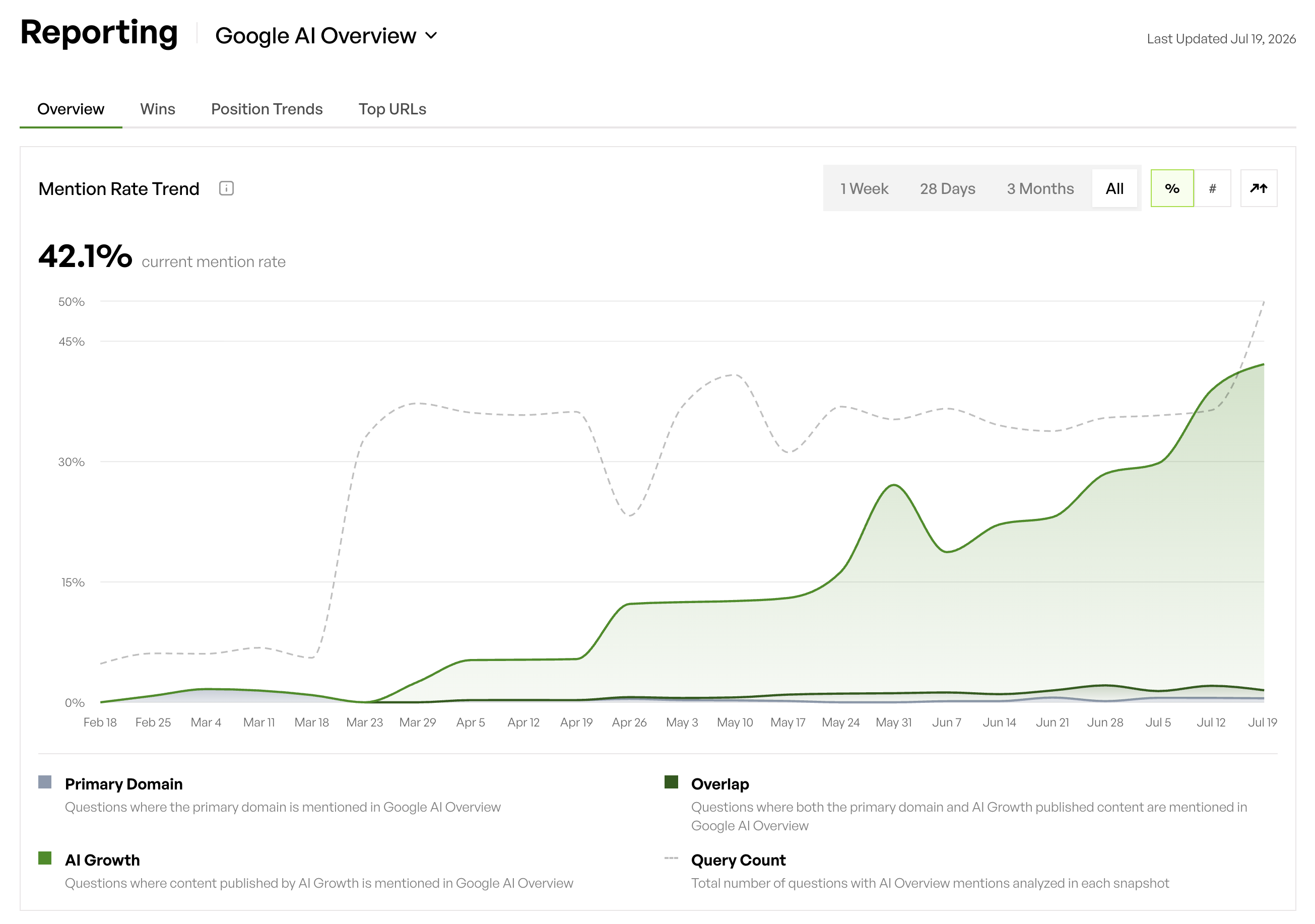
A complete fintech visibility baseline requires tracking 100 prompts distributed evenly across four categories and measured across four platforms to capture the full range of citation patterns. The 100-prompt benchmark tracker below covers the four prompt categories and four platforms required for a complete fintech visibility baseline.
| Prompt Category | Example Prompt | ChatGPT | Perplexity | Gemini | Google AI Overviews |
|---|---|---|---|---|---|
| Category (25 prompts) | “What are the best embedded finance platforms?” | Track: cited / not cited / position | Track: cited / not cited / position | Track: cited / not cited / position | Track: cited / not cited / position |
| Use-Case (25 prompts) | “Which BaaS provider supports multi-jurisdiction licensing?” | Track: cited / not cited / position | Track: cited / not cited / position | Track: cited / not cited / position | Track: cited / not cited / position |
| Comparison (25 prompts) | “[Brand] vs [Competitor]: fees, compliance, and integrations” | Track: cited / not cited / position | Track: cited / not cited / position | Track: cited / not cited / position | Track: cited / not cited / position |
| Problem (25 prompts) | “How do I reduce AML compliance costs for a neobank?” | Track: cited / not cited / position | Track: cited / not cited / position | Track: cited / not cited / position | Track: cited / not cited / position |
Benchmark targets for financial services brands include progressive mention rate improvements over the first 90 days assuming active optimization. AI Growth Agent reports incremental visibility week over week, isolating exactly what the engine generated rather than taking credit for visibility the brand already had. Bot analytics track every bot that touches the blog, including the bot ChatGPT uses to cite sources, and Google Search Console serves as an independent audit layer.
Explore the incremental visibility reporting dashboard.
Frequently Asked Questions
How long does it take for a fintech brand to see its first AI citations after starting this framework?
The first article is typically live within one week of kickoff. Content has indexed in as little as ten days and often within two weeks. Initial AI citations for fintech brands generally appear in weeks three to four of an active program. Meaningful citation share across priority queries typically requires three to six months of consistent publishing, because AI engines weight sustained editorial presence over single placements. The 90-day pilot is the standard engagement precisely because indexing timelines vary by industry and competitive density.
Why does YMYL compliance matter more for fintech than for other industries?
Google AI Overviews apply the strictest YMYL criteria of any platform for fintech queries, frequently declining to generate responses rather than risk citing an unverified financial provider. AI search systems are particularly cautious with financial services topics because a poor citation carries real reputational and financial risk for the AI platform itself. Financial services content is held to the same quality bar as medical or legal advice, so the authority bar is materially higher than the cross-vertical median. Brands that treat compliance documentation as a first-class content asset, publishing regulatory licenses, PCI DSS, SOC 2, and ISO 27001 certifications in indexable HTML with geographic schema markup, earn higher AI citation rates than those that leave the same documentation in downloadable PDFs or compliance archives.
What is the difference between monitoring AI visibility and actually improving it?
Monitoring tools tell a brand whether it appears for a capped set of prompts and stop there. They function as a rearview mirror. Improving AI visibility requires producing the content the models will use to describe the brand, in the formats and structures the models can read, with the validation that earns the citation. AI Growth Agent is not a monitoring company. It produces the content, owns the publishing, applies the full technical and agentic SEO stack, and proves the incremental result week over week. The distinction matters because 45% of marketing leaders cannot accurately measure their brand visibility within AI-generated answers, and only 9% have the tools to track all relevant metrics across platforms, so most teams measure only a fraction of their actual exposure.
How does pricing transparency on fintech product pages affect AI citation rates?
AI agents retrieve first-party pricing information only 79% of the time, compared to 92% for security and compliance pages. When pricing is hidden or gated behind contact forms, outside citations from G2, Reddit, or resellers rise to 45% of agent responses. Pricing pages alone account for 77% of all third-party citations in AI agent studies, so opaque pricing directly hands citation authority to third parties. Publishing fee tables in machine-readable HTML with feesAndCommissionsSpecification in FinancialProduct schema, using three-letter currency codes rather than symbols, and keeping figures current reduces third-party citation leakage and keeps the brand as the authoritative source for its own pricing.
What prompt categories should a fintech brand track to measure AI search visibility accurately?
A complete prompt universe for fintech AI visibility covers four categories. Category prompts ask which platforms or providers are best in a given vertical. Use-case prompts describe a specific operational need such as multi-jurisdiction licensing or AML automation. Comparison prompts name the brand alongside competitors. Problem prompts describe a challenge the buyer is trying to solve. Each category should be tracked across ChatGPT, Perplexity, Gemini, and Google AI Overviews separately, because platform-specific citation patterns differ significantly. A minimum of 50 prompts with at least three measurements per query per platform over a seven-day window is required to account for the non-deterministic nature of AI responses. Prompt count should never be a billed metric, because capping tracked prompts means a brand only ever sees the slice of its market it already thought to ask about.
Conclusion
The 8-step framework maps the full query universe, embeds YMYL trust signals at every layer, applies traditional and agentic technical SEO automatically, structures pages for direct AI extraction, secures external co-citations in the publications AI engines weight most heavily, and measures incremental visibility week over week. The old agency stack and capped monitoring tools leave fintech brands invisible in AI answers. The brands cited in ChatGPT, Perplexity, and Google AI Overviews this year are training the next generation of models with their own narrative. Brands that wait are training the next generation with whatever happens to be sitting on the open web.
AI Growth Agent executes the full stack as a single headless engine. Content indexes in as little as ten days. Across the first twelve weeks, clients average more than 12,000 additional AI citations and mentions, over 100,000 additional bot visits, and a 20%-plus lift in impressions.
Make your brand the answer—get your first article live within a week.