Written by: Mariana Fonseca, Editorial Team, AI Growth Agent
Key Takeaways for Fintech GEO Programs
- Generative engine optimization for fintech replaces traditional ranking with direct AI citations through answer-first formatting, FinancialProduct schema, comparison hubs, and regulatory-grade validation.
- A 5-step checklist that maps buyer prompts, deploys schema, publishes fee transparency tables, earns third-party validation, and tracks 90-day citation rates separates consistent winners from one-time mentions.
- Traditional SEO metrics like keyword rank position are largely ignored by AI engines, and citation rate across ChatGPT, Perplexity, and Gemini now acts as the primary performance signal.
- Answer-first formatting, itemized fee tables, and third-party validation on G2, Trustpilot, and regulatory filings create the structural signals AI engines extract for fintech answers.
- Traditional search tools show you where your brand stands. AI Growth Agent makes your brand the answer. Schedule a consultation session to see your first article live within a week.
5-Step Fintech GEO Checklist
A structured implementation sequence separates fintech brands that earn consistent AI citations from those that appear once and disappear. Execute these five steps in order.
- Map the query universe. Audit the top 20 to 30 buyer prompts in ChatGPT and Perplexity to identify which sources are currently cited. upGrowth’s fintech GEO workflow can help identify relevant buyer questions for content pillars. Assign a dedicated content pillar to each query cluster.
- Implement FinancialProduct and supporting schema. Deploy the schema types listed in the table below on every product, comparison, and FAQ page. Analysis of pages found that schema markup helps AI systems extract accurate claims, especially when combined with sameAs links to Wikidata.
- Build comparison hubs with itemized fees. Vendors that publish itemized fees can earn citations because their numbers are quotable, and AI engines can lift them directly into answers. Publish specific numeric values in every cell.
- Earn third-party validation. A majority of AI-cited B2B SaaS articles often come from earned media sources and review platform domains such as G2, Capterra, or TrustRadius, so your validation footprint shapes citation share.
- Measure citation rate across a 90-day cycle. Track the percentage of buyer prompts that trigger a brand citation across ChatGPT, Perplexity, and Gemini over a full 90-day measurement window.
| Schema Type | Use Case | Citation Target |
|---|---|---|
| FinancialProduct | Loan rates, payment terms, account features | Lending and payments queries |
| FAQPage | Eligibility, compliance, fee questions | Question-format AI answers |
| Organization | Entity identity, regulatory registrations | Brand mention queries |
| Review | G2, Trustpilot, Capterra aggregation | Third-party validation queries |
Why Traditional SEO Falls Short for Fintech in AI Answers
The citation landscape for fintech diverges sharply from organic rankings. Ahrefs’ study of keywords found only a portion of Google AI Overview citations come from top-10 pages, down from a higher share in mid-2025. Studies have measured varying citation-to-organic overlap across industries, so rank-based monitoring misses much of the picture.
| Metric | Traditional SEO | AI Citation (GEO) |
|---|---|---|
| Primary signal | Keyword rank position | Citation rate across AI engines |
| Overlap with organic top 10 | 100% by definition | Lower share for AI Overviews (Ahrefs study) |
| Finance vertical overlap | High | Varies across industries |
| Citation drift per month | Stable rankings | Significant change monthly (Semrush AI Visibility Study) |
The gaps in current agency and monitoring approaches are specific and fixable.
- Agencies optimize for rank positions that AI engines largely ignore when selecting citation sources, so their work often fails to move citation share.
- Monitoring tools cap tracked prompts, which leaves the long tail of buyer queries unmeasured and unaddressed.
- Neither category consistently produces answer-first content structure, FinancialProduct schema, or fee transparency tables that AI engines extract from.
- Content goes stale without a self-healing mechanism, and the Semrush AI Visibility Study recommends multiple consecutive monthly measurement cycles before treating citation movement as signal.
The solution to these gaps lies in restructuring content to match how AI engines extract and cite information. The following sections detail the specific formatting, schema, and transparency signals that address each limitation.
Answer-First Formatting with FinancialProduct Schema
Every H2 section should open with a definitive, self-contained answer in the first 40 to 60 words, followed by supporting evidence, data tables, and regulatory context. LLMReach 2025 data shows financial services firms see first citation movement within 14 to 21 days after deploying answer-first content and entity signals.
The FinancialProduct schema below represents a minimum viable implementation for a lending product. Extend it with loanTerm, annualPercentageRate, and feesAndCommissionsSpecification for payments products when applicable.

{ "@context": "https://schema.org", "@type": "FinancialProduct", "name": "Small Business Term Loan", "description": "Fixed-rate term loans from $25,000 to $500,000 for US-based businesses with 2+ years operating history.", "url": "https://example.com/products/small-business-loan", "provider": { "@type": "Organization", "name": "Example Lending Co", "sameAs": "https://www.wikidata.org/wiki/Q_EXAMPLE" }, "annualPercentageRate": { "@type": "QuantitativeValue", "minValue": 7.9, "maxValue": 24.9, "unitText": "PERCENT" }, "loanTerm": { "@type": "QuantitativeValue", "minValue": 12, "maxValue": 60, "unitText": "MONTH" }, "feesAndCommissionsSpecification": "Origination fee 1-3% of loan amount. No prepayment penalty. No annual fee." } The table below shows which schema properties are mandatory versus optional for each product type, helping you prioritize implementation based on your offering.
| Schema Property | Lending | Payments |
|---|---|---|
| annualPercentageRate | Required | Not applicable |
| feesAndCommissionsSpecification | Required | Required |
| loanTerm | Required | Not applicable |
| priceSpecification | Optional | Required |
| sameAs (Wikidata) | Required | Required |
BLUF structure checklist for every content page:
- Open with a bolded definition of the topic in the first sentence to establish immediate clarity for both readers and AI engines.
- State the regulatory context or applicable jurisdiction in the second sentence, because AI engines prioritize content that specifies legal boundaries.
- Deliver the complete answer within the first 60 words of each H2 section so the front-loaded structure matches how AI systems extract quotable claims.
- Follow with a data table, then supporting evidence with inline citations that validate the opening answer.
- Close each section with a named author or reviewer carrying financial credentials, which provides the authority signal AI engines use to weight competing sources.
Direct Comparison Hubs That Earn Citations
Publishing detailed head-to-head comparisons against named competitors on a vendor domain can strongly predict AI citation share. Pages that directly compare options can be cited more often for decision-support queries in AI Overviews.
The table below illustrates the structure AI engines extract from. Every cell contains a specific numeric value sourced from public regulatory disclosures or published fee schedules.
| Dimension | ACH Transfer | Wire Transfer | Real-Time Payment (RTP) |
|---|---|---|---|
| Typical fee (sender) | $0.20-$1.50 per transaction | $15-$35 domestic | $0.045 per credit transfer (The Clearing House published rate) |
| Settlement time | 1-3 business days | Same day if submitted before cutoff | Seconds, 24/7/365 |
| Regulatory framework | Nacha Operating Rules | Fedwire, UCC Article 4A | The Clearing House RTP Network Rules |
| Reversal window | Up to 5 business days | No reversal after completion | No reversal after completion |
Checklist for building citation-ready comparison pages:
- Write a one-sentence prose introduction immediately before the table that names what is being compared so AI engines understand the scope.
- Use specific numeric values in every cell and replace vague language like “affordable” or “fast” with figures and units.
- Name column headers as specific entities or options, not generic labels like “Basic / Pro / Enterprise,” to give AI systems clear entities to cite.
- Include a “Not right for you if” row that gives AI engines scope boundaries to quote for edge cases.
- Source every fee and timeline figure from a regulatory disclosure, published fee schedule, or primary filing with an inline citation.
Third-Party Validation on G2, Trustpilot, and Regulatory Filings
Fintech citations for buyer-intent prompts often come from editorial sources and vendor sites, with Reddit, news, Wikipedia, forums, and academic and government sources also contributing. Vendor sites that earn citations do so through structured, verifiable content, not marketing copy.
The table below summarizes the main validation sources, their role in citations, and the concrete actions your team can take.
| Validation Source | Citation Role | Implementation Action |
|---|---|---|
| G2 / Capterra / TrustRadius | Share of AI-cited B2B SaaS articles hosted on review platforms | Embed Review schema aggregating platform ratings and link to verified profiles |
| CFPB filings and adverse action guidance | Regulatory authority signal | Cite CFPB guidance inline on lending and credit content and link to primary filings |
| LinkedIn and Deloitte | Citation rates in Machine Relations Index v2 (July 2026) | Publish thought leadership on LinkedIn and earn analyst coverage from Deloitte-tier firms |
| Fintech Futures / PYMNTS | Citation rates in Machine Relations Index v2 | Pitch product news and data releases to vertical fintech press |
Checklist for incorporating third-party validation:
- Embed Review schema on product pages aggregating G2, Trustpilot, and Capterra scores with ratingCount and ratingValue properties so AI engines can verify social proof.
- Cite CFPB adverse action guidance and Nacha or Fedwire rules inline on any page covering credit, payments, or lending decisions to anchor claims in regulation.
- Publish original data releases quarterly, because original research earns disproportionate AI citations because it provides unique facts not available elsewhere.
- Earn coverage in Fintech Futures, PYMNTS, and Forbes to build the editorial citation layer that AI engines draw from when answering complex prompts.
Regulatory Explainers and Fee Transparency Tables
Menra’s July 2026 guide states that vendors publishing clear tiered pricing effectively write the engine’s answer for cost prompts and prevent brand hallucination from third-party sources. Hiding pricing behind a contact-sales form causes AI engines to answer cost questions from review sites or forums, often with wrong or stale figures.
The semantic HTML structure below represents the minimum viable fee transparency table for a lending product. Use thead, tbody, th, and td roles so AI systems correctly associate fees, plan names, and conditions.
<table> <thead> <tr> <th scope="col">Fee Type</th> <th scope="col">Amount</th> <th scope="col">Trigger Condition</th> <th scope="col">Regulatory Basis</th> </tr> </thead> <tbody> <tr> <td>Origination fee</td> <td>1%-3% of loan amount</td> <td>Charged at disbursement</td> <td>Disclosed under TILA/Reg Z</td> </tr> <tr> <td>Late payment fee</td> <td>$15 or 5% of payment, whichever is less</td> <td>Payment more than 15 days past due</td> <td>State usury law cap applies</td> </tr> <tr> <td>Prepayment penalty</td> <td>None</td> <td>Not applicable</td> <td>CFPB QM rule exemption</td> </tr> </tbody> </table> Regulatory explainer structure checklist, aligned with FSSCC/BPI January 2026 guidance and the FSB June 2026 consultation report on responsible AI adoption:
- Name the applicable regulatory framework (TILA, ECOA, Nacha, CFPB) in the first sentence of every explainer section, which establishes legal context that AI engines require for financial content.
- Publish Data Nutrition Labels documenting data provenance, quality, limitations, and biases for any AI-assisted underwriting or decisioning product, per FSSCC/BPI guidance, so transparency supports your regulatory claims.
- Include human-in-the-loop review disclosures and outcome analysis for bias and drift on credit underwriting pages, as required by CFPB adverse action guidance from May 2025 and the April 2026 revised interagency model risk management guidance (Federal Reserve SR 26-2), which provides operational evidence of compliance.
- Update the page’s dateModified value whenever fees or rates change, and Menra confirms this practice helps engines weight fresher sources for volatile facts.
- Write pricing logic in plain text near the table, including unit price and billing frequency, since this redundancy ensures AI crawlers capture the information even if they miss visual UI elements.
90-Day GEO Roadmap with Measurable Citation Metrics
Mersel AI’s benchmark data across tracked client programs spanning multiple months shows a structured 90-day GEO program typically delivers initial citation lift via signal discovery within 4 to 8 weeks, with compounding growth continuing through 8 to 12 weeks and day 90.
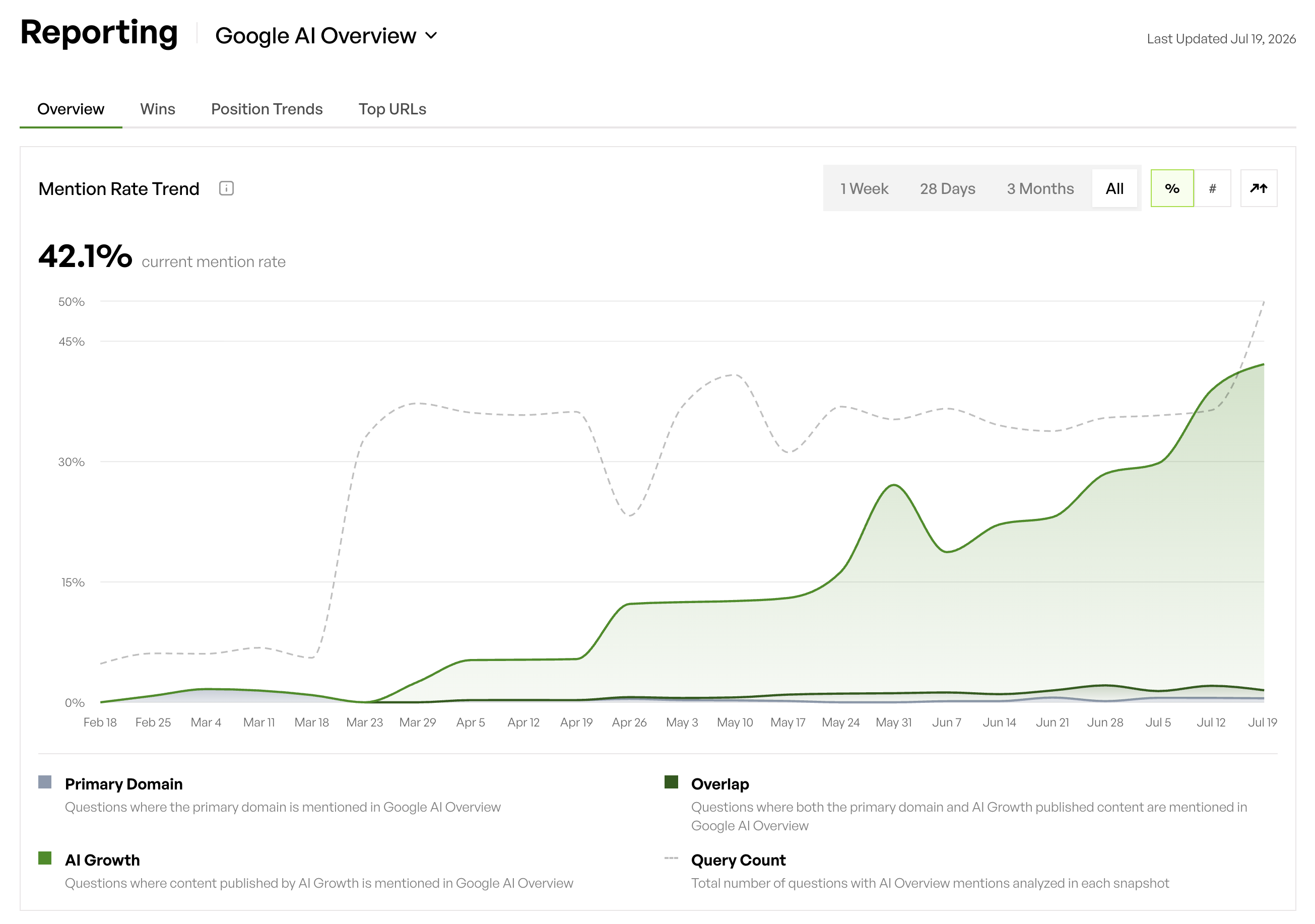
The table below breaks this 90-day journey into three phases and shows the weekly actions to take and the citation lift to expect at each milestone.
| Phase | Weeks | Weekly Actions | Citation Target |
|---|---|---|---|
| Baseline | 1-4 | Query universe audit, schema deployment, fee transparency tables live, and baseline citation rate recorded across ChatGPT, Perplexity, and Gemini | Baseline established, typically in the low single digits |
| First lift | 5-8 | Two to four answer-first articles per week, comparison hubs published, G2 and regulatory validation embedded, and BLUF structure applied to all existing product pages | Significant lift over baseline citation rate |
| Compounding | 9-13 | Self-healing refresh of stale articles, internal linking spine built, earned media pitches to Fintech Futures and PYMNTS, and regulatory explainers published for each product vertical | Further growth over baseline citation rate |
Book a demo to map your first 90-day citation roadmap and see how AI Growth Agent can operationalize this plan for your team. Schedule a consultation session to see your first article live within a week.
B2B SaaS vs Consumer Fintech Tactics
The query fan-out for B2B fintech is wider and more role-specific than consumer fintech, which changes how you plan content. ProseMedia’s B2B fintech GEO guide identifies that fintech buyers evaluate solutions differently by role, requiring content that addresses what the CFO, compliance lead, head of growth, and product marketer each care about. Consumer fintech queries cluster around eligibility, rates, and comparisons, while B2B queries extend into governance, security, RevOps, and procurement.
| Dimension | B2B SaaS Fintech | Consumer Fintech |
|---|---|---|
| Top cited content types | Comparison, use-case, implementation, governance pages | Rate tables, eligibility guides, calculator tools |
| Schema priority | Organization, FinancialProduct, FAQPage, SoftwareApplication | FinancialProduct, FAQPage, Review |
| Query fan-out depth | Multi-role (CFO, compliance, product, growth) | Single-persona (borrower, account holder) |
| Pricing transparency impact | Dominates AI answers because most competitors hide pricing | Prevents hallucination from review sites |
Differentiated tactics checklist:
- B2B: Publish vendor A vs vendor B, direct vs indirect, and build vs buy comparison pages covering company size, growth stage, geography, and regulatory burden fit dimensions, per ProseMedia’s B2B fintech framework.
- B2B: Include a “Not right for you if” section on every comparison page so AI engines can quote scope boundaries for enterprise buying queries.
- Consumer: Deploy calculator content such as EMI, interest rate, and eligibility tools, because calculator content can generate more organic traffic than standard blog content while producing structured data outputs AI platforms can directly reference.
- Consumer: Apply the regulatory pyramid architecture with product hub pages at the top for commercial intent, comparison content in the middle, and educational and compliance content at the base.
- Both: Run prompt coverage tests across ChatGPT, Perplexity, and Google AI Overviews using actual buyer questions, then audit page structure against GEO signals including direct answers in the opening paragraph and explicit entity clarity, per Citera HQ’s B2B SaaS GEO guidance.
Common Mistakes and Troubleshooting
The GEO-16 framework study analyzing citations found that pages scoring higher on structural quality with more structural pillar hits achieved higher cross-engine citation rates. The five mistakes below represent the most common reasons fintech pages fall below that threshold and lose citation share.
| Mistake | Fix | Citation Impact |
|---|---|---|
| Abstract marketing language (“empowering financial futures”) | Replace with specific, factual, plainly structured claims, because abstract language is invisible to AI extraction systems. | Eliminates extractable claims entirely |
| Pricing hidden behind contact-sales forms | Publish tiered pricing in semantic HTML tables with priceSpecification schema, and Menra confirms that hidden pricing causes AI to answer from third-party sources. | Cedes cost-query citations to review sites |
| Optimizing for one AI engine only | Test across ChatGPT, Perplexity, and Gemini, because ChatGPT and Perplexity share only a small portion of cited URLs for the same B2B SaaS keywords. | Misses most cross-engine citation opportunity |
| No third-party validation layer | Embed Review schema, earn coverage in Fintech Futures, PYMNTS, and analyst reports, and recognize that editorial sources supply a significant share of fintech citations (2026 Attrifast study). | Limits vendor site citations to a smaller share |
| Content published once and left to decay | Implement self-healing refresh triggered by bot traffic and Search Console signals, and update dateModified on every revision, because citations change substantially month over month. | Erodes citation share as fresher sources displace stale pages |
Ongoing self-healing checklist:
- Schedule monthly citation rate audits across at least three AI engines using identical non-branded buyer questions so you can see cross-engine drift.
- Refresh any article where bot traffic drops or Search Console impressions decline by more than 15 percent in a 30-day window.
- Re-extract and verify every claim in refreshed articles against current regulatory filings and published fee schedules before republishing.
- Update FinancialProduct schema annualPercentageRate and feesAndCommissionsSpecification values whenever rates or fees change, and update dateModified simultaneously to signal freshness.
Avoiding these five mistakes requires both technical implementation and ongoing monitoring. AI Growth Agent handles the full GEO stack, from schema deployment to self-healing refresh, so your team can focus on product and growth. Schedule a demo to see if you’re a good fit.
Frequently Asked Questions
What FinancialProduct schema properties are required for lending and payments products to earn AI citations?
For lending products, the minimum required properties are name, description, url, provider with Organization type and sameAs linking to Wikidata, annualPercentageRate as a QuantitativeValue, loanTerm as a QuantitativeValue, and feesAndCommissionsSpecification as plain text. For payments products, replace annualPercentageRate and loanTerm with priceSpecification using the Offer type, and include priceCurrency and price properties.
Both product types require the Organization schema for entity identity with regulatory registrations, FAQPage schema for question-and-answer pairs, and Review schema for third-party validation. Implement every schema block as JSON-LD in the page head and combine it with sameAs links to Wikidata to help AI systems categorize offerings precisely, which acts as a prerequisite for citation in structured finance answers. Update schema values whenever rates or fees change and update the dateModified property simultaneously so AI engines weight the fresher source.
What citation results should a fintech CMO expect from a 90-day GEO program?
A structured 90-day program typically establishes a baseline citation rate by week 5, delivers a first citation lift of 2x to 3x by weeks 6 to 8, and achieves compounding growth of 4x to 6x over baseline by day 90. Expect the most significant movement in weeks 5 to 8 as answer-first content and schema deployment take effect, followed by sustained growth as the self-healing refresh cycle and earned media layer compound citation share across ChatGPT, Perplexity, and Gemini.