Written by: Mariana Fonseca, Editorial Team, AI Growth Agent
Key Takeaways for Financial AI Visibility
- Financial brands capture a small share of banking AI citations, while affiliates and comparison sites capture most of the rest.
- A 90-day compliance-first roadmap maps prompt universes, builds regulatory schema, measures AI share of voice, and replaces traditional agency stacks with headless marketing.
- Entity data must include FinancialProduct, BankOrCreditUnion, and FinancialService JSON-LD plus version-controlled disclaimers to satisfy both AI engines and regulators.
- AI share of voice is measured across five layers: citation rate, mention rate, recommendation rate, citation absorption, and sentiment.
- AI Growth Agent executes this playbook end to end for financial brands; book a demo to see your first compliant article live within a week.
Phase 1: Map Prompts and Establish AI Citation Baselines (Days 1–30)
The first 30 days establish a complete baseline across AI engines. Without that baseline across ChatGPT, Perplexity, and Google AI Overviews, every later move becomes guesswork. The outcome for Phase 1 is a mapped prompt universe, a citation-rate baseline by product type, and a technical foundation that makes every asset AI-readable from day one.
Start by defining a query library that reflects real buyer behavior. A working library covers 25 to 50 prompts across brand-specific, category, comparison, and problem queries, categorized by intent stage: awareness, consideration, and decision. Run each prompt across at least four engines and record whether the brand is mentioned, cited with a link, recommended as a top option, or used as an unattributed source.
This baseline measurement reveals a stark reality for financial products. Financial brands appear in a minority of citations, while third-party and affiliate sources dominate across categories. The table below summarizes what current research shows for brand-owned domains versus third-party sources.
| Product Type | Brand-Owned Domain Citation Rate | Top Third-Party Citation Sources | Primary Source |
|---|---|---|---|
| Consumer Banking (general) | 6.8% | Wikipedia 19.3%, Bankrate 17.8%, Investopedia 14.2% | Banking AI Visibility Index 2026 |
| Credit Cards | ~6% of AI citations despite $20B annual marketing spend | The Points Guy, NerdWallet, Bankrate: 62% combined | Banking AI Visibility Index 2026 |
| Neobanks / Fintech | <9% | Wikipedia, NerdWallet, Bankrate, Reddit | 5W Neobanks AI Visibility Index 2026 |
| Financial Services (broad) | Brand-owned (first-party) sites account for 47% of citations in financial services AI responses and 6.8% of banking AI citations | comparison and affiliate sites dominant, Reddit frequently cited | Foundation x AirOps 2026 |
Every asset produced in Phase 1 must ship with three non-negotiable technical elements. First, include an llms.txt and llms-full.txt file so AI surfaces can read the brand in the format they require. Second, implement full regulatory schema using FinancialProduct, BankOrCreditUnion, and FinancialService JSON-LD, including annualPercentageRate, interestRate, feesAndCommissionsSpecification, and loanTerm properties. Third, apply version-controlled disclaimers programmatically to every page that touches a regulated claim. Financial schema markup must align with YMYL accuracy expectations by ensuring every property value exactly reflects regulator-approved disclosures on the page, because mismatched or unsupported claims cause rich-result rejection and loss of AI citation eligibility.
Phase 2: Build a Compliant Entity and Schema Layer (Days 31–60)
Phase 2 converts the mapped prompt universe into a durable entity data layer that satisfies both AI engines and regulators. Most financial brands still tune pages for human readers while leaving the machine-readable layer incomplete, inconsistent, or exposed to regulatory risk.
The schema requirements for financial services are specific and strict. Core financial-services schema types for AI search visibility include FinancialService for firm-level identification (with properties name, areaServed, hasOfferCatalog, provider, slogan), FinancialProduct for specific offerings such as loans and accounts (with properties name, feesAndCommissionsSpecification, interestRate, annualPercentageRate), Person with hasCredential for advisor pages, and FAQPage for educational content. The BankOrCreditUnion type must include legalName, taxID, leiCode, regulatorAuthority, and contactPoint properties.

The regulatory compliance layer has three components that work together as a single system. Each component addresses a different dimension of machine-readable compliance and supports the others.
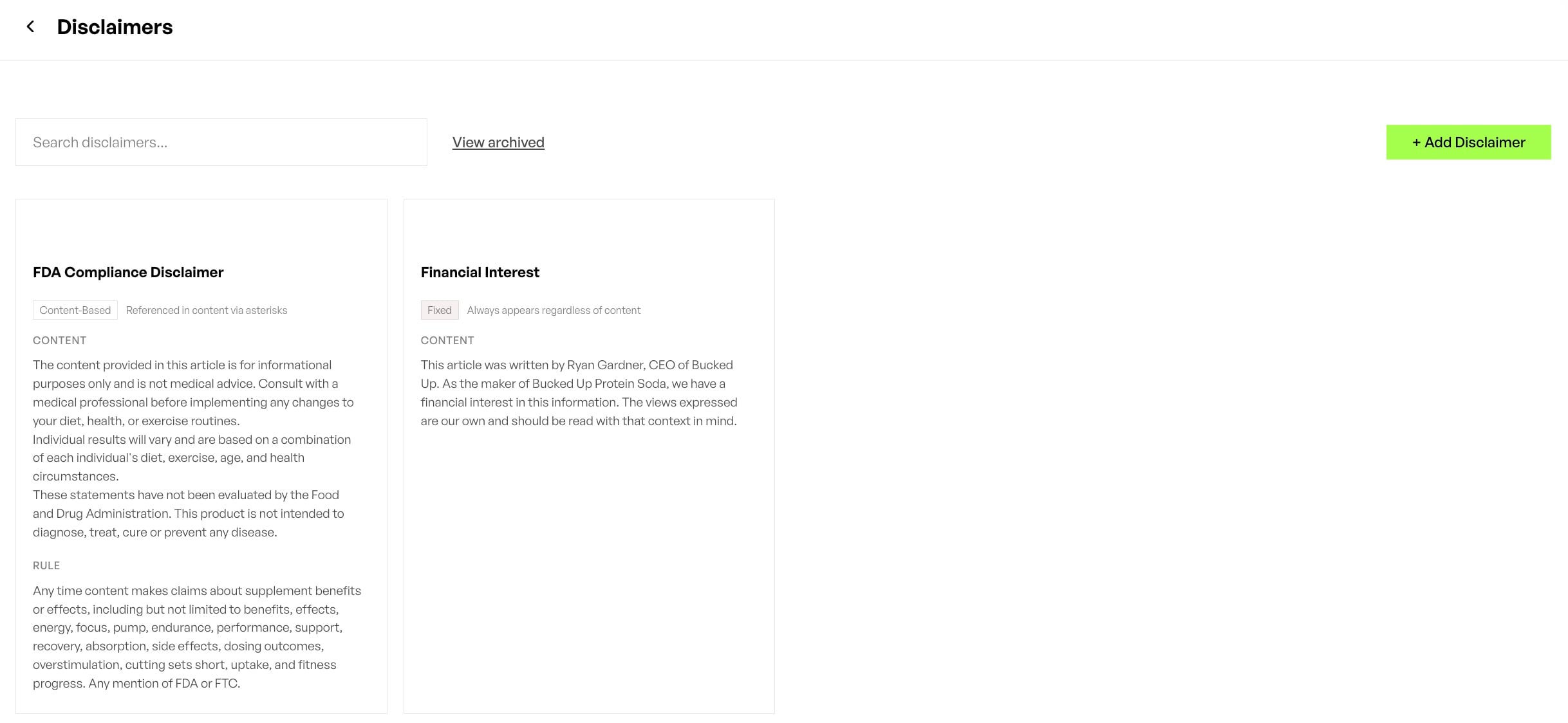
- Canonical glossary. This glossary establishes consistent terminology across all pages so AI engines do not encounter conflicting definitions for the same product or term. Financial-services brands with a documented canonical glossary and consistent terminology across pages can show higher citation rates than brands whose pages disagree about their own terminology. Scale the glossary to the regulatory surface area: approximately 300 terms for a Tier-1 bank, 150 for a mid-cap asset manager, and 50 for a fintech.
- Version-controlled disclaimers. Once terminology is consistent, disclaimers must be centrally managed to prevent compliance drift across hundreds of pages. Structured data should include disclosure metadata, with a JSON-LD block carrying
Article,Person,Organization, and a customDisclosureproperty for educational, advisory, and jurisdictional scope and last-reviewed date, while version-controlled disclaimers are stored as a single source of truth and pulled into pages programmatically. - APY/APR effective-date rules. With terminology and disclaimers standardized, rate presentation becomes the final compliance surface. Product and rate pages must include explicit APY/APR figures with effective dates, applicable conditions, fee schedules in structured formats, eligibility criteria in plain language, and timestamps showing when rates were last verified, along with FDIC/NCUA insurance statements. The SEC Marketing Rule (Rule 206(4)-1) and FINRA Rules 2210–2216 govern how performance and rate claims are communicated publicly, and content that AI systems consume and redistribute falls under these frameworks.
The US interagency Final Rule under the Financial Data Transparency Act adds a machine-readability mandate. Data transmission and schema formats must render data fully searchable and machine-readable, use schemas with machine-readable metadata and ontology models that clearly define semantic meaning, and adopt ISO 17442 (LEI), ISO 8601 date formatting (YYYY-MM-DD), and ISO 4217 currency codes as common identifiers. Financial brands that build entity data for AI search now need to align to these standards before enforcement begins.
Phase 3: Apply a Five-Layer AI Share of Voice Model (Days 61–90)
Phase 3 shifts the focus from building infrastructure to measuring performance. AI share of voice for insurance and financial products uses a five-layer visibility model that separates new gains from existing visibility.
The five layers of the visibility model are:
- Citation rate. The percentage of prompts where a brand URL appears as a source.
- Mention rate. The percentage of prompts where the brand name appears in the answer text.
- Recommendation rate. The percentage of prompts where the product is actively suggested.
- Citation absorption. Whether cited content shapes the answer beyond footnotes, per Yao et al., 2026, with Perplexity citing more sources per query but lower average absorption and ChatGPT citing fewer sources with higher influence per citation.
- Sentiment classification. Whether the brand is described positively, neutrally, or negatively in the answer.
Use a weighted AI SOV formula to quantify performance. Calculate (brand’s weighted citations) / (total weighted citations for all tracked brands) × 100, benchmarked against actual market share to identify visibility gaps, with mention weighted at 1x, citation with source link at 2x, recommendation as a top option at 3x, and source absorption at 4x.
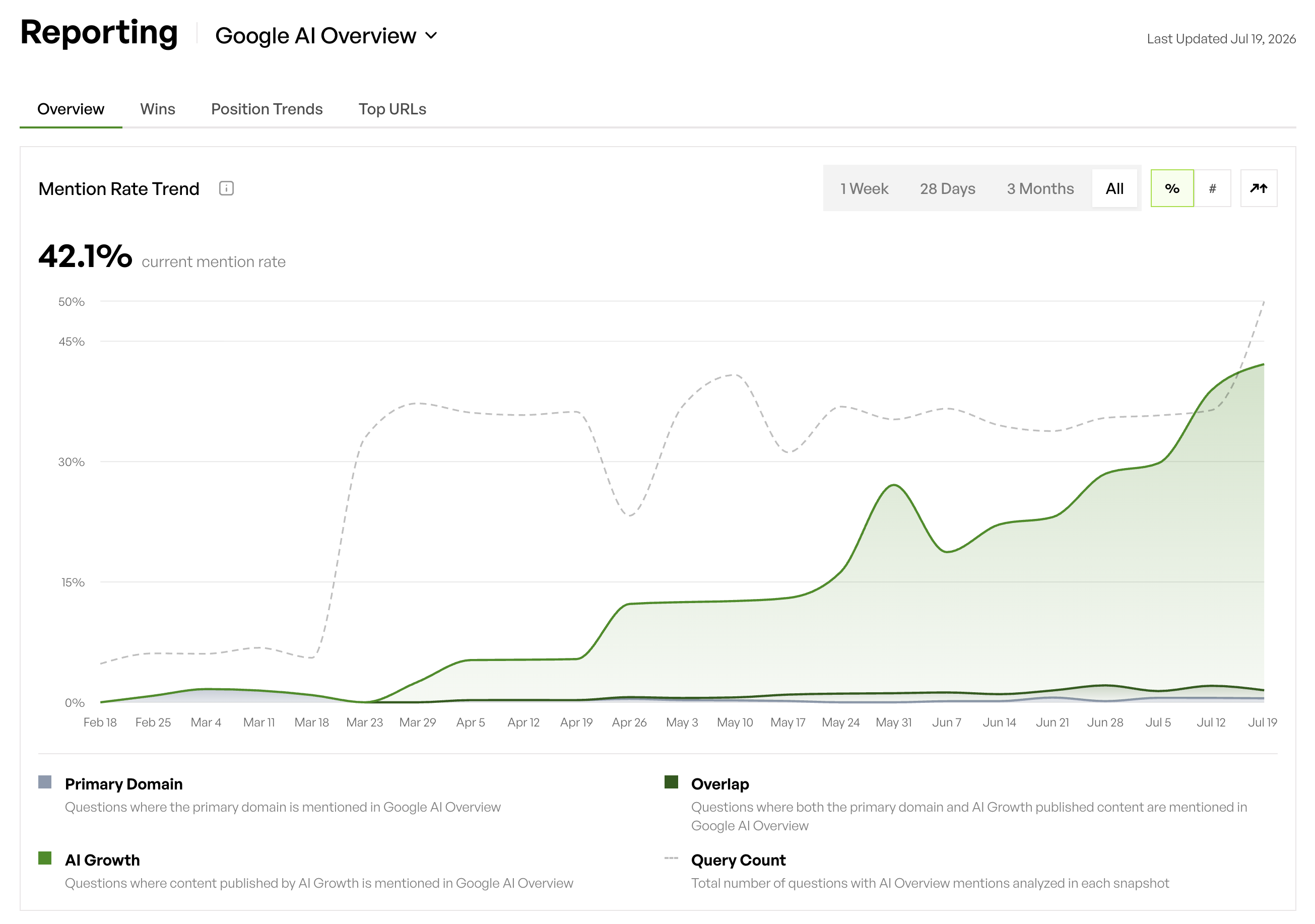
The table below compares brand-owned versus third-party affiliate citation rates across financial product categories, using this five-layer model as the measurement frame.
| Product Category | Brand-Owned Citation Rate | Third-Party / Affiliate Citation Rate | Primary Source |
|---|---|---|---|
| Financial Services (broad, unbranded queries) | 47% for financial services AI responses | 85% (comparison sites, media, regulatory filings, forums) | Foundation x AirOps 2026; AI Visibility Monitoring for Financial Services |
| Fintech / Banking (trade and regulatory sources) | Not separately reported | American Banker, Banking Dive, Reddit (r/personalfinance), .gov domains, SEC filings dominate | 5W Citation Source Audit Q1 2026 |
To isolate incremental citations from existing visibility, publish new assets into a separate environment and track bot traffic, Google Search Console impressions, and citation appearances independently. AI referral traffic grew as a channel for the Financials industry from May to September 2025, with ChatGPT driving 87.4% of all AI referral traffic across analyzed domains from May to September 2025. Bot tracking at the per-article level, cross-referenced with Search Console, provides the only reliable way to prove that new citations are incremental rather than a reallocation of existing visibility.
Phase 4: Run Headless Marketing Instead of Traditional Agency Retainers
The 90-day roadmap above does not fit a traditional agency stack. An RFP often takes three months, and onboarding takes three more. Schema maintenance, disclaimer versioning, and living content updates require engineering hours that most agency retainers do not include. By the time the first compliant asset ships, the AI citation leaderboard has already shifted.
Headless marketing replaces that stack with a single engine. One engine maps the full prompt universe, produces citation-worthy assets with regulatory disclaimers and entity schema built in, self-heals rates and disclosures as product terms change, and proves incremental AI citations and bot traffic isolated from existing visibility. The brand keeps its curated main site. The engine runs a fully optimized, owned blog connected through a reverse proxy rewrite, with no agency dependency and no site lock-in.
Third-party and affiliate sources function as essential infrastructure rather than pure competitors. Financial brands need to appear within that infrastructure, not only alongside it. Wikipedia, NerdWallet, Bankrate, and Reddit are major sources for US neobank-related AI citations. A compliant PR and earned-media strategy that places the brand’s content and expert voices on those platforms becomes a direct citation lever. Trade publications carry particular weight. The dominant citation sources for fintech queries in AI engines are American Banker, Banking Dive, Reddit (r/personalfinance), .gov domains, and SEC filings, with authoritative editorial and regulatory sources more important than brand-owned content for earning AI citations in financial services.
The content itself must be structured for absorption, not only for citation. Pages with structured financial facts can receive more AI citations than narrative-only content. FAQ-format financial pages are often cited more than narrative-format articles covering the same topics. Every asset must include credential-verified author schema. Financial services firms with credential-verified author profiles, FinancialService schema, and disclaimer-compliant FAQ content are often cited at higher rates than firms without these signals.
Conclusion and Next Steps for Financial AI Growth
The 90-day roadmap works as a sequence, not a menu. Phase 1 maps the prompt universe and establishes the citation baseline. Phase 2 builds the entity data layer that satisfies regulators and earns AI trust. Phase 3 measures AI share of voice with a five-layer model and isolates incremental citations. Phase 4 replaces the agency stack with a headless engine that produces compliant, citation-worthy assets at scale and self-heals as rates and disclosures change.
The urgency is structural for financial brands. Approximately 68% of U.S. Google searches ended without a click in early 2026, and health and finance businesses saw up to 60% organic CTR drops as AI Overviews disrupted search. Twenty-two of the top 75 US banks had minimal citation share in the Banking AI Visibility Index 2026, making them effectively invisible in AI-driven research. Brands that establish authoritative, compliant, machine-readable content now train the next generation of models with their own narrative. Brands that wait train those models with whatever affiliates and comparison sites publish.
AI Growth Agent is built to execute this playbook end to end for financial brands. The system is compliance-first and finance-native, with incremental visibility reporting that proves what the engine generated rather than riding existing brand authority.
Frequently Asked Questions
What does AI search visibility for financial brands mean in practice?
AI search visibility for financial brands means that when a consumer asks ChatGPT, Perplexity, or Google AI Mode about a mortgage rate, a credit card comparison, an insurance policy, or a savings account, the brand appears as a cited, trusted source in the answer rather than being absent or misrepresented. This visibility differs from traditional SEO ranking because there is no ordered list of blue links. The AI engine instead selects sources it trusts, cites them, and synthesizes an answer. A brand with high AI search visibility is one whose content the engine finds, reads, and uses to construct that answer. For financial brands, this requires compliant structured data, credential-verified authorship, version-controlled disclaimers, and content structured around the specific facts AI engines extract, such as rates, terms, eligibility criteria, and regulatory disclosures.
Why do affiliates and comparison sites dominate AI citations for loans and credit cards instead of the brands themselves?
AI engines select sources based on trust signals that affiliates and comparison sites have spent years building. These signals include high domain authority, dense structured facts, FAQ-format content, broad inbound link profiles, and consistent coverage across multiple AI training cycles. Brand-owned product pages, by contrast, are typically written for human conversion rather than machine extraction. They often lack structured financial facts, credential-verified authorship, and the FAQ format that AI engines prefer. As a result, a brand can spend tens of millions on marketing and still capture a small percentage of AI citations for its own product category, while NerdWallet, Bankrate, and Reddit communities supply most of what AI engines say about that brand’s products. Closing this gap requires producing content in the formats and structures that AI engines actually cite, not only the formats that convert human visitors.
What regulatory requirements apply specifically to AI search optimization for financial products?
Financial brands that optimize for AI search must satisfy the same regulatory frameworks that govern all public-facing communications, applied to the specific context of machine-readable content. The SEC Marketing Rule (Rule 206(4)-1) governs how investment advice and performance claims are communicated publicly. FINRA Rules 2210 through 2216 govern retail communications for broker-dealers, with different review and approval requirements by communication type. The CFPB requires fair, transparent, and accurate consumer communications for consumer financial products. The FTC extends its authority over deceptive advertising to digital content that AI systems might reference. State insurance commissions, state banking regulators, and state securities regulators add jurisdiction-specific requirements. On the technical side, the US Financial Data Transparency Act Final Rule mandates machine-readable schema using ISO 17442 (LEI), ISO 8601 date formatting, and ISO 4217 currency codes. Every asset must include APY/APR figures with effective dates, applicable conditions, and timestamps showing when rates were last verified. Disclaimers must be version-controlled, stored as a single source of truth, and pulled into pages programmatically rather than maintained manually across hundreds of pages.
How long does it take to see measurable AI citation improvements for a financial brand?
Schema implementation typically shows measurable citation improvements in four to six weeks. E-E-A-T signal building, which includes credential-verified authorship and canonical glossary consistency, takes eight to twelve weeks to show full impact. A complete AI share of voice measurement cycle requires monthly runs across the full prompt library, with weekly spot checks on priority prompts, because citation distributions can shift within weeks due to model updates and index refreshes. For financial brands, the compliance review cycle adds time to the asset production process, which makes a system that builds compliance into every generation structurally faster than an agency workflow that treats compliance as a post-production step. AI Growth Agent clients typically see their first article live within a week of kickoff and content indexed within ten days, with measurable citation and bot traffic movement visible within the first 30 days.
What is the difference between monitoring AI citations and actually improving them?
Monitoring tools track whether a brand appears for a defined set of prompts and report the result. These tools do not produce content, implement schema, build the earned-media footprint on comparison sites and trade publications, or self-heal assets as rates and disclosures change. Knowing that a brand captures a small share of AI citations for its credit card product provides useful data, but that data alone does not change the number. Improving AI citation rates requires producing structured, fact-dense, disclaimer-compliant content in the formats AI engines prefer, building credential-verified authorship signals, earning coverage on the third-party domains that supply most financial AI citations, and maintaining living content that updates automatically as product terms change. The distinction matters because financial brands often invest in monitoring infrastructure and interpret the dashboard as progress. The dashboard functions as a rearview mirror, while the content engine functions as the steering wheel.