Written by: Mariana Fonseca, Editorial Team, AI Growth Agent
Key Takeaways
- Topical depth is the measurable coverage of entities, relationships, and follow-up questions that AI surfaces can find, trust, and cite, while topical authority is the reputation that accrues once that depth is recognized.
- The correct build order starts with separating depth from authority, then building the entity graph with six named layers: definitions, fundamentals, problems, comparisons, evidence, and opinions.
- Mapping and covering the follow-up questions AI search actually asks is the single biggest gap in competitor content and directly drives citation share.
- The evidence layer, built from original data, first-hand testing, and documented process, creates non-commodity content and strongly increases citation confidence.
- AI Growth Agent automates the full architecture: entity graph mapping, follow-up chain coverage, evidence layer creation, and living self-healing content that compounds AI visibility.
Book A Demo With AI Growth Agent
The Build Sequence, In Order
The sequence below is a build order. Skipping a step breaks the ones after it. A coverage gap is a Step 3 problem, not a Step 6 problem. A citation gap is a Step 4 problem, not a publishing volume problem. Work the steps in order.
Step 1: Separate Topical Depth From Topical Authority
Topical depth is the architecture you control, while topical authority is the reputation the AI surface infers once that architecture is recognized. Because authority follows structure, the first build decision is structural rather than editorial. Before choosing what to write, decide what layers to build and in what order.
In AI search, topical authority converts into three distinct advantages: retrieval priority, citation confidence, and recommendation share. Retrieval priority means your pages enter the working set more often on related questions. Citation confidence means the engine is more willing to attribute the answer to you once retrieved. Recommendation share means your name appears when someone asks who does this well. A single ranked page can earn retrieval priority. Only a coherent body of work earns all three, and that body of work is built layer by layer, starting with the entity graph.
Step 2: Build The Entity Graph For SEO
The entity graph is the actual structure of topical depth, and it has named layers. Internal links encode relationships between entities rather than merely passing authority. Entity consistency across company, product, and author descriptions keeps the graph legible to AI surfaces. Inconsistent entity naming creates ambiguity that weakens how AI systems understand a brand: alternating between brand name variants across company, product, and author descriptions is one of the most common and most damaging structural errors.
The table below lays out the six layers of the entity graph and what each one earns you.
| Layer | What It Contains | What It Earns |
|---|---|---|
| Definitions | What the subject is, how it differs from close alternatives | Extractable answer passages AI can cite without rewriting |
| Fundamentals | How the subject works, what it depends on, and what it enables | Retrieval priority on related questions |
| Problems | What goes wrong, why it goes wrong, and how to diagnose it | Citation confidence on diagnostic queries |
| Comparisons | Named alternatives, honest differences, and decision criteria | Recommendation share in commercial prompts |
| Evidence | Original data, first-hand testing, and documented process | Non-commodity content that stands out from generic summaries |
| Opinions | A defensible point of view with reasoning and named tradeoffs | Narrative control over what AI says about the brand |
For each key concept, content should clarify what it is, what it connects to, what it causes or enables, what it depends on, and how it differs from a close alternative. Internal links do four jobs in this structure. They help crawlers discover related pages and give context about site structure and page relationships. They also help readers move from broad to narrow questions. Most importantly, they make the cluster’s conceptual relationships visible instead of leaving every page an island.
Step 3: Map The Follow-Up Questions AI Search Actually Asks
This step closes the single biggest gap in competitor content. Google’s own documentation describes AI Mode as particularly helpful for queries where further exploration, reasoning, or complex comparisons are needed, and documents that AI Overviews and AI Mode may use a query fan-out technique, issuing multiple related searches across subtopics and data sources to develop a response. Covering the follow-up chain maps directly to how the system retrieves content.
AirOps’ March 2026 retrieval study, which analyzed 548,534 retrieved pages, found that 32.9% of cited pages appeared only in search results for a fan-out query, not the starting prompt, and that 95% of ChatGPT fan-out queries had zero monthly search volume in traditional keyword tools. The follow-up chain is where most citations actually happen.
Present the follow-up chain as a list, because the questions are the content:
- What is it, exactly, and what is it not?
- How does it work, and what does it depend on?
- What breaks it, and how do I know it is broken?
- How does it compare to the alternative I am already considering?
- What does it cost in time, money, and attention?
- Who has done this successfully, and what did they actually do?
- What should I do first, and what should I not do at all?
Each of these questions maps to a layer in the entity graph. The definitions layer answers the first question, the fundamentals layer the second, and the problems layer the third. The comparisons layer answers the fourth, while the fifth, cost in time, money, and attention, is answered across the comparisons and evidence layers together. The evidence layer answers the sixth, and the opinions layer the seventh. A gap in the entity graph is a gap in the follow-up chain.
Because retrieval systems rewrite context-dependent follow-up questions into standalone queries before searching, content should cover not only the primary question but also the adjacent subquestions a retriever is likely to generate after rewrite. The three-stage architecture documented in multi-turn retrieval research shows that AI search actively transforms and refines a user’s evolving information need across turns.
See How AI Growth Agent Maps Your Follow-Up Chain
Step 4: Build An Evidence Layer AI Can Cite
Original data, first-hand testing, and documented process sit at the center of the evidence layer. These assets create the non-commodity content that AI systems value most. Google’s May 15, 2026 resource on optimizing for generative AI in Google Search emphasizes providing valuable, unique, non-commodity content as a core requirement, and Google’s helpful content guidance asks whether content provides original information, reporting, research, or analysis, and whether it demonstrates first-hand expertise.
The original Princeton-led GEO study found that adding citations, quotations, and statistics to a page can lift its visibility in generative engines by more than 40%. Only 15% of pages retrieved by ChatGPT during inference are cited in the final response, with the remaining 85% evaluated and discarded. The evidence layer is what separates the 15% from the 85%.
A single proprietary data report other sources cite can produce more entity authority than a year of generic blog content, because it teaches LLMs that the brand is the source of a specific fact, knowledgeable enough to produce it, and endorsed by other authoritative voices. Original research, proprietary benchmarks, and documented process form the structural requirement for the evidence layer. Once those layers exist, the next question is whether they are actually earning citations, which is what Step 5 measures.
Step 5: Measure Whether Your Topical Depth Is Working
Effective measurement starts with Google’s Generative AI performance report in Search Console, which launched June 3, 2026 and rolled out to all websites worldwide on August 31, 2026. The report shows impressions from AI Overviews, AI Mode, and generative AI features in Discover, segmented by page, country, device, and date. It does not include clicks, click-through rate, average position, or query data, so it measures visibility rather than traffic. Rising impressions do not guarantee rising traffic, so tie impressions back to actual referral logs and conversion data.
AI answers have no static ordered list, so order of mention and citation context act as the new ranking. The signals that matter are Google Search Console impressions from the Generative AI performance report, bot traffic per article, and citation context. Citation context includes where the brand appears in the answer, who it is grouped with, and what claim it is cited for.
How AI Growth Agent Operationalizes This Architecture
AI Growth Agent provides a direct solution for building and maintaining this architecture on autopilot. It maps a client’s full universe of seed terms and long-tail queries from real-time Google and ChatGPT data. From there, it produces authoritative content that validates every claim and source, and stands up a fully structured site the client owns within the first week. Content remains living and self-heals instead of going stale.
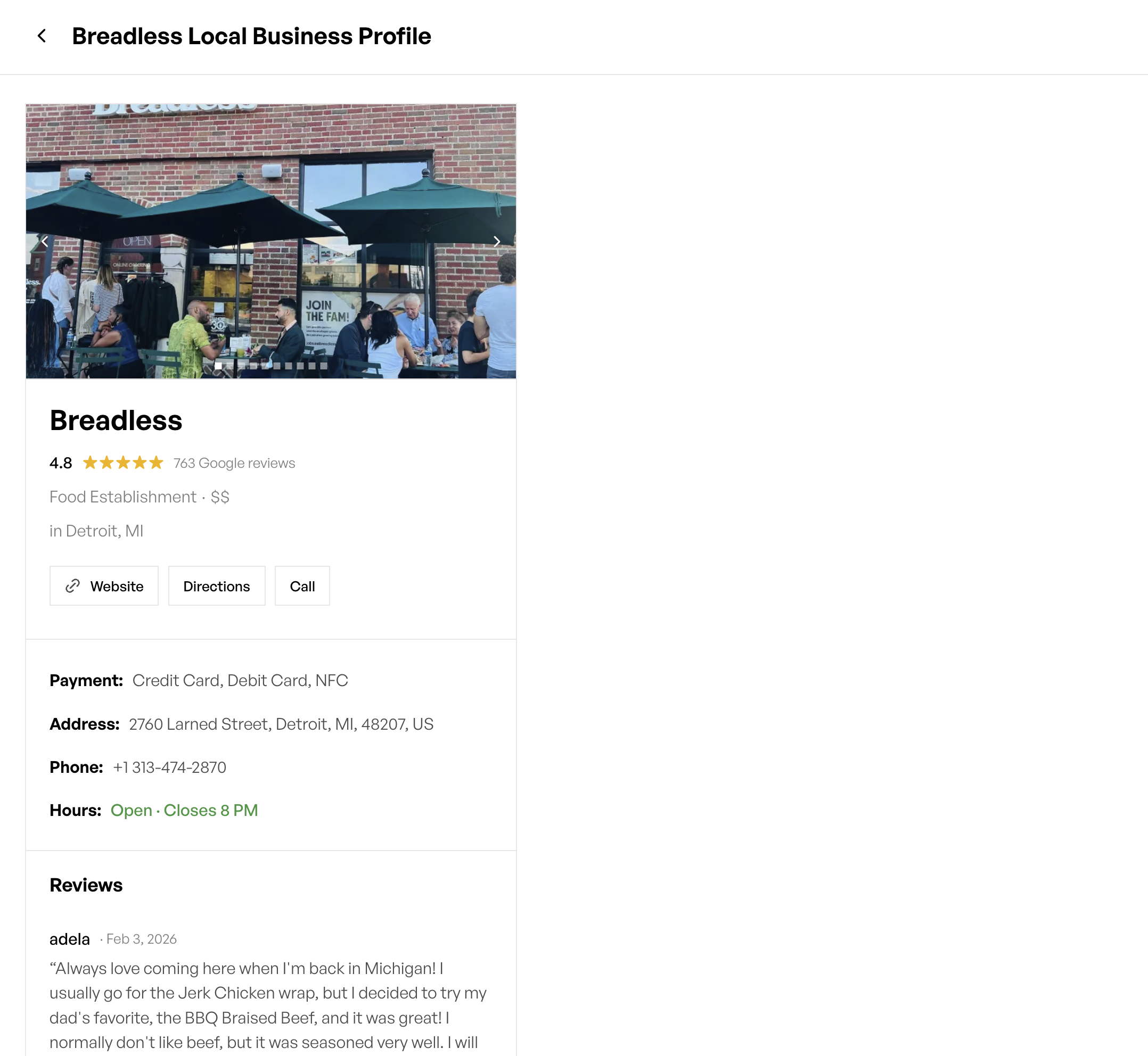
Pricing uses a flat fee with no per-article charges, credit limits, or per-prompt billing, and clients own all the content they produce. Across the first twelve weeks, clients average more than 12,000 additional AI citations and mentions, over 100,000 additional bot visits, and a 20%+ lift in impressions. Breadless, for example, now sees ChatGPT citing eatbreadless.com over 45,000 times per month. Leva Sleep’s content is cited by ChatGPT over 10,000 times per month, with $40,000 to $50,000 in deals closed in under three weeks from buyers who found them through AI Growth Agent content.
Measure Your AI Visibility With AI Growth Agent
Step 6: Avoid The Two Biggest Topical Depth Failures
Two failure modes account for most topical depth problems. The first is creating separate pages for every query variation. This approach fragments signals across near-duplicate URLs and weakens the entity graph. Google’s helpful content guidance lists producing lots of content across many different topics hoping some will perform, and mainly summarizing what others say without adding much value, as warning signs of search-engine-first content.
The second failure mode treats volume as depth. Between the August 2022 helpful content update and the March 2024 core update, sites that interpreted “cover the topic” as “publish at volume” lost the majority of their traffic despite having textbook topical structure on paper. A cluster of 80 thin articles has less authority than a cluster of 20 substantial ones.
Step 7: Work The Example
An entity graph for “restaurant inventory management in the UK” makes the structure concrete. The definitions layer names what restaurant inventory management is, what it is not, and how it differs from general stock control. The fundamentals layer names par level, stock variance, and order frequency as the mechanisms the subject depends on. The problems layer names spoilage and over-ordering as the failure modes and explains how to diagnose each. The comparisons layer names Toast, MarketMan, and Lightspeed as the comparison entities, with honest differences and decision criteria for each. The evidence layer contains original data on spoilage rates by cuisine type or documented process for a weekly stock count. The opinions layer takes a defensible position on which approach fits which operation size, with named tradeoffs.
Jelly, a restaurant inventory management platform in the UK, used this architecture with AI Growth Agent and became the number one cited solution for “Restaurant Inventory Management in the UK” on ChatGPT, with 120+ mentions and a 20%+ impression lift within 28 days. AirOps found that pages with headings closely matching the user’s query were cited 41% of the time, versus 29% for pages with weak heading matches. Named entities outperform placeholders, and concrete examples outperform abstractions.
Common Mistakes And How To Troubleshoot
The most common planning failure is mapping keywords instead of entities and follow-up questions. A keyword list does not equal a topical map. A topical map is the full layout of a subject: every entity, every relationship, and every follow-up question a knowledgeable reader would expect a thorough source to cover.
Common mistakes that break topical depth:
- Mapping keywords instead of entities and follow-up questions
- Publishing many shallow pages on a topic, which dilutes rather than builds
- Creating separate pages for every query variation, fragmenting signals across near-duplicate URLs
- Ignoring entity consistency: alternating between brand name variants across company, product, and author descriptions
- Skipping the evidence layer and publishing only commodity content
- Measuring with vanity metrics: reporting blended impressions or treating rising AI impressions as rising traffic
How to troubleshoot in dependency order:
- Is the page indexed and eligible to appear in Search with a snippet? To be eligible to appear as a supporting link in AI Overviews or AI Mode, a page must be indexed and eligible to be shown in Google Search with a snippet.
- Are the entity descriptions consistent across company, product, and author pages?
- Does the follow-up chain have coverage? Map the seven follow-up questions from Step 3 against published content.
- Does the evidence layer exist? If every claim on the page can be summarized from many other sites, the evidence layer is missing.
A practical audit checklist: for each seed term, confirm the definitions layer exists, the fundamentals layer exists, the problems layer exists, the comparisons layer exists, the evidence layer exists, and the opinions layer exists. Any missing layer becomes the next build priority, ahead of additional volume in a layer already present.
Frequently Asked Questions
How Long Does It Take To Build Topical Depth That AI Surfaces Will Cite?
The timeline depends on the competitive density of the subject and the completeness of the entity graph at launch. Content can index in as little as ten days and often within two weeks. Citation share begins to move in three to six months as the follow-up chain fills in and the evidence layer accumulates corroboration from third-party sources. The entity graph compounds: each new layer increases retrieval priority on related questions, which increases citation confidence, which increases recommendation share. The first citations appear early. Durable citation share across the full follow-up chain takes a sustained build sequence rather than a single publishing sprint.
Who Should Own The Topical Depth Build Inside A Marketing Team?
The decision-maker who controls the marketing outcome owns the build order. The entity graph is an architecture decision, so it belongs at the CMO or founder level rather than with an SEO manager or content writer. The practical execution can be delegated, but the layer priorities, the evidence layer investment, and the measurement framework require someone who can connect topical depth to revenue. Teams that delegate the build order without retaining the architecture decision consistently produce volume without depth.
Does Technical SEO Still Matter For AI Visibility?
Technical SEO still matters and acts as the prerequisite for everything else. A page must be indexed and eligible to appear in Google Search with a snippet before it can appear as a supporting link in AI Overviews or AI Mode. Beyond indexability, the technical stack that matters for AI visibility includes structured schema markup, proper sitemaps, a detailed robots.txt, internal linking that encodes entity relationships, and agentic technical SEO elements such as Blog MCP, llms.txt and llms-full.txt, and agent discovery endpoints. Technical SEO cannot replace topical depth, and topical depth built on a technically broken site produces no AI visibility.
How Is Topical Depth Different From Just Publishing More Content?
Topical depth is a coverage decision. The entity graph has six named layers: definitions, fundamentals, problems, comparisons, evidence, and opinions. Publishing more content in a layer already present adds volume. Publishing content in a missing layer adds depth. A site with 200 articles covering only the definitions and fundamentals layers has less topical depth than a site with 30 articles covering all six layers, because the follow-up chain is incomplete and the evidence layer is absent. AI surfaces retrieve the most complete, verifiable answer to a specific question, not the site with the most pages.
How Do I Know Which Layer To Build Next?
Run the audit checklist from the troubleshooting section against your current seed terms. For each seed term, confirm whether the definitions layer exists, the fundamentals layer exists, the problems layer exists, the comparisons layer exists, the evidence layer exists, and the opinions layer exists. The first missing layer for your highest-priority seed term becomes the next build priority. If the evidence layer is missing across all seed terms, that investment has the highest leverage, because it is the non-commodity layer most directly correlated with citation confidence.
Plan Your Next Layer With AI Growth Agent
Conclusion: Build The Architecture, Not The Archive
Building topical depth for AI visibility is an architecture decision. The entity graph has named layers, the follow-up chain has a specific structure, and the evidence layer has a clear definition: original data, first-hand testing, and documented process that create non-commodity content. Measurement relies on the Generative AI performance report in Search Console discussed in Step 5, along with bot traffic and citation context as the signals that replace position numbers.
The build sequence is the build order. Step 1 separates topical depth from topical authority so the first decision is structural. Step 2 builds the entity graph with named layers. Step 3 maps the follow-up chain AI search actually uses. Step 4 builds the evidence layer. Step 5 measures with the right report. Step 6 avoids the volume trap. Step 7 works a concrete example with named entities.
The brands cited in AI search this year are training the next generation of models with their own narrative. The leaderboard is being written now. Brands that establish authoritative topical depth today compound that advantage as the models retrain, while brands that wait train the next generation with whatever happens to be sitting on the open web.
AI Growth Agent builds and maintains this architecture on autopilot: entity graph, follow-up chain coverage, evidence layer, living self-healing content, and measurement grounded in the signals that matter. Traditional search tools show you where your brand stands. AI Growth Agent helps your brand become the answer. Book a kickoff and see your first article live within a week.
Get Started With AI Growth Agent