Written by: Mariana Fonseca, Editorial Team, AI Growth Agent
Key Takeaways
- An AI search lead engine maps seed terms and high-intent prompts, enriches accounts, and applies a 70-point scoring model across ICP fit, intent strength, and recency to deliver qualified pipeline.
- Phase 1 builds a prompt taxonomy that tags queries by funnel stage and ICP match, so every long-tail variant aligns with buying triggers and firmographics.
- Phases 2 through 4 connect anonymous AI sessions to named accounts, route visitors to intent-matched landing pages, and turn pre-qualified traffic into demo requests or form submissions.
- Phase 5 closes the loop with GA4 and CRM attribution that isolates incremental pipeline and closed-won revenue from AI search sources.
- AI Growth Agent automates the entire engine, mapping prompts, scoring leads, and routing pipeline, so marketing hands sales only qualified opportunities; see the automated engine in action.
Phase 1: Define ICP and High-Intent Prompt Taxonomy
Goal
Map the full universe of prompts your ideal buyers type into ChatGPT, Perplexity, and Google AI Mode, then organize them into a taxonomy that connects directly to ICP firmographics and buying stages.
Sequence
- Pull your ICP definition: industry, company size, revenue band, tech stack, and buying trigger.
- Identify 10 to 20 seed terms that anchor your market, such as “AI search lead generation” or “B2B intent scoring.”
- Expand each seed term into long-tail queries using real-time Google AI Overview and ChatGPT search results as the objective function, not keyword tools alone.
- Tag each query by funnel stage: problem awareness, solution exploration, or product evaluation.
- Use the funnel-stage tags to prioritize queries that match both your ICP and a high-intent stage, then remove queries with no ICP signal and flag head terms that AI surfaces rarely cite.
Inputs and Tools
Use ICP documentation, real-time ChatGPT and Google AI Mode search results, Google Search Console query data, and a prompt taxonomy template organized by seed term and funnel stage.
Roles
The marketing strategy lead owns taxonomy decisions. Demand generation validates funnel-stage tagging against closed-won data.
Validation Checkpoints
Average CRM ICP-fit data is 54% according to Cognism 2024 benchmarks. Verify that each seed term has at least 10 long-tail variants. Cross-reference the taxonomy against AI referral traffic growth data to prioritize verticals where AI-referred sessions already appear.
Suggested Visual
This table helps you verify that your taxonomy covers all three funnel stages and that each seed term generates enough long-tail variants to capture diverse buyer intent. A table with four columns: Seed Term, Long-Tail Query, Funnel Stage, and ICP Match Score. A taxonomy checklist confirms coverage across problem awareness, solution exploration, and product evaluation stages.
Phase 2: Map Buyer Prompts to Accounts with Enrichment
Goal
Connect anonymous AI-referred sessions to named accounts so that intent signals turn into actionable pipeline rather than unattributed traffic.
Sequence
- Tag all controlled links in AI-cited content with UTM parameters that carry prompt category and funnel stage.
- Build a custom GA4 channel group named “AI Search” that matches sessions where source contains chatgpt.com, perplexity.ai, gemini.google.com, claude.ai, and copilot.microsoft.com, following the three-layer attribution model of session-level GA4 tracking, self-reported attribution, and influence-level measurement.
- Pass the landing page URL and UTM data into your CRM on form submission, creating an “AI Source” field populated from both GA4 session data and self-reported form responses.
- For sessions that do not convert immediately, run IP-to-account enrichment on AI-referred sessions to resolve anonymous visitors to company records, so you can score and route them even before they fill out a form.
- Append firmographic data such as industry, employee count, revenue estimate, and technology signals.
Inputs and Tools
Rely on GA4 custom channel groups, a CRM with an “AI Source” property, an IP-to-account enrichment provider, and a self-reported discovery question on all demo and contact forms with an explicit “AI assistant (ChatGPT, Perplexity, Claude)” option.
Roles
Marketing operations configures GA4 and CRM fields. Revenue operations validates enrichment match rates against ICP criteria.
Validation Checkpoints
Confirm that the GA4 AI Search channel captures referrals correctly and that AI-influenced visits that arrive without a referrer header are accounted for through self-reported data and branded search lift in Google Search Console. Verify that enriched accounts align with ICP firmographics before passing to scoring.
Suggested Visual
This table shows you how to verify that your enrichment pipeline correctly connects anonymous AI sessions to named accounts and that those accounts match your ICP criteria. An account enrichment table with five columns: Session Source, Landing Page, Enriched Company, ICP Firmographic Match, and AI Source Field Value.
Phase 3: Apply the 70-Point Scoring Model
Goal
Create a reusable, transparent score for every AI-referred lead so that marketing hands sales only accounts above the qualification threshold.
Sequence
- Assign ICP fit points based on firmographic match to the ICP criteria defined in Phase 1.
- Assign intent strength points based on the funnel stage of the prompt that drove the session and the behavioral signals observed on-site.
- Assign recency points based on how recently the account engaged with AI-cited content and whether the engagement occurred within a defined trigger window.
- Sum the three dimensions to produce a total score out of 70.
- Route accounts scoring 70 or above to sales as AI-qualified leads. Place accounts scoring 40 to 69 into a nurture sequence. Suppress accounts below 40.
The 70-Point Formula
| Dimension | Signal | Max Points | Scoring Logic |
|---|---|---|---|
| ICP Fit | Industry match | 10 | Exact match = 10, adjacent = 5, no match = 0 |
| ICP Fit | Company size match | 8 | Within target band = 8, one band off = 4, outside = 0 |
| ICP Fit | Revenue band match | 7 | Within target band = 7, one band off = 3, outside = 0 |
| Intent Strength | Prompt funnel stage | 10 | Product evaluation = 10, solution exploration = 6, problem awareness = 2 |
| Intent Strength | Pages visited per session | 8 | Pricing plus demo page = 8, two content pages = 4, one page = 1 |
| Intent Strength | Session duration | 7 | Over 600 seconds = 7, 300 to 599 = 4, under 300 = 1 |
| Intent Strength | Self-reported AI source | 5 | Confirmed AI discovery on form = 5, inferred from GA4 = 2, absent = 0 |
| Recency | Days since first AI-referred session | 8 | 0 to 7 days = 8, 8 to 30 days = 4, over 30 days = 1 |
| Recency | Repeat AI-referred sessions | 7 | Three or more sessions = 7, two sessions = 4, one session = 0 |
The weights in this table are not arbitrary. They reflect the principle that strong AI lead scoring systems define 5 to 7 ICP firmographic and behavioral criteria and validate model weights with sales teams, with Hot thresholds set at 70 or above. The recency dimension highlights the importance of timely engagement on key pages, which can help compress the sales cycle.
Downloadable Scoring Resources
To help you implement this model in your own environment, two resources are available on request. A prompt taxonomy template organized by seed term, funnel stage, and ICP match score, and a real-time trigger checklist that flags accounts entering the 70-point threshold within a defined window.
Inputs and Tools
Use CRM scoring fields, GA4 behavioral data, enrichment firmographics, and self-reported AI source data from forms.
Roles
Marketing operations builds and maintains the scoring model. Sales validates thresholds quarterly against closed-won data.
Validation Checkpoints
Confirm that accounts scoring 70 or above convert to opportunities. Recalibrate weights every 90 days using closed-won and closed-lost data.
Phase 4: Route AI-Referred Visitors to Intent-Specific Landing Pages
Goal
Send every AI-referred session to a landing page that confirms the AI claim, reduces friction, and turns existing intent into a demo request or qualified form submission.
Sequence
- Identify the top 5 to 10 prompt categories driving AI-referred sessions from your GA4 AI Search channel.
- Build a dedicated landing page variant for each prompt category that mirrors the language and structure the AI system used when citing your content.
- Lead each page with the specific factual claim the AI likely made, confirm key facts in the first viewport, and surface named customer logos and specific outcomes above the fold.
- Once you have confirmed the AI claim and built trust, reduce form friction to a minimum viable set: email and one primary qualifier in the first step, with additional qualification collected after the visitor commits.
- Add a “Why We Were Recommended” content block near the top that addresses the most common reasons an AI assistant referred the visitor.
- Route sessions from the GA4 AI Search channel to the matching variant using UTM-based conditional redirects or IP-based personalization.
Inputs and Tools
Draw on GA4 AI Search channel data, UTM parameters from Phase 1, landing page variants by prompt category, and schema markup for Product, Review, and FAQ on each page.
Roles
Demand generation owns page creation and routing logic. CRO validates conversion performance by prompt category.
Validation Checkpoints
Confirm that intent-matched landing page variants deliver conversion rate improvement for AI traffic versus generic landing pages. Verify that pages load in under 2 seconds on mobile, as pages over 3 seconds lose visitors before they can confirm the AI claim. Monitor rage-click rates as a signal of form or CTA friction.
Suggested Visual
This checklist ensures that every AI-referred visitor lands on a page tuned to confirm the AI claim and convert their existing intent with minimal friction. A landing page checklist with sections for hero claim confirmation, trust signals placement, form field count, schema markup, page speed, and UTM routing logic.
Phase 5: Track and Attribute in GA4 and CRM
Goal
Show that AI-referred sessions meeting the 70-point qualification threshold create incremental pipeline, separate from existing brand visibility, and report results weekly in a format sales and finance can use.
Sequence
- Confirm the GA4 AI Search custom channel group captures referrals from all known AI platforms and sits above the default Referral channel to prevent misclassification.
- Build a GA4 Exploration report filtered to the AI Search channel with dimensions for landing page, session source, and device category, and metrics for sessions, conversions, and revenue.
- Ensure the AI Source field created in Phase 2 captures data from both self-reported form responses and GA4 session data where the source matches an AI platform domain.
- Tag all AI-cited content with custom UTM parameters that carry prompt category, funnel stage, and scoring tier so that closed-won deals can be traced back to the originating prompt.
- Report weekly on AI-referred sessions that meet the 70-point qualification threshold, pipeline created, and closed-won revenue attributed under the AI Source field.
- Cross-reference branded search lift in Google Search Console with AI citation rate trends to account for approximately 70% of AI-influenced visits that arrive without a referrer header and are classified as Direct in GA4.
Inputs and Tools
Use GA4 custom channel groups and Exploration reports, the CRM AI Source field, Google Search Console, UTM parameters, and AI visibility monitoring for citation rate trends.
Roles
Marketing operations owns GA4 configuration and weekly reporting. Revenue operations maintains the CRM AI Source field and validates pipeline attribution. Sales confirms AI-sourced closed-won deals at the deal level.
Validation Checkpoints
Confirm that the GA4 AI Assistant default channel is supplemented by the custom AI Search channel group to capture platforms GA4 does not classify automatically. Verify that self-reported AI discovery data on forms is preserved through the CRM lifecycle so that corrected attribution models recover the full revenue contribution of AI search rather than the 2% captured by last-click alone. Establish a 30-day baseline by defining a stable set of buyer prompts, verifying machine discovery, validating GA4 key events, and comparing visibility, crawler, referral, and conversion layers.
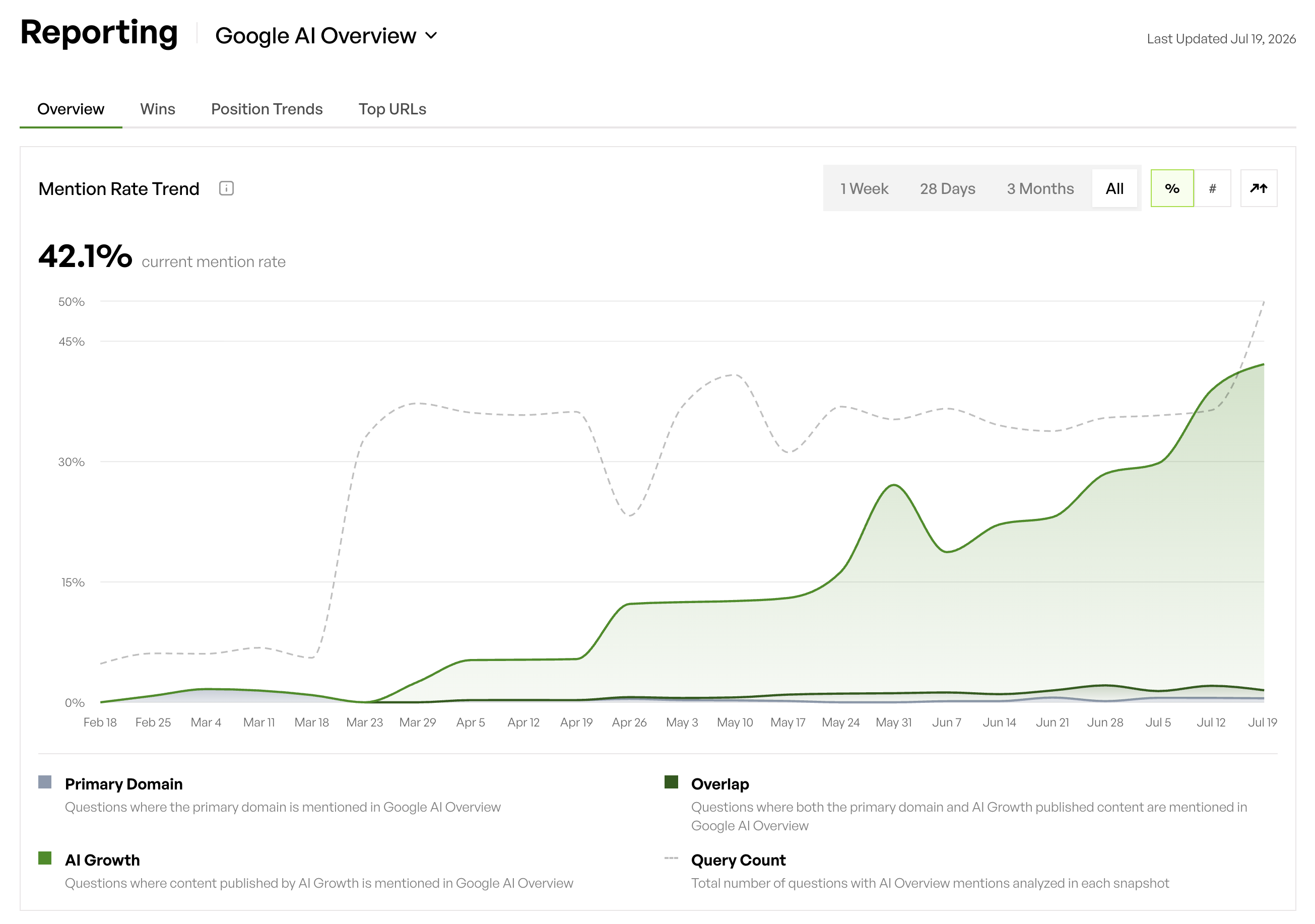
Suggested Visual
This dashboard gives sales and finance a single view of AI search’s incremental contribution, from top-of-funnel sessions through closed-won revenue, so they can validate ROI week over week. An attribution dashboard mockup with five panels: AI-referred sessions over time, engagement and conversion rate versus site average, top landing pages from AI sources, pipeline created by AI Source field, and closed-won revenue by prompt category.
Frequently Asked Questions
How long does it take to see qualified leads from AI search?
The timeline depends on how quickly your content earns citations and how fast your scoring and routing infrastructure is configured. With living, self-healing content indexed quickly and a scoring model validated against your CRM data, the first qualified AI-referred sessions can appear within the first few months. Pipeline attribution in your CRM follows once the AI Source field is populated from both GA4 session data and self-reported form responses. A three-month pilot is standard because indexing timelines vary by industry, but movement appears early.
Who owns the AI search lead engine inside a marketing organization?
Ownership is distributed across three functions. Marketing strategy owns the prompt taxonomy and ICP definition. Marketing operations owns the GA4 configuration, CRM field setup, and scoring model maintenance. Revenue operations validates pipeline attribution and recalibrates scoring weights quarterly against closed-won and closed-lost data. Sales confirms AI-sourced deals at the deal level and provides the feedback that keeps the scoring model accurate. Without a named owner for each function, the system produces data but no action.
What technical dependencies are required to run this system?
The minimum viable stack uses GA4 with a custom AI Search channel group, a CRM with an AI Source field, UTM parameters on all AI-cited content, and a self-reported discovery question on all high-value forms. IP-to-account enrichment is required for Phase 2 account mapping. Intent-matched landing page variants require the ability to route sessions by UTM parameter or IP-based personalization. Full schema markup on landing pages, including Product, Review, and FAQ schema, helps AI surfaces lift details precisely and increases citation likelihood. A headless content engine that publishes living, self-healing content removes the dependency on manual publishing and keeps the citation surface current.
How do you measure AI search attribution when most AI-referred traffic arrives without a referrer?
Attribution relies on three layers working together. The first layer is session-level GA4 tracking for clickable referrals that retain referrer headers, captured through the custom AI Search channel group. The second layer is self-reported attribution via a “Where did you first hear about us?” field on all demo and contact forms, with an explicit AI assistant option, populated into the AI Source field. The third layer is influence-level measurement for zero-click AI mentions that produce no trackable referrer, using branded search lift in Google Search Console and citation rate trends from AI visibility monitoring as leading indicators. As described in Phase 2, this three-layer attribution model combines GA4 session data, self-reported form responses, and branded search lift to capture AI’s full influence, not just the trackable referrals.
How does the 70-point scoring model scale as the prompt universe grows?
The model scales because its three dimensions, ICP fit, intent strength, and recency, are firmographic and behavioral signals that apply to any prompt category, not to specific queries. As the prompt taxonomy expands from hundreds of queries to over a thousand, the scoring logic remains constant while the funnel-stage tags on each query determine the intent strength allocation. Scoring weights should be recalibrated every 90 days using closed-won and closed-lost data so the model reflects your actual sales cycle rather than a generic benchmark. A headless content engine that maps the full universe and refreshes it weekly keeps the prompt taxonomy feeding the scoring model current without manual intervention.
Can this system run without adding headcount?
The system is designed to run without adding headcount. The GA4 configuration, CRM field setup, and scoring model are built once and maintained through quarterly recalibration. The content layer, which is the source of AI citations, historically required an editor, an SEO specialist, a researcher, and a publishing workflow. A headless marketing engine replaces that entire stack with one autonomous system that maps the universe, produces living content, publishes with full technical and agentic SEO, and self-heals over time. The internal team gives feedback in plain language, and the engine learns and applies it to every future generation without re-briefing.
Schedule a consultation to walk through your implementation requirements so you can see how AI Growth Agent maps your universe, scores AI-referred leads, and routes qualified pipeline to sales without adding headcount.
Conclusion
AI search functions as a lead acquisition channel, not just a visibility channel. Brands that treat it this way generate scored, sales-ready pipeline while competitors produce monitoring reports. The five-phase system described here replaces a fragmented stack of tools, agencies, and manual processes with a closed-loop engine: a prompt taxonomy mapped to ICP accounts, the scoring model described in Phase 3 applied to every AI-referred session, intent-matched landing pages that convert pre-qualified visitors, and attribution that proves incremental results in GA4 and CRM week over week.
Headless marketing makes this system durable. Living, self-healing content keeps the citation surface current without a publishing team. Agentic technical SEO ensures AI surfaces can read, trust, and cite the content. Incremental visibility reporting isolates exactly what the engine generated rather than taking credit for visibility the brand already had. The prompt taxonomy compounds as the universe expands. The scoring model improves as closed-won data recalibrates the weights.
Traditional search tools show you where your brand stands. AI Growth Agent makes your brand the answer and turns every citation into scored, sales-ready leads through one headless engine. The brands cited in AI search this year are training the next generation of models with their own narrative. The brands that wait are training it with whatever happens to be sitting on the open web.