Written by: Mariana Fonseca, Editorial Team, AI Growth Agent
Why CPG Brands Struggle To Earn AI Citations
- CPG brands face a 36-point gap between brand mentions (44%) and URL citations (8%) in AI answers, which creates a structural data problem that needs engineering fixes, not more awareness spend.
- Inconsistent retailer data across DTC sites, Amazon, Walmart, and other marketplaces causes AI agents to drop products at the verify stage, so GTIN/UPC alignment and real-time feed refreshes are essential for faster citation growth.
- Mining review text from retailer sites and third-party platforms provides the exact shopper language AI engines extract, which helps close the gap between brand mention rate and URL citation rate.
- Building authority across trade publications, Reddit, YouTube, and review aggregators creates third-party credibility that prompts AI engines to surface brands by default in their categories.
- AI Growth Agent maps your full product universe, maintains real-time retailer feeds and schema, and delivers measurable citation lifts without adding headcount, so you can see how the complete citation flywheel works for CPG brands like yours.
The Ghost-Citation Problem
The ghost citation occurs when an AI surface names a brand in its answer but never links to the brand’s domain. The gap is larger than most CPG marketers realize. Gradial’s retail AI search visibility study across 28 major brands quantified this gap and confirmed that the 36-point disparity mentioned above appears consistently across the CPG vertical. Similar disparities show up for specific brands in categories like beverages and athletic footwear.
The pattern repeats at the conglomerate level. Sub-brands often appear in AI responses across laundry, cleaning, grooming, and baby care, while citations flow primarily to third-party review sites instead of brand domains.
Semrush and Kevin Indig’s Ghost Citations study found that 62% of AI citations never name the brand, with citation rate at 74.9% but mention rate only 38.3%. Kevin Indig explains that strong brands get named without citation while aggregators get cited without naming the brand at all. The AI system knows the information came from somewhere but does not feel the need to say so explicitly.
Ghost citations do not signal a branding failure. They signal a structural data failure. Engineering fixes the problem more effectively than additional awareness spend.
How Inconsistent Retailer Data Blocks AI Citations
AI shopping agents follow a retrieve, rank, and verify pipeline. They convert shopper queries into structured intent, pull candidate products from indexes and feeds, score candidates against constraints, and only cite products whose data they can verify and attribute to a consistent source. Conflicting prices or specifications between a brand’s ecommerce site and a marketplace listing cause products to be dropped at the verify stage.
Nightly feed refreshes fail for grocery and CPG retailers because inventory turns hourly and pricing changes intraday, while Google’s Shopping Graph refreshes approximately 2 billion listings per hour. Stale data causes deprioritization. The Shopping Graph refresh rate sets the floor for what AI agents expect.
Ready To Engineer Your Citation Flywheel?
AI Growth Agent maps your full product universe, maintains real-time retailer feeds and schema, and delivers measurable citation lifts without adding headcount. Get a free flywheel audit and see whether your current setup can support AI citation growth.
Strategy 1: Turn Every SKU Into a Single, Citable Product Entity
Goal: Make every SKU a citable record by giving AI systems a single, verified, cross-channel product entity they can resolve without ambiguity.
Sequence of actions:
- Audit your catalog for GTIN/UPC consistency across your DTC site, Amazon, Walmart, Target, Kroger, and Instacart listings. Flag any SKU where the identifier differs or is absent.
- Deploy Schema.org Product and Offer markup with GTIN, MPN, brand, description of at least 150 characters, price, availability, and AggregateRating on every PDP.
- Add typed additionalProperty fields for dietary flags, allergens, nutrition facts, package size, and unit price so AI agents can match conversational constraints such as “gluten-free pasta under $5.”
- Replace nightly feed refreshes with webhook-based or 15-minute interval inventory pulls to meet the Shopping Graph’s refresh cadence.
- Synchronize taxonomy and attribute values across your PIM, Merchant Center feed, and JSON-LD schema so no field contradicts another.
Executing this sequence requires access to several data sources and systems.
Required inputs: PIM or MDM export, retailer feed credentials (Walmart Retail Link, Kroger Stratum, Target Partners Online), Schema.org Product markup template, GTIN registry.
Validation points:
- Products with complete structured data including GTIN and rich attributes appear in AI-generated answers at higher rates than products with only basic schema, following the March 2026 core update that repositioned structured data as an AI citation confidence signal.
- A majority of pages cited by AI systems include structured data.
- Confirm GTIN consistency by running the same product query across ChatGPT Shopping and Perplexity product cards and checking whether both surfaces return the same entity. The table below contrasts weak product records that AI agents drop at the verify stage against citable records that pass verification and earn citations.
| Field | Weak Record | Citable Record | Source |
|---|---|---|---|
| GTIN/UPC | Missing or inconsistent across channels | Identical across DTC, Amazon, Walmart, Kroger | Claro AI, 2026 |
| Description length | Under 80 characters | 150+ characters with specifications | Logicbroker, June 2026 |
| Dietary/allergen flags | Buried in paragraph text | Structured schema fields | Paz.ai, 2026 |
| Feed refresh cadence | Nightly batch | Webhook or 15-minute interval | Paz.ai, 2026 |
Strategy 2: Rewrite PDPs With AI-Extractable Review Language
Goal: Surface the shopper language AI engines extract for product characterization and use it to close the gap between brand mention rate and URL citation rate.
Sequence of actions:
- Pull review text from Amazon, Walmart, Target, Sephora, Ulta, and Instacart at the SKU level. Shoppers post within days of purchase, which makes this the fastest-closing signal source.
- Identify recurring claim patterns such as specific outcomes, ingredient callouts, use-case language, and complaint clusters.
- Rewrite PDP copy and FAQ blocks using the exact phrases shoppers use, structured as named entity plus direct answer plus evidence.
- Syndicate updated copy back to retailer PDPs through content syndication tools to maintain consistency.
- Monitor TikTok, Reddit, and creator content as a confirmation layer to determine whether a review pattern is isolated or spreading across the category.
Required inputs: Retailer review exports or API access, social listening tool, content syndication platform.
Validation points:
- In the Attrifast 2026 study of citation events, editorial reviews accounted for a notable share of food and beverage citation slots while Reddit accounted for a comparable share, which shows heavier reliance on community and review sources than in regulated verticals.
- AI models favor CPG product content that makes specific, verifiable claims backed by independent testing over generic marketing language when generating recommendations.
- Brands with active Trustpilot and Yelp profiles have higher citation probability in AI engines than brands without them, per Passionfruit’s March 2026 synthesis of citation studies.
To illustrate the difference between language AI engines ignore and language they extract, compare generic PDP copy such as “great for sensitive skin” with a specific claim like “reduces fine lines in 28 days based on independent clinical testing, verified across Amazon reviews.” The second version provides the precision and evidence AI systems require for extraction.
Strategy 3: Build Third-Party Authority Across Forums and Trade Press
Goal: Achieve the authority density that causes AI engines to surface a brand by default by concentrating credible mentions across the third-party domains AI systems weight most heavily.
Sequence of actions:
- Identify the CPG-specific citation domains your category relies on. In the CPG vertical, dominant AI citation sources include Modern Retail, Retail Dive, Food Dive, AdAge, Reddit, and review aggregators, per the 5W Trade Press AI Index 2026 synthesis of citations across nine industries.
- Pitch product news, original data, and category commentary to trade editors at those publications. Editorial coverage in authoritative independent media ranks as the highest tier of third-party validation for AI visibility, because the publication’s institutional credibility transfers to the brand and feeds AI retrieval systems with exceptional force.
- Seed Reddit threads in r/MealPrepSunday, r/cooking, and category-specific subreddits with factual, non-promotional product information. Reddit captured a significant share of citation slots in food and beverage prompts in the Attrifast 2026 study, the highest share among the verticals measured.
- Pursue YouTube coverage from category creators. YouTube mentions showed the highest correlation with AI visibility in Ahrefs’ December 2025 study of brands. Review platforms extend this authority signal by capturing ongoing customer sentiment in a structured way.
- Ensure brand profiles are complete and active on Trustpilot and relevant review aggregators. Research on review platform impact shows mixed results. Seer Interactive’s analysis reported higher citation rates for brands with review profiles, while SE Ranking’s study of 129k domains found no correlation between review-platform listings and ChatGPT citations. The difference likely reflects platform-specific behavior, where Perplexity and Gemini may weight review platforms more heavily than ChatGPT. Maintain active profiles across major platforms to capture citations from engines that do weight them.
Required inputs: Trade press contact list, Reddit community map, YouTube creator roster, review platform profiles.
Validation points:
- Clearscope research found that brands mentioned positively across at least four non-affiliated surfaces are more likely to appear in ChatGPT responses.
- Brands cited across many publications see AI citations rise compared to brands publishing only on their own site, per Omnibound’s 2026 GEO statistics report sourcing Princeton/KDD research.
Suggested visual: A ranked list of CPG citation domains by AI engine weight, with target publication names, subreddit handles, and review platform URLs in three columns.
See the Full Flywheel in Action
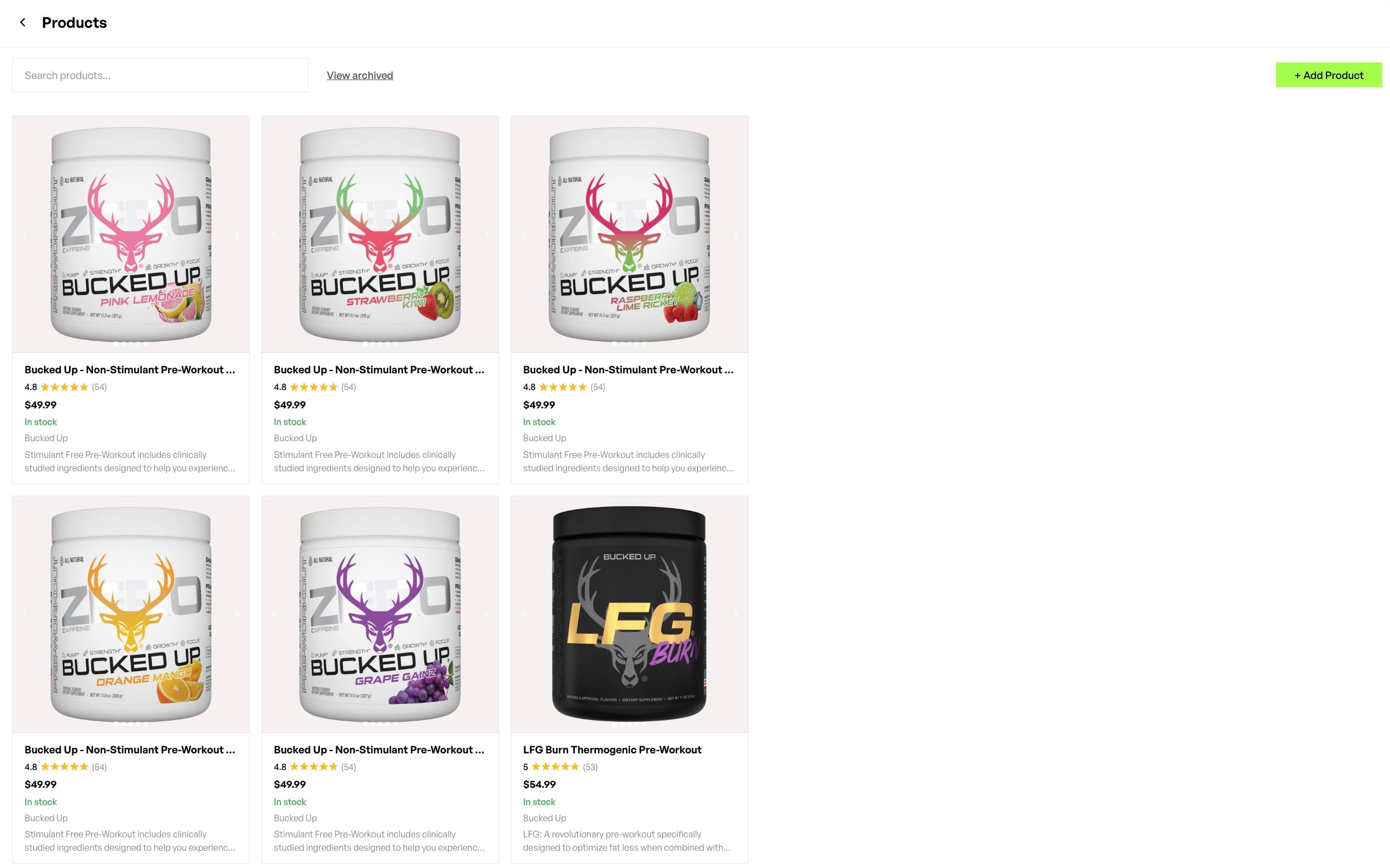
Leva Sleep became the most mentioned retailer for adjustable beds in Canada, with ChatGPT citing its content frequently, and Bucked Up became the number-one cited product for “Best Protein Soda” within three weeks. Both results came from engineering the complete citation flywheel, not from monitoring it. See how the complete citation flywheel works for CPG brands like Leva Sleep and Bucked Up.
Strategy 4: Structure Content as Atomic Q&A That AI Can Lift
Goal: Produce owned content that AI engines extract at the passage level by structuring every page as a collection of atomic, self-contained claim units.
Sequence of actions:
- Map the fan-out queries your category generates, such as “best [product type] for [use case] under [price],” “is [brand] gluten-free,” and “how does [ingredient] compare to [alternative].” Use real-time ChatGPT and Google AI Overview results as your objective function for which queries deserve focus.
- Open every section with a 40-to-60-word answer capsule containing the key facts. This format is what AI engines most frequently extract for citations, per SE Ranking’s domain study.
- Structure body sections at 120-to-180 words between headings. Pages with sections of 120-to-180 words between headings averaged higher citations while pages with sections under 50 words averaged lower, according to SE Ranking’s domain study.
- Add FAQ schema blocks to every product and category page. Pages with FAQ sections see roughly a lift in ChatGPT citation rate compared to pages without them.
- Include multiple statistical data points with linked sources per page. Pages containing statistical data points with linked sources averaged higher citations versus sparse data, per SE Ranking analysis.
- Use comparison tables wherever product options exist. Comparison tables are extracted at a higher rate versus prose making the same points.
Required inputs: Fan-out query map, FAQ schema template, internal data and clinical study references, comparison table framework.
Validation points:
- The Princeton GEO study found that adding citations, quotations, and statistics to existing content can raise visibility in AI-generated answers by up to 40%.
- Over half of cited content across models is informational or comparative, which indicates answer engines favor pages that clarify concepts or enable option comparisons.
- A significant percentage of organizations receive zero direct domain citations in AI-generated answers, which creates opportunity for brands that implement structured, extractable semantic Q&A content.
Suggested visual: A side-by-side page structure diagram showing a standard product page versus a semantic Q&A page, with annotation of answer capsule, FAQ block, comparison table, and statistical claim placement.
Strategy 5: Measure and Close Your Ghost-Citation Gap
Goal: Separate brand mentions from URL citations, isolate the incremental visibility your content efforts generate, and identify which ghost citations to convert into owned citations.
Sequence of actions:
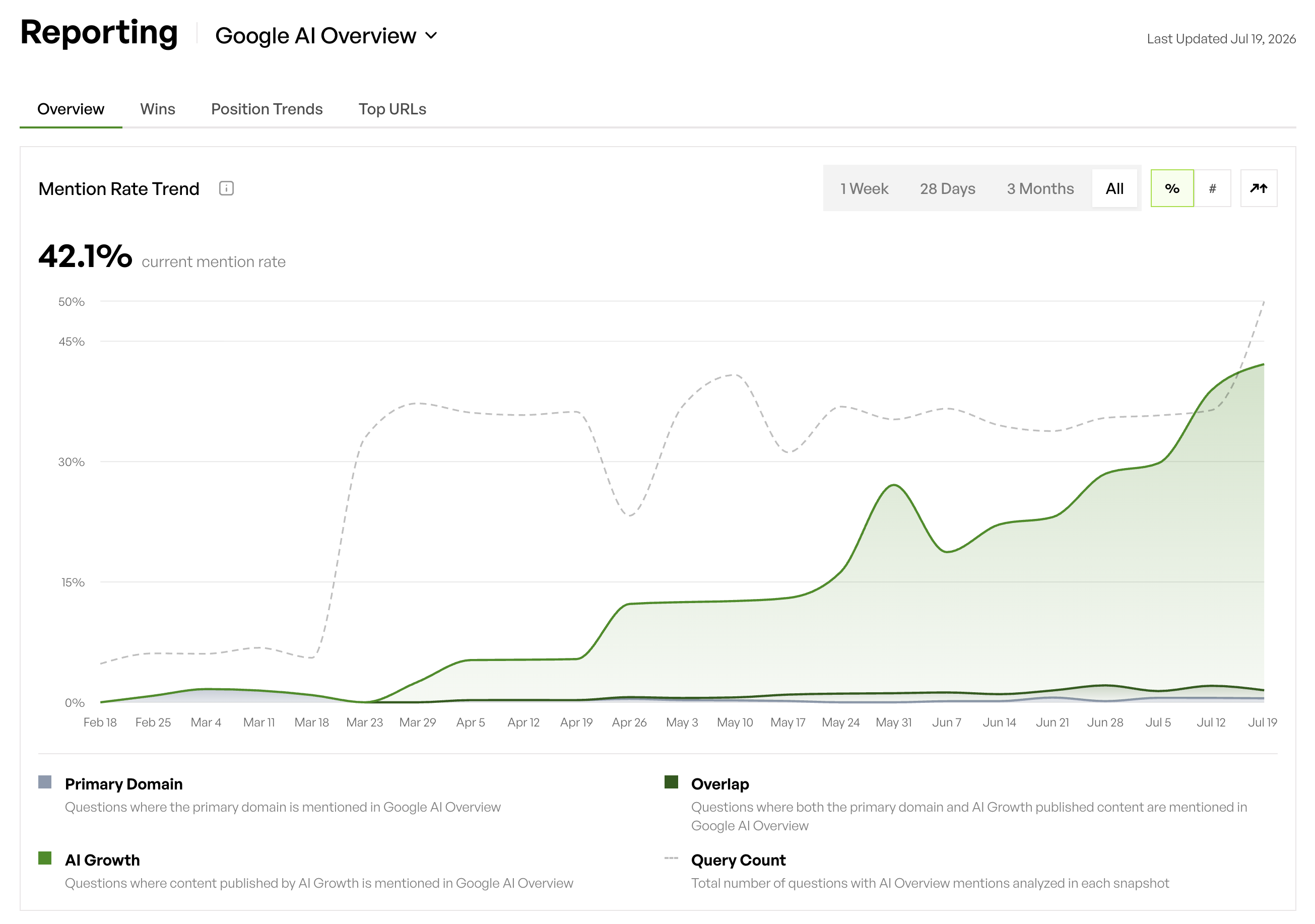
- Establish a baseline by running a standard set of purchase-intent queries across ChatGPT, Gemini, and Perplexity. Record brand appearance, citation URL, and share of mention for each query. Consumer goods brands should conduct quarterly audits of AI representation using this method to track brand appearance, accuracy, and share of mention over time. This baseline becomes your benchmark for measuring progress.
- With your baseline established, separate mention events from citation events in your tracking. A mention without a URL citation is a ghost citation. Map which third-party domains are capturing the citation traffic your brand name is generating so you can see who competes for your citation slots.
- Next, cross-reference per-article bot tracking data with Google Search Console impressions to identify which owned pages are being crawled by GPTBot and PerplexityBot but not yet cited. This step reveals content that is being indexed but not yet trusted enough to cite.
- Measure Share of Model (SoM) across major LLMs before and after each content deployment. Yotpo recommends measuring baseline visibility and Share of Model across major LLMs before implementing structural changes, which enables brands to identify where their products are cited and where competitors are favored. Comparing SoM over time shows whether your interventions work.
- Report incremental visibility week over week, isolating what new content generated versus what the brand already had. This final step turns your tracking into a narrative you can share with stakeholders.
Required inputs: Bot tracking dashboard, Google Search Console access, prompt tracking spreadsheet or platform, SoM baseline report.
Validation points:
- Across all segments analyzed between December 2025 and March 2026, brands are mentioned in an average percentage of AI-generated answers, while top-performing brands reach a higher percentage, roughly multiple times the average, according to AthenaHQ’s analysis of millions of AI responses across multiple LLMs.
- A specialty retailer earned the highest citation rate in Gradial’s study, outperforming global brands with far higher awareness by publishing deep, authoritative, structured buying guides and comparison content.
Suggested visual: A four-column weekly tracking table with columns for query, mention rate, citation rate, and ghost-citation domain, updated each week to show conversion progress.
Strategy 6: Run a 90-Day Plan With Clear Citation KPIs
Goal: Sequence the five preceding strategies into a compounding execution plan with measurable milestones at 30, 60, and 90 days.
Sequence of actions:
- Days 1-30 (Foundation): Complete the GTIN/UPC audit and deploy Product schema across the full catalog. Establish the ghost-citation baseline across purchase-intent queries. Identify the top ghost-citation domains capturing your brand’s traffic. Publish the first semantic Q&A articles targeting high-volume fan-out queries.
- Days 31-60 (Authority): With your technical foundation in place, shift focus to building third-party credibility. Pitch trade publications and seed Reddit threads with factual product content to create the external validation AI engines weight heavily. Activate or refresh Trustpilot and review aggregator profiles to establish review presence. Apply the review language you have mined by rewriting top PDPs using atomic claim units, and complete your technical stack by switching retailer feeds to webhook or 15-minute refresh cadence to match the Shopping Graph’s expectations.
- Days 61-90 (Compounding): Publish additional semantic Q&A articles. Run a second ghost-citation audit and compare mention rate versus citation rate against the Day 1 baseline. Refresh any article older than 90 days. Pages not updated for a quarter are more likely to lose AI citations, while a majority of commercial citations come from pages refreshed within a year.
Required inputs: Flywheel audit output, content calendar, retailer feed access, trade press contact list, bot tracking and Search Console dashboards.
Validation points and KPIs:
- Day 30: GTIN consistency confirmed across all major retailer feeds and ghost-citation baseline documented.
- Day 60: URL citation rate up from baseline, at least three trade placements secured, and bot crawl volume increasing on new semantic pages.
- Day 90: Share of Model measurably higher than baseline, ghost-citation conversion rate tracked, and Google Search Console impressions showing incremental lift attributable to new content.
AI Growth Agent clients average additional AI citations and mentions, additional bot visits, and a lift in impressions across the first twelve weeks. Breadless grew Google Search Console impressions significantly in six months, with ChatGPT citing eatbreadless.com frequently.
Suggested visual: A three-column 90-day Gantt table with rows for schema, content, authority, measurement, and feed cadence, and milestone checkboxes at Day 30, Day 60, and Day 90.
Your Flywheel Will Not Run Itself
Traditional search tools show you where your brand stands. AI Growth Agent makes your brand the answer. The flywheel above requires real-time retailer feeds, living content, bot tracking, schema at scale, and incremental visibility reporting, all running simultaneously. That is exactly what the headless engine delivers without adding headcount. Start your pilot and publish your first AI-ready article within a week.
Frequently Asked Questions
How long does it take to see measurable AI citation lifts for a CPG brand?
Most brands see the first content index within ten days of publication, often within two weeks. Ghost-citation baselines become measurable within the first two weeks of tracking. Meaningful citation rate movement, defined as a measurable shift in URL citation rate versus mention rate, usually appears within 30 to 60 days when schema, feed consistency, and semantic content go live in parallel. The standard AI Growth Agent pilot runs three months because compounding authority from trade placements and review text needs time to accumulate across the third-party domains AI engines weight most heavily. Clients like Leva Sleep and Bucked Up saw ChatGPT citations within three weeks of content going live.
Who owns the CPG citation flywheel inside a brand organization?
The CMO or the founder acting as CMO owns the outcome. Execution spans ecommerce for retailer feed consistency and schema, content for semantic Q&A articles and FAQ blocks, and PR or communications for trade publication placements and review platform management. Most CPG brands have not closed the ghost-citation gap because no single team owns all three tracks at once. AI Growth Agent functions as the single headless engine that runs all three tracks without requiring the brand to coordinate across agencies or add headcount. The internal team gives direction in plain language, and the engine handles schema, publishing, bot tracking, and self-healing content.
What technical dependencies must be resolved before the flywheel produces citations?
Four dependencies must be in place before citation velocity compounds. First, GTIN/UPC consistency across every retailer feed and your DTC site, because AI shopping agents drop products at the verify stage when identifiers conflict. Second, server-side rendering on product pages, because AI crawlers including GPTBot and PerplexityBot often receive blank shells from JavaScript-heavy storefronts. Third, Schema.org Product and Offer markup with price, availability, and AggregateRating present, because complete schema drives the higher citation rates discussed in Strategy 1. Fourth, a feed refresh cadence faster than nightly batch, because the Shopping Graph refreshes approximately 2 billion listings per hour and stale data causes deprioritization. AI Growth Agent provisions the full technical stack, including schema, advanced robots.txt, sitemap, Blog MCP, llms.txt, and agent discovery, automatically on every article and site it publishes.
How do you measure ghost citations versus real citations, and what counts as success?
Ghost citations are brand name mentions in AI answers that do not include a URL pointing to your domain. Measurement requires running a consistent set of purchase-intent queries across ChatGPT, Gemini, and Perplexity, recording both the mention event and the citation URL separately, then mapping which third-party domains are capturing the citation traffic your brand name is generating. Success at 90 days is a measurable narrowing of the gap between mention rate and URL citation rate, combined with increasing bot crawl volume on owned pages and rising Google Search Console impressions attributable to new content. AI Growth Agent reports incremental visibility week over week, isolating exactly what the engine generated versus what the brand already had, so the CMO has a defensible number for every stakeholder conversation.
Can a CPG brand run this flywheel without a technical team or agency stack?
A CPG brand can run this flywheel without a technical team on the brand side, even though the work itself is technical. AI Growth Agent stands up a fully optimized, owned site within the first week, provisions every schema type automatically, maintains real-time feed integrations, and self-heals content as the world changes. The only integration step on the brand’s side is a reverse proxy rewrite connecting the blog to a subdirectory under the brand’s domain. Everything else, including bot tracking, FAQ schema, product schema, llms.txt, Blog MCP, and agent discovery, ships automatically with every package. The internal team reviews finished articles and gives feedback in plain language, and the engine learns and applies that feedback to every future generation without re-briefing.
Conclusion
The CPG brands winning AI citations in 2026 are not the ones with the largest awareness budgets. They are the ones with the cleanest product data, the densest third-party authority, and the most structured owned content. The ghost-citation gap is real, the retailer data problem is solvable, and the six strategies above form a complete, sequenced flywheel that compounds over time.
The brands winning AI citations in 2026 are not just monitoring their visibility, they are engineering it. AI Growth Agent delivers the complete technical stack and content flywheel that turns your brand into the default answer. Book your kickoff call and begin closing your ghost-citation gap.