Written by: Mariana Fonseca, Editorial Team, AI Growth Agent
Key Takeaways for Controlling Your Brand in AI Search
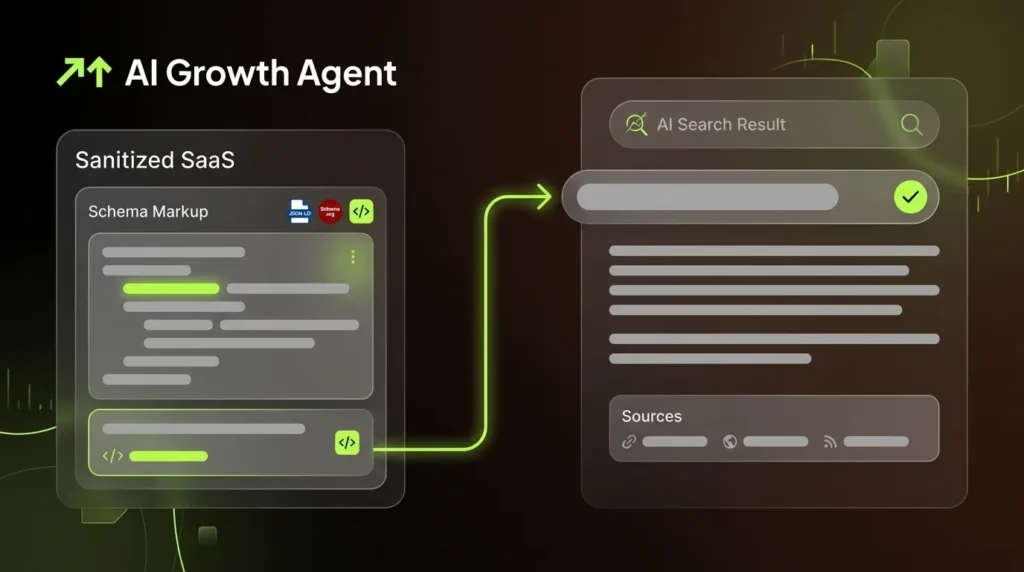
- Schema markup creates clear entities for AI systems through Organization, Person, Product, Offer, and Review schema types with stable @id references.
- The sameAs array connects your brand to authoritative third-party profiles like Wikidata and LinkedIn so AI systems can verify and cite your entity consistently.
- Consistent JSON-LD implementation across all pages reduces factual drift and hallucinations by forming a connected knowledge graph of typed relationships.
- Schema alone cannot control brand narrative because external source conflicts, citation rotation, and outdated third-party data often outweigh on-site structured data signals.
- AI Growth Agent combines schema with living content, llms.txt, and Blog MCP to deliver complete narrative control so you can see the full system in action.
Schema Types That Directly Influence AI Answers
Schema markup shapes brand narrative in AI answers when you focus on the schema types AI systems rely on most. Four core types sit at the center of most enterprise implementations.
Organization defines the brand as a discrete entity. Riley Cullen, Sr. Content Strategist at WP Engine, describes Organization schema as “your digital business card” that consolidates brand identity and reinforces authority across an entire site. Because it serves this consolidating function, it belongs on the homepage and should be referenced by @id everywhere else.
Person schema connects named executives and authors directly to the brand entity.
Product and Offer schema anchors pricing and specification claims so AI systems have a canonical reference.
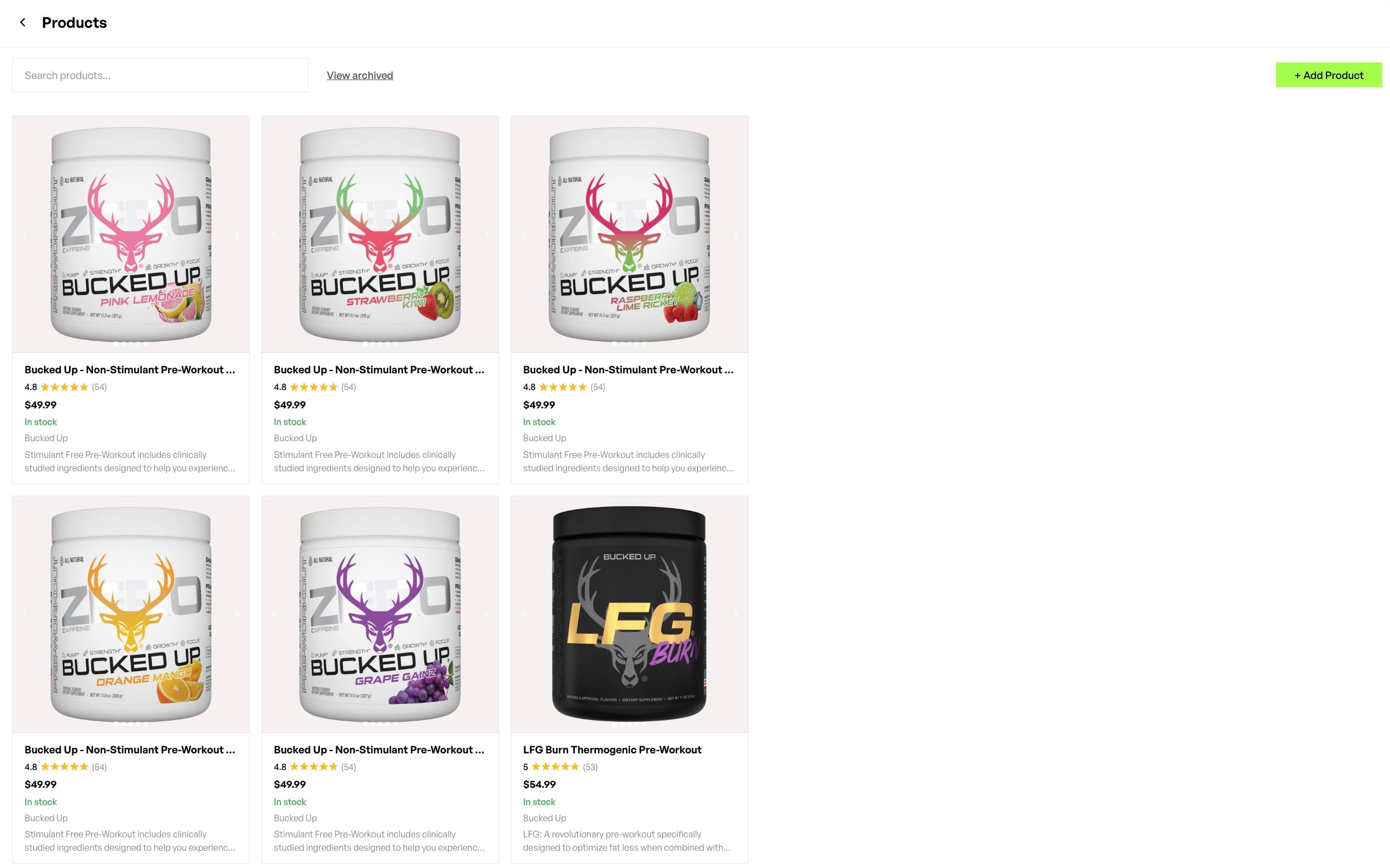
Review and AggregateRating schema surfaces trust signals inside AI answers and rich results. Review and AggregateRating are among the most impactful schema types for 2026 ROI and rich result eligibility, alongside Article, Product, FAQ, LocalBusiness, Organization, and HowTo.
A validated Organization block with @id looks like this:
{ "@context": "https://schema.org", "@type": "Organization", "@id": "https://yourdomain.com/#organization", "name": "Your Brand Name", "url": "https://yourdomain.com", "logo": "https://yourdomain.com/logo.png", "description": "A concise, factual description of what your brand does.", "foundingDate": "2018", "founder": { "@type": "Person", "@id": "https://yourdomain.com/#founder", "name": "Founder Name" } }The @id value must remain identical every time this entity is referenced across the site. Without consistent @id values, the same brand mentioned across multiple articles appears as separate entities and citation authority does not accumulate.
The sameAs Property and External Brand Authority
The sameAs array connects your entity graph to the authoritative third-party profiles that AI systems use to verify brand identity. AI assistants triangulate entity identity through the sameAs graph; without a robust sameAs array, a brand lacks the cross-platform coherence needed for unambiguous identification by systems such as ChatGPT, Perplexity, Claude, or Gemini.
The priority order for sameAs targets reflects the relative authority AI systems assign to each platform when they confirm entity identity. Higher authority profiles carry more weight when models reconcile conflicting information across the web.
- Wikidata Q-entity URL (highest authority)
- Wikipedia article URL, where one exists
- LinkedIn company page
- Crunchbase profile
- Twitter/X profile
- GitHub or GitLab, for technology brands
- Bloomberg company profile, where applicable
A complete Organization block with @id and sameAs:
{ "@context": "https://schema.org", "@type": "Organization", "@id": "https://yourdomain.com/#organization", "name": "Your Brand Name", "url": "https://yourdomain.com", "logo": "https://yourdomain.com/logo.png", "description": "Factual one-sentence description of the brand.", "foundingDate": "2018", "sameAs": [ "https://www.wikidata.org/wiki/Q12345678", "https://en.wikipedia.org/wiki/Your_Brand", "https://www.linkedin.com/company/your-brand", "https://www.crunchbase.com/organization/your-brand", "https://twitter.com/yourbrand", "https://github.com/yourbrand" ] }Jason Barnard, CEO of Kalicube, formalized the entity home concept in a March 2026 Search Engine Land article as “the single page that anchors how algorithms, bots, and people understand your brand. It’s where algorithms resolve your identity, where bots map your footprint, and where humans verify trust before they convert.” That entity home, typically the About page or homepage, is where this Organization block lives.
JSON-LD Patterns That Keep Your Story Consistent
Consistent JSON-LD across every content type reduces the factual drift that produces AI hallucinations about your brand. Best practice uses the @graph pattern to combine multiple schema types in a single JSON-LD block, which reduces script tags and allows entity cross-referencing by ID.
A Person block for a named executive, linked back to the Organization entity:
{ "@context": "https://schema.org", "@type": "Person", "@id": "https://yourdomain.com/#ceo", "name": "Executive Name", "jobTitle": "Chief Executive Officer", "worksFor": { "@id": "https://yourdomain.com/#organization" }, "sameAs": [ "https://www.linkedin.com/in/executivename", "https://twitter.com/executivename" ] }A Product block with Offer and AggregateRating to reduce pricing hallucinations:
{ "@context": "https://schema.org", "@type": "Product", "@id": "https://yourdomain.com/product-name/#product", "name": "Product Name", "description": "Factual product description.", "brand": { "@id": "https://yourdomain.com/#organization" }, "offers": { "@type": "Offer", "price": "299.00", "priceCurrency": "USD", "availability": "https://schema.org/InStock" }, "aggregateRating": { "@type": "AggregateRating", "ratingValue": "4.8", "reviewCount": "312" } }The knowledge graph this creates functions as a web of typed relationships. The Organization entity anchors the graph. Person entities connect to it via worksFor. Product entities reference it via brand. Article entities reference both the Organization and the named author via publisher and author fields. Every node carries a stable @id so AI systems accumulate citation authority toward a single, unambiguous brand identity instead of fragmenting it across disconnected mentions.
In headless stacks, JSON-LD comes from typed content fields instead of manual entry. A hybrid headless CMS generates structured data as JSON-LD programmatically from typed content fields, enabling consistent schema markup across thousands of pages at enterprise scale without per-page manual editing.
The Limits of Schema Markup Alone
The implementation patterns above create strong entity clarity for machines. Entity clarity alone does not guarantee narrative control, however, because AI systems still weigh external sources and training data when they generate answers.
Schema clarifies entity relationships for machines. It does not control what machines say about your brand when they pull from conflicting third-party sources, outdated forum posts, or stale training data. This structural limit matters for every enterprise marketer who considers schema a narrative control strategy.
The hallucination problem remains significant. A Columbia Journalism Review study in March 2025 found citation hallucination rates exceeding 60% for leading tools when requesting sourced information. The average hallucination rate across leading LLMs was around 21.8% in 2021, with 2026 rates varying by benchmark but often 1–5% for frontier models on summarization and factual tasks. Frontier models improved on benchmarks, yet brand-specific queries still suffer when training data conflicts with current reality.
This accuracy problem is compounded by citation instability. Only 30% of brands that appear in an AI-generated answer persist in the very next response to the exact same query, which shows citation rotation that structured data alone cannot stabilize.
The source diversity problem makes this instability worse. Review and recommendation platforms such as G2, Yelp, Trustpilot, Tripadvisor, and Clutch appear among the most frequently cited domains in AI answers, showing that brand narrative is shaped by public conversations, peer validation, and third-party context rather than owned website content alone.
Wells Fargo used entity linking via schema markup connected to a content knowledge graph to correct AI Overviews hallucinations, such as incorrectly stating a branch location was closed based on an outdated news article. The bank connected branch entities to current, structured information in its knowledge graph, which gave Google a reliable source of truth. That remediation shows schema markup needs entity linking and structured knowledge graph connections before it can meaningfully correct hallucinations.
Schema functions as one component inside a larger system. Without surrounding architecture that continuously publishes authoritative content, manages external source signals, and keeps the brand’s narrative current across AI surfaces, schema markup becomes a label on an empty shelf.
Integrating Schema into a Living Content Engine
Real narrative control in AI search comes from a system that connects schema, agent instructions, and living content. That system relies on four coordinated layers: valid JSON-LD schema, llms.txt and llms-full.txt, Blog MCP with agent discovery, and living content that updates over time.
Enhanced entity pages that incorporate llms.txt-style agent instructions alongside structured data can improve accuracy in RAG systems and agentic pipelines. These pages give agents both factual structure and explicit navigation guidance.
AI Growth Agent provisions this entire stack automatically, with each layer serving a specific role in the discovery and citation pipeline. Every published site includes:
- The full schema suite, covering Article, Author, Organization, Product, Review, FAQ, LocalBusiness, and Software Application, generated programmatically and kept current to establish page-level entity clarity
- llms.txt and llms-full.txt so AI surfaces receive site-level navigation guidance tailored to how they crawl and rank content
- Blog MCP, compatible with Chrome 146 and other WebMCP-enabled browsers, with schema, manifest, discovery, and capability guidance exposed to agents
- OpenAI discovery and Agent Card guidance served via /.well-known/ so agents can handshake with the site and understand capabilities
- Natural language query parameters via /?s={query} that return personalized, internally linked responses to agents
- Markdown served to agent crawlers so models ingest clean, structured content without layout noise
- Advanced robots.txt, proper sitemap.xml, instant indexing, autoredirects, and 404 tracking to maintain technical hygiene
The content layer is what makes the schema layer matter. Schema without surrounding authoritative content becomes a structured description of a brand that AI systems cannot verify against anything. AI Growth Agent’s living content engine publishes between 2 and 50 articles per day per client, validates every claim and source against primary evidence, and self-heals articles over time so the brand’s narrative stays current through every model training cycle. Clients average more than 12,000 additional AI citations and mentions in the first twelve weeks, with content indexing in as little as ten days.
The headless architecture lets the brand keep its curated main site while AI Growth Agent stands up a fully optimized blog the brand owns, connected through a reverse proxy rewrite under a subdirectory or subdomain. No existing structure changes. No technical team is required. The engine handles schema, MCP endpoints, llms.txt, bot tracking, and self-healing content on autopilot.
This system turns schema from a static label into the machine-readable layer inside a living content engine that makes your brand the cited answer.
Frequently Asked Questions
What is schema markup and why does it matter for AI search?
Schema markup is structured data added to a website in JSON-LD format that tells search engines and AI systems what a page is about, who created it, what entity it belongs to, and how it relates to other entities on the web. In AI search, systems like ChatGPT, Perplexity, and Google AI Mode use schema to verify claims, establish entity relationships, and assess source credibility during answer synthesis. Pages with complete, accurate schema markup are more likely to appear in AI-generated answers because structured data makes facts easier for AI systems to extract with high confidence rather than relying on inference from unstructured text. Schema does not guarantee citation, yet it provides the entity clarity AI systems need to cite a brand confidently.
Can schema markup alone prevent AI hallucinations about my brand?
No. Schema clarifies entity relationships but cannot override conflicting signals from third-party sources, outdated forum posts, review platforms, or stale training data. As noted earlier, external sources frequently carry more weight than on-site structured data, particularly for consensus-driven engines like ChatGPT. Correcting AI hallucinations about pricing, specifications, or brand facts requires a surrounding architecture that continuously publishes authoritative content, manages external source signals, and keeps the brand’s narrative current. Schema functions as one layer inside that system, not the system itself.
What is the difference between @id and sameAs in Organization schema?
The @id property is a stable internal identifier for a brand entity, typically set to a URL fragment like https://yourdomain.com/#organization. It allows AI systems and search engines to recognize that the same brand is being referenced across multiple pages and schema blocks, which accumulates citation authority toward a single entity rather than fragmenting it. The sameAs property is an array of external URLs that link the brand entity to authoritative third-party profiles, such as Wikidata, LinkedIn, Wikipedia, and Crunchbase. Together, @id and sameAs give AI systems two complementary signals: internal consistency across the site and external verification across the broader web. Both are required for strong entity clarity.
What is llms.txt and how does it work with schema markup?
llms.txt is a plain-text file published at the root of a domain that tells AI systems what a site is about at a high level, which sections are most relevant, and how the content is organized. It functions as a site-level instruction layer for AI agents, complementing the page-level specificity of JSON-LD schema markup. Where schema tells an AI system what a specific article or product page contains, llms.txt tells it how to navigate and prioritize the entire site. When both are present alongside Blog MCP and agent discovery via /.well-known/, AI systems receive a complete machine-readable map of the brand’s content, which improves retrieval accuracy and citation consistency across AI surfaces. AI Growth Agent provisions llms.txt, llms-full.txt, Blog MCP, and the full agent discovery stack automatically as part of every engagement.
How does AI Growth Agent differ from simply implementing schema on an existing site?
Implementing schema on an existing site addresses entity clarity for pages that already exist. AI Growth Agent addresses the full system. It maps the brand’s entire universe of queries, produces authoritative living content against each one, provisions the complete schema suite programmatically on every published page, and layers in llms.txt, Blog MCP, agent discovery, bot tracking, and self-healing content updates. Schema on a static site describes a brand to machines. The AI Growth Agent headless architecture continuously publishes the content those machines need to verify, trust, and cite the brand across ChatGPT, Perplexity, and Google AI Mode, without requiring a technical team, an SEO agency, or a content operation to manage it.
Conclusion
Schema markup provides the foundation for brand entity clarity in AI search. Organization schema with a stable @id and a robust sameAs array, Person schema for named executives, Product and Offer schema for pricing accuracy, and Review and AggregateRating schema for trust signals all contribute to the machine-readable layer AI systems use to identify and cite a brand. Without this foundation, even strong content carries ambiguity that AI systems resolve by pulling from whatever external sources appear most prominent.
Schema alone cannot control brand narrative, however. Citation rotation, external source conflicts, and structural hallucination rates mean that structured data on a static site behaves like a label without a system behind it. Brands that appear consistently in AI answers publish authoritative living content at scale, maintain entity graphs connected to Wikidata and authoritative profiles, and expose their content to agents through llms.txt, Blog MCP, and /.well-known/ discovery endpoints.
AI Growth Agent operates as the complete headless system that turns schema into the machine-readable layer inside a living content engine. It provisions the full schema suite, llms.txt, Blog MCP, and agent discovery automatically, publishes authoritative self-healing content across the brand’s entire query universe, and reports the incremental AI citations and impressions it generates week over week. Results begin appearing within days, not months.
See the full system in action and how AI Growth Agent makes your brand the answer.