Written by: Mariana Fonseca, Editorial Team, AI Growth Agent
Key Takeaways
- HubSpot works well for teams that mainly need unified CRM and basic marketing automation, but it rarely meets the needs of mid-market and enterprise brands that treat AI search visibility as a core growth channel.
- The platform’s prompt cap on its AI content tool, mandatory onboarding fees, and lack of self-healing content limit its ability to give brands real narrative control in AI-driven search.
- Headless marketing engines that map full query universes and publish living content create measurable citation gains and compounding authority without HubSpot’s structural limits.
- Implementation speed, pricing clarity, technical SEO depth, and long-term fit for zero-click search all tilt toward dedicated AI search engines when citation performance matters.
- AI Growth Agent provides a headless marketing engine built for full query-universe coverage and AI citation leadership; book a demo to map your brand’s opportunity.
Why AI Search Now Shapes Your Stack
Mid-market and enterprise marketing leaders in 2026 now decide whether the platform that manages contacts and campaigns must also win citations in ChatGPT, Perplexity, and Google’s AI Mode. That decision affects every budget line and every platform choice. This guide compares HubSpot’s full platform with headless marketing engines that publish living, self-healing content built for AI surfaces.
The evaluation criteria are implementation speed, AI search citation performance, pricing transparency and creep, universe coverage versus prompt caps, technical and agentic SEO depth, team involvement required, and long-term adaptability to zero-click search. Before examining each criterion in detail, it helps to see how company size and growth priorities shape which platform architecture makes sense.
Platform Fit by Company Size and Growth Priority
| Company Size | Primary Need | Recommended Path |
|---|---|---|
| SMB (under 50 employees) | CRM, email automation, basic pipeline | HubSpot Starter or equivalent CRM |
| Mid-market (50–500 employees) | CRM plus AI search visibility and narrative control | HubSpot for CRM; headless marketing engine for content authority |
| Enterprise (500+ employees) | Full query-universe coverage, bot tracking, self-healing content, incremental visibility reporting | Headless marketing engine; evaluate CRM separately |
| Any size with franchise or multi-location growth goals | AI citation leadership in a competitive category | Headless marketing engine as primary organic channel |
Takeaway: Company size alone does not determine the right path. The deciding variable is whether AI search citation performance is a growth priority. When it is, HubSpot’s content tooling remains structurally insufficient at every tier.
HubSpot vs. AI Growth Agent: Core Differences
| Criterion | HubSpot | AI Growth Agent |
|---|---|---|
| Implementation speed | Weeks to months, with mandatory onboarding fees at higher tiers | First article live in about one week, content indexing in as little as ten days |
| AI search citation performance | AI content tool often produces prompts that lack brand mentions and rarely surface in AI results | Clients see measurable increases in AI citations and mentions within the first twelve weeks |
| Pricing model | Tiered seat-based pricing with documented creep at renewal, plus onboarding fees at Professional and Enterprise tiers | Flat fee with no per-article charges, credit limits, or per-prompt billing |
| Universe coverage vs. prompt caps | AI content tool capped at approximately 50 prompts | Hundreds of seed terms and thousands of long-tail queries mapped weekly, with prompt count never billed |
| Technical and agentic SEO depth | Standard on-page SEO, provisions an MCP server and an llms.txt endpoint but does not appear to provision Blog MCP, llms-full.txt, or an agentic technical SEO stack; offers AI citation tracking | Full stack including schema suite, Blog MCP, llms.txt, llms-full.txt, bot tracking, agent discovery via /.well-known/, web stories, and instant indexing |
| Team involvement required | Requires marketing operations staff, agency support, or HubSpot-certified partners for content at scale | No technical headcount required; the engine manages schema, publishing, self-healing, and reporting end to end |
| Long-term adaptability to zero-click search | No documented self-healing content, no living content architecture, and no incremental visibility reporting isolated from existing brand traffic | Living content self-heals over time, and incremental visibility reporting isolates what the engine generated week over week |
Takeaway: HubSpot and AI Growth Agent solve different problems. HubSpot is a CRM with content features. AI Growth Agent is a headless marketing engine built to win AI search citations at scale.
Schedule a demo to see if AI Growth Agent fits your brand’s query universe.
Where HubSpot Falls Short for AI Search
Setup and onboarding. HubSpot’s Professional and Enterprise tiers include onboarding fees that raise the total cost before a single campaign runs. These fees fund an implementation process that usually stretches across weeks for mid-market teams. The platform’s complexity at higher tiers often means that timeline depends on certified partner support or dedicated HubSpot administrators.
Operational efficiency. HubSpot brings CRM, email, landing pages, and reporting into one interface, which helps teams that manage those functions together. For teams focused on AI search content at scale, the same structure adds friction because content lives inside a CRM workflow instead of a publishing engine tuned for bot consumption.
Quality control and anti-hallucination. HubSpot’s AI content tool generates text from prompts but does not run multi-stage claim validation, primary-source checks, or anti-hallucination cascades. Content produced at scale through a single-pass system carries accuracy risks that AI surfaces weigh when deciding whether to trust and cite a source.
Technical depth including schema and MCP. HubSpot provisions an MCP server and an llms.txt endpoint but does not appear to provision Blog MCP, llms-full.txt, or an agentic technical SEO stack that AI surfaces use to read and cite content. Schema support remains limited compared with a dedicated publishing engine that ships a full schema suite on every article automatically.
Team and agency dependencies. Scaling content through HubSpot usually requires either internal marketing operations staff or agency partners. The agency then controls the workflow, or the internal team must coordinate editors, SEO specialists, and designers. Both paths move slowly compared with the pace at which AI search surfaces refresh their citation pools.
Scalability to full query universes. The prompt cap mentioned earlier means a brand that treats HubSpot as its primary AI content engine sees only a small fraction of its real query universe. Mature headless marketing clients operate across universes of 1,600 or more queries that refresh weekly. The gap between a small prompt set and a large mapped universe creates a structural ceiling on narrative control.
How HubSpot’s Pricing Model Creates Risk
HubSpot’s pricing model scales with seats, contacts, and tier, and renewal cycles have historically introduced rate increases that compound across multi-year contracts. The onboarding fees mentioned earlier raise the true cost of entry above the advertised monthly rate. Teams that build workflows, integrations, and content libraries inside HubSpot then face switching costs that make renewal the easiest path even when the platform no longer fits the use case.
For mid-market and enterprise brands, the real question becomes whether the total cost of ownership, including onboarding fees, seat costs, agency support, and the opportunity cost of a capped AI content tool, still makes sense. A flat-fee headless marketing engine that covers the full query universe often delivers more AI visibility for a lower and more predictable spend.
HubSpot vs. Salesforce for AI Visibility
Both HubSpot and Salesforce operate as CRM platforms with marketing automation capabilities, and neither was built to win AI search citations. Salesforce’s Marketing Cloud offers enterprise-grade campaign management and data infrastructure, but like HubSpot, it does not provision a full agentic technical SEO stack or self-healing content. HubSpot offers AI citation tracking and an AI Search Sensor that show when ChatGPT and other answer engines surface a brand’s content.
The HubSpot versus Salesforce comparison matters most for teams choosing where to manage contacts, pipeline, and campaign data. For teams focused on controlling what AI surfaces say about their brand, both platforms sit in the same category: CRM tools with content features that were not designed for the discovery shift. Neither maps a full query universe, neither produces living content, and neither reports incremental visibility that is isolated from existing brand traffic.
The more useful comparison for narrative control pairs any CRM platform with a headless marketing engine that was built specifically for AI search.
When HubSpot or AI Growth Agent Makes Sense
HubSpot fits well when the primary need is a unified CRM with email automation, pipeline management, and basic marketing workflows. SMBs and early-stage companies that do not yet treat AI search citation performance as a growth priority gain real value from HubSpot’s consolidated interface. The platform also works for teams that already run content and SEO on separate infrastructure and want HubSpot only for CRM and automation.
AI Growth Agent fits well when the brand needs to control what AI surfaces say about it, cover a full query universe instead of a capped prompt set, publish content that self-heals over time, and report incremental visibility isolated from existing brand traffic. Mid-market and enterprise brands in competitive categories, franchise development, B2B SaaS, retail, and financial services have used the engine to become the most cited or most recommended brand in their category within a standard three-month pilot.
Operational and Long-Term Risks to Plan Around
Contract lock-in creates a real operational risk with HubSpot at higher tiers. The longer a team builds inside the platform, the higher the switching cost becomes. Content created in HubSpot’s CMS ties directly to HubSpot’s infrastructure, so a migration requires both a technical lift and a full content audit.
Incremental visibility reporting is a capability HubSpot does not offer in the context of AI search. The platform reports on email opens, landing page conversions, and pipeline attribution, which helps with campaign performance, but it cannot isolate the AI citations and bot visits that a new content effort generated versus the visibility the brand already had. That gap becomes critical in a zero-click search environment, where brands that cannot separate earned visibility from existing brand traffic cannot prove their content investment is working.
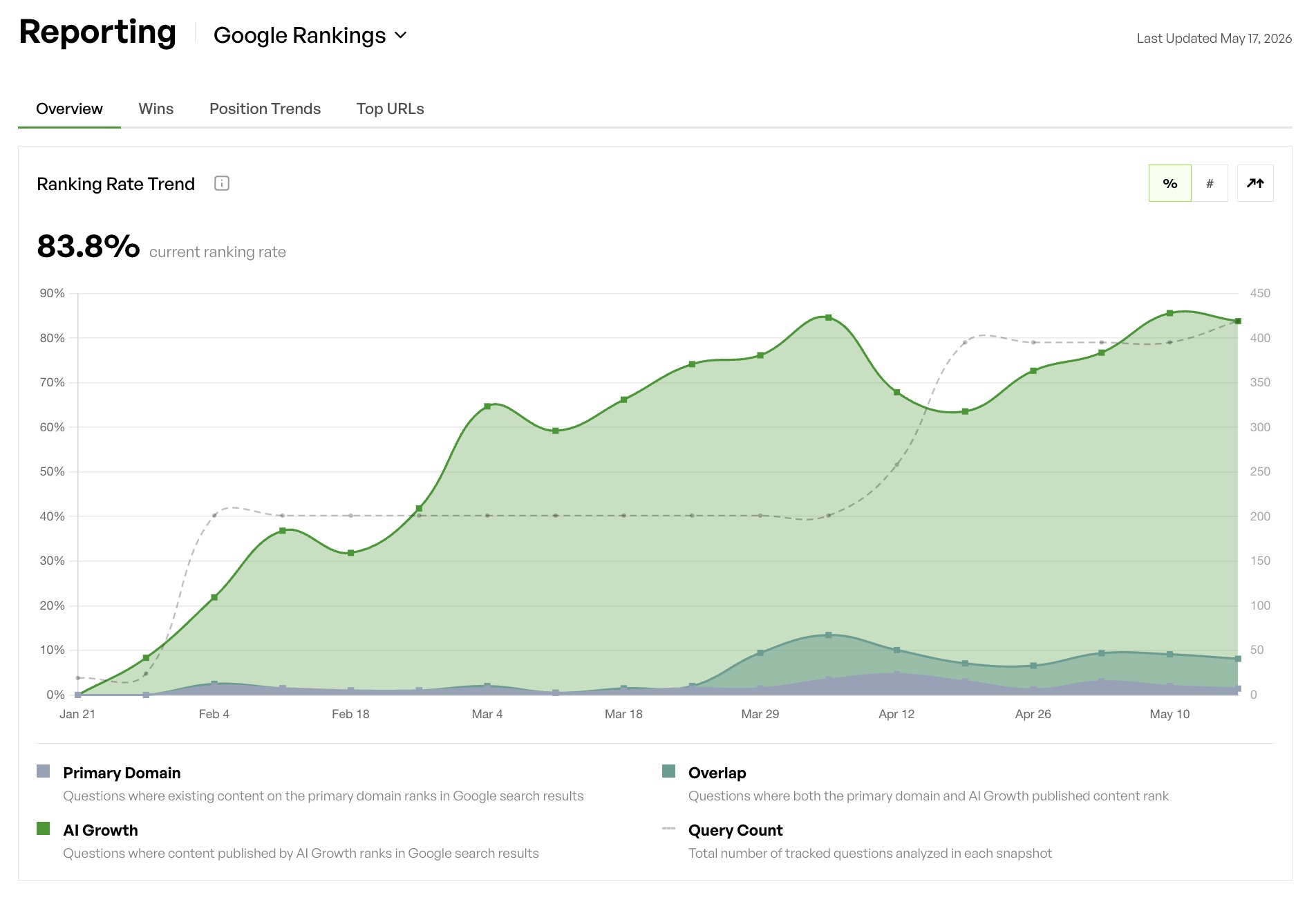
Content decay creates another long-term risk for static content. An article published in 2024 that never changes reflects a 2024 state of the world. AI surfaces that crawl and cite content reward freshness. A headless marketing engine that self-heals content automatically keeps the brand’s narrative current without asking a content team to audit and republish by hand.
Risks and Limitations of Relying on HubSpot for AI Content
HubSpot’s AI content tool uses a structural prompt limit, so brands that treat it as their primary AI content engine remain confined to a small slice of their query universe. The tool often produces content without brand mentions that fails to surface in AI results, which turns the work into activity rather than citation-building.
Onboarding fees at Professional and Enterprise tiers add to the total cost of entry and usually cannot be removed from standard contracts. Teams that budget against the advertised monthly rate and only later discover these fees encounter a higher true cost than they expected.
The citation tracking tools mentioned earlier help teams understand when AI systems read and cite their content. Teams can use those signals to see which assets appear in AI answers and where gaps remain.
Self-healing content does not appear as a documented feature of HubSpot’s architecture. Content published through the platform often needs manual updates in response to Google Search Console data, bot-traffic patterns, or competitive changes. In a market where AI surfaces refresh citation pools continuously, static content can quietly lose visibility.
Decision Framework for Your Stack
| Priority | Recommended Path |
|---|---|
| Unified CRM, email automation, and pipeline management | HubSpot |
| AI search citation performance and narrative control | Headless marketing engine (AI Growth Agent) |
| Full query-universe coverage without prompt caps | AI Growth Agent |
| Technical and agentic SEO depth with no internal engineering required | AI Growth Agent |
| Flat-fee pricing with no per-prompt billing | AI Growth Agent |
| Living, self-healing content that compounds authority over time | AI Growth Agent |
| Incremental visibility reporting isolated from existing brand traffic | AI Growth Agent |
The decision does not hinge on whether HubSpot is a bad platform. It hinges on whether HubSpot’s content tooling matches the AI search environment that now determines whether a brand appears in the conversation at all. For mid-market and enterprise brands that treat AI citation performance as a growth priority, that bar sits higher than HubSpot’s current capabilities.
Frequently Asked Questions
How long does HubSpot implementation take compared with headless marketing?
HubSpot implementation at Professional and Enterprise tiers usually spans several weeks and includes onboarding fees before the platform becomes fully operational. Teams that rely on agency support or HubSpot-certified partners to configure workflows, integrations, and content pipelines often extend that timeline. A headless marketing engine like AI Growth Agent moves from kickoff interview to first published article in about one week, with content indexing in as little as ten days. HubSpot functions as a configurable platform, while a headless marketing engine behaves as an autonomous system that begins producing and publishing content as soon as the brand manifesto is set.
Does HubSpot’s AI content tool scale beyond its prompt limit?
HubSpot’s AI content tool operates with an approximately 50-prompt cap, and current documentation does not show a path to full query-universe coverage at higher tiers. That cap reflects how HubSpot treats AI content as one feature inside a large platform rather than as the core product. Brands that need coverage across hundreds of seed terms and thousands of long-tail queries will find that scope misaligned. A headless marketing engine maps the full universe from the start, never bills on prompt count, and mature clients often operate across universes of 1,600 or more queries refreshed weekly.
How does pricing transparency differ between HubSpot and flat-fee headless engines?
HubSpot’s pricing scales with seats, contacts, and tier, and the onboarding fees mentioned earlier raise the true cost of entry beyond the advertised monthly rate. Renewal cycles have historically introduced rate increases, and the accumulation of integrations, workflows, and content inside the platform creates switching costs that push the total cost of ownership above the initial contract. A flat-fee headless marketing engine charges a fixed price with no per-article charges, credit limits, or per-prompt billing. The client owns all content produced, and the pricing model does not penalize the brand for mapping more of its universe or publishing more content.
What alternatives exist for brands that need full query-universe coverage?
Brands that need full query-universe coverage usually face three realistic paths. The first path builds an internal team of editors, SEO specialists, designers, and engineers, which often takes close to a year before the first assets ship and leaves the brand dependent on cross-functional coordination. The second path hires an SEO or content agency, which carries similar timeline and dependency risks, plus the added challenge that most agencies were not built for AI search citation performance. The third path uses a headless marketing engine that maps the full universe, produces authoritative self-healing content, provisions a complete technical and agentic SEO stack, and reports incremental visibility week over week without requiring technical headcount on the brand’s side. AI Growth Agent powers that third path and replaces the traditional agency stack with one autonomous system at a flat fee.