Written by: Mariana Fonseca, Editorial Team, AI Growth Agent
Key Takeaways for 2026 AI Search
- An AI search agency increases brand visibility inside AI-generated answers on ChatGPT, Perplexity, and similar tools, focusing on citations instead of blue-link rankings.
- Core 2026 services include AI visibility audits, AEO/GEO content strategies, entity optimization, AI visibility tracking, and incremental reporting that proves real impact.
- Winning in 2026 requires mapping the full search universe, publishing living self-healing content, and lifting citations and bot traffic in measurable ways.
- Traditional SEO agencies and generic tools fall short because they chase clicks or ship static content that AI answer engines rarely cite.
- AI Growth Agent delivers the complete AI search agency stack through a single headless engine, and you can book a demo to see how it works for your brand.
Five Core AI Search Services You Actually Get
The AI search agency category in 2026 has settled around five consistent service areas. Each one solves a specific layer of the AI visibility problem.
- AI Visibility Audits. This is the baseline measurement of how a brand appears across AI surfaces. Effective audits evaluate presence across ChatGPT, Perplexity, Google AI Overviews, and Gemini, scoring citation frequency, share of voice versus competitors, sentiment, and technical accessibility to AI crawlers. An AI visibility audit measures five key areas: mentions, citations, sentiment, share of voice, and technical accessibility, which differs from SEO audits that focus on keyword rankings and backlinks. These measurements feed directly into a prioritized roadmap that tells you what to fix first, not just a dashboard of problems without solutions.
- AEO and GEO Services. Answer Engine Optimization and Generative Engine Optimization shape content and structure so a brand becomes easy to cite. GEO requires coordinated deliverables across content strategy, brand presence on third-party platforms, technical optimization for AI crawlers, and reputation building through mentions and associations. An llm seo agency executing this layer produces self-contained answer blocks, structured FAQs, and fact-dense content that AI surfaces can extract and cite without needing surrounding context.
- Entity and Brand Optimization. AI systems cite brands they can categorize reliably. Entity optimization establishes consistent signals about brand identity, category, offerings, and authority across a website, LinkedIn, Crunchbase, review platforms, and other sources. Entity optimization in GEO involves establishing clear, consistent signals so AI systems can reliably categorize and reference the brand. Full schema implementation covering Article, FAQ, Organization, Product, and Author schema creates clear structure that AI systems can parse and turns into measurable gains in AI extractability.
- AI Visibility Tracking. AI answers in 2026 have no static ranked list, so tracking requires a different measurement layer. Effective ai search optimization services monitor citation frequency, share of model response, order of mention within AI answers, and bot traffic from AI training and retrieval agents. Traffic from LLMs converts at rates ranging from 1.26x to 5x traditional organic traffic depending on the study and industry, with no data on sessions required. Tracking that captures this conversion signal separates teams that can prove results from those that guess.
- Incremental Visibility Reporting. The hardest problem in 2026 is isolating what new work actually generated from visibility the brand already had. Incremental reporting cross-references bot traffic, Google Search Console impressions, and citation data week over week, publishing into a separate environment so credit is never taken for pre-existing visibility. This reporting layer turns an ai seo agency engagement from a cost center into a defensible investment.
How Companies Get Cited in AI Search in 2026
CMOs and founders in 2026 face a structural problem, not a content gap. AI surfaces decide what to cite based on four kinds of intelligence, and a brand that cannot see all four is flying blind in its own market.
Search Intelligence provides a complete portrait of the traditional search landscape. It covers positioning, competition, search volume, and the structure of who is already winning each query. This turns raw search data into an actionable diagnosis. Without it, content decisions are guesses.
AI Analytics tracks brand value and consumer behavior across the full journey, from external touchpoints like Google and AI-tool queries through content consumption, demographics, and sentiment. This view shows where that traffic originates and what it does, which is the analytics layer most brands still lack in 2026.
Bot Tracking records every bot interaction, including traditional crawlers and AI training agents, along with every crawl, citation, and training sweep. A brand that cannot see who is reading it cannot tell whether it is being read at all.
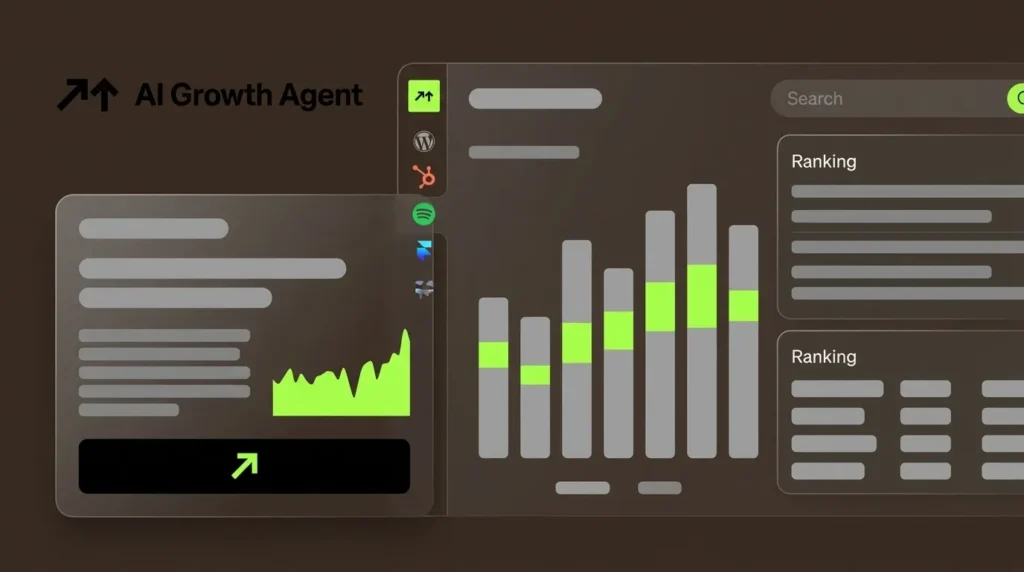
AI Ranking replaces the old idea of a position number. AI answers have no static ordered list, so order of mention and citation context form the new leaderboard. Where a brand appears in the answer, and how that position evolves week over week against the content plan, becomes the metric that matters.
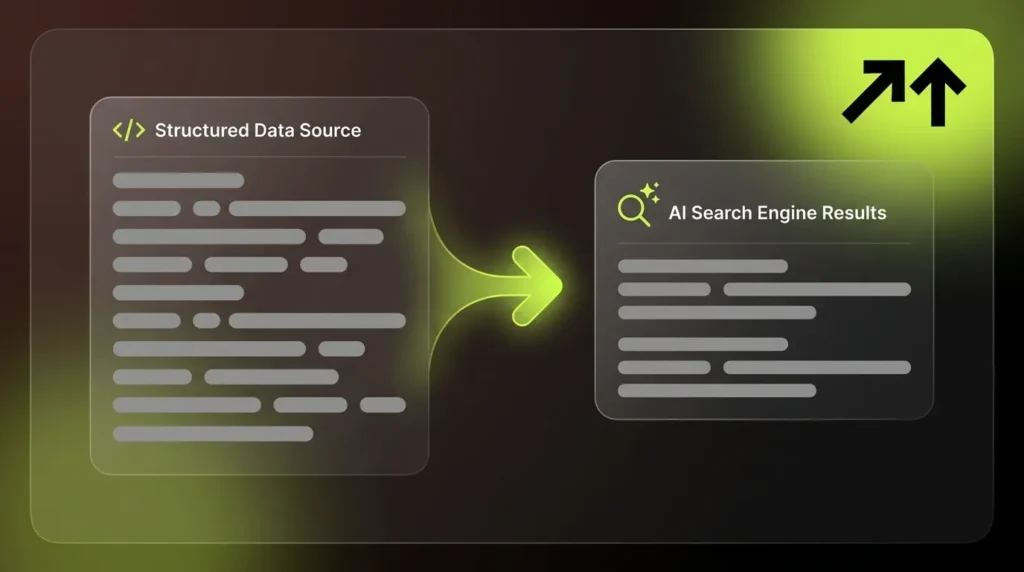
To operationalize these four intelligence pillars simultaneously, brands in 2026 need an integrated architecture. The architecture that connects these four pillars is headless marketing. AI Growth Agent stands up a fully optimized blog the brand owns, connected through a reverse proxy rewrite under a subdirectory or via a subdomain, so nothing in the existing site structure changes. Every article ships with complete traditional and agentic technical SEO out of the box, including full schema, Blog MCP, llms.txt and llms-full.txt, instant indexing, advanced robots.txt, a proper sitemap.xml, and automatic web stories. The brand’s internal team requires no technical skill. The engine handles every layer, and the first article is live within a week of kickoff.
What Replaces Standalone SEO in 2026
Traditional SEO in 2026 no longer stands alone as a separate discipline. It is being absorbed into a broader architecture, and brands that treat it as isolated work are losing ground fast. In Google AI Overviews, 83% of queries end without a click. The click-through model that once justified traditional SEO investment is structurally eroding.
Each legacy path has a specific failure mode in this environment.
Traditional SEO agencies target blue-link rankings and measure success in clicks, a model that, as noted earlier, focuses exclusively on Google while AI-first agencies optimize across multiple AI answer engines. An agency RFP often takes roughly three months, then three more to produce the first assets. By the time anything is live, the AI search leaderboard has moved.
In-house teams face a skill divide between what an engineer thinks content should be, what a marketer wants, and what robots need to cite it. Almost no team has all three skills, and coordination overhead compounds with every article.
Generic AI writing tools can produce one decent article, then require the entire process to run again. One company produced roughly 300 articles this way and not one was cited. The problem is not the model. The problem is the absence of a system around it, with no universe map, no validated sources, no technical SEO, and no self-healing.
SEO suites such as keyword and rank tracking platforms sell data without action. They do not produce AI search content, do not publish, and do not self-heal what is live. Data alone does not form a strategy.
Monitoring-only platforms track whether a brand appears for a capped set of prompts and stop there. AI search agency offerings now include visibility audits that track brand citation frequency in zero-click AI features and optimization services for AI-generated summaries, but monitoring without content production leaves the brand to solve the problem alone.
The replacement stack in 2026 is not a better version of any one of these tools. It is a single headless engine that maps the full universe, produces authoritative living content, owns the technical SEO end to end, and proves incremental visibility week over week. That is the architecture headless marketing describes, and it is the only model that scales at the speed AI search now demands.
Inside the Headless Marketing Engine
Headless marketing in 2026 borrows its structure from headless commerce. The brand keeps its curated main site as the storefront that humans read. AI Growth Agent stands up a separate, fully optimized blog the brand owns and styles to match its own pages. The two connect through a reverse proxy rewrite, usually under a subdirectory, or through a subdomain. Nothing in the existing structure changes.
The engine writes, publishes, monitors, self-heals, and reports. Content behaves as a living system. It updates automatically when the year turns, refreshes in response to Google Search Console signals and bot-traffic awareness, and never goes stale in place. Every article’s relationships, performance, and indexing data are centralized so authority compounds instead of decaying.
Traditional technical SEO ships at the article level with highly structured HTML, full metadata, rich schema markup across the complete schema suite, internal linking that compounds authority, and sanitized external linking. At the site level, the stack includes proper sitemaps, a detailed robots.txt, automated web stories with a dedicated web-stories sitemap, real-time bot tracking, instant indexing, autoredirects, and 404 tracking.
Agentic technical SEO adds a layer that monitoring tools and traditional agencies cannot deliver. Blog MCP with schema, manifest, discovery, and capability guidance is exposed to agents. OpenAI discovery and Agent Card guidance are served via /.well-known/. Natural language query parameters via /?s={query} auto-trigger personalized, internally linked responses. Markdown is served to agent crawlers, and llms.txt plus llms-full.txt are published so AI surfaces can read the brand the way they need to.

The brand’s internal team does none of this work. The engine handles every layer, and every package includes the full stack.
Decision Framework: One Engine Replaces the 2026 Stack
CMOs and founders in 2026 are not deciding which extra tool to add. They are deciding which legacy stack to replace. AI Growth Agent operates as a single flat-fee engine that replaces the SEO agency, the content tool, the web agency, the GEO monitor, the schema plugin, the analytics stack, and parts of the PR function. Pricing is a flat fee with no per-article charges, credit limits, or per-prompt billing. Clients own all the content they produce.
The timeline contrast is concrete. A traditional agency RFP often runs roughly three months, then three more to produce the first assets. AI Growth Agent goes from kickoff to the first published article in about one week, with content indexing in as little as ten days. The standard pilot is three months, because indexing takes time and varies by industry, but clients see movement early.
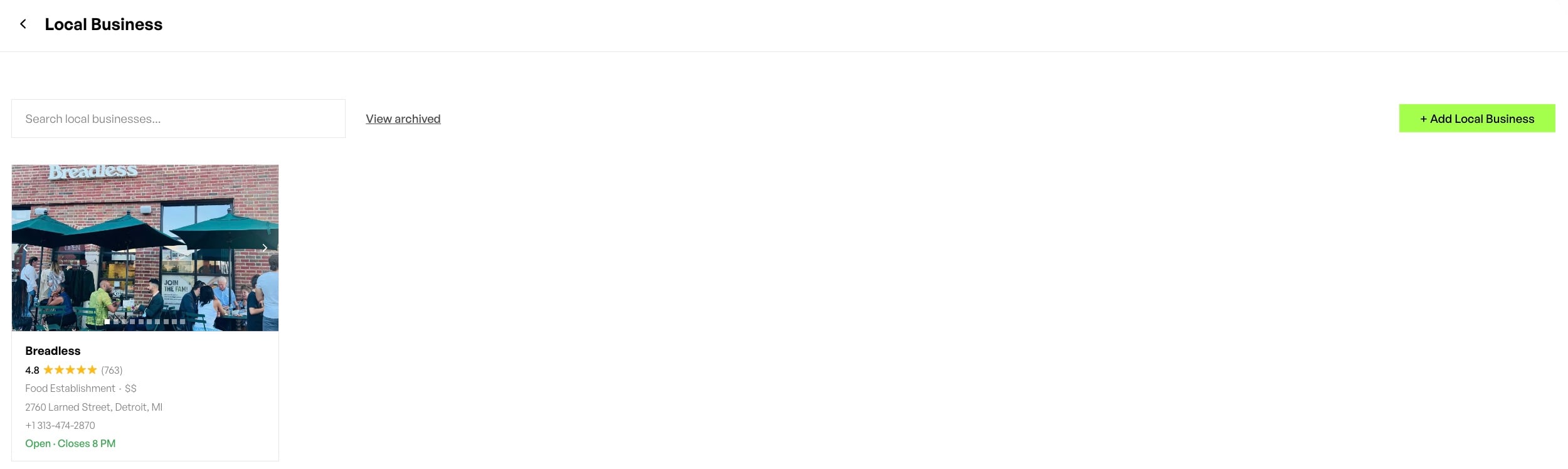
Across the first twelve weeks, clients average more than 12,000 additional AI citations and mentions, over 100,000 additional bot visits, and a lift of more than 20% in impressions. Breadless is now one of the most recommended healthy franchises in the US, ahead of CAVA, Rush Bowls, and Sweetgreen in its search universe, with ChatGPT citing eatbreadless.com over 45,000 times per month and Google Search Console impressions growing roughly 30x in six months. Leva Sleep is now the most mentioned retailer for adjustable beds in Canada, with ChatGPT citations topping 10,000 per month and $40,000 to $50,000 in deals closed in under three weeks from buyers who found them through AI Growth Agent content.
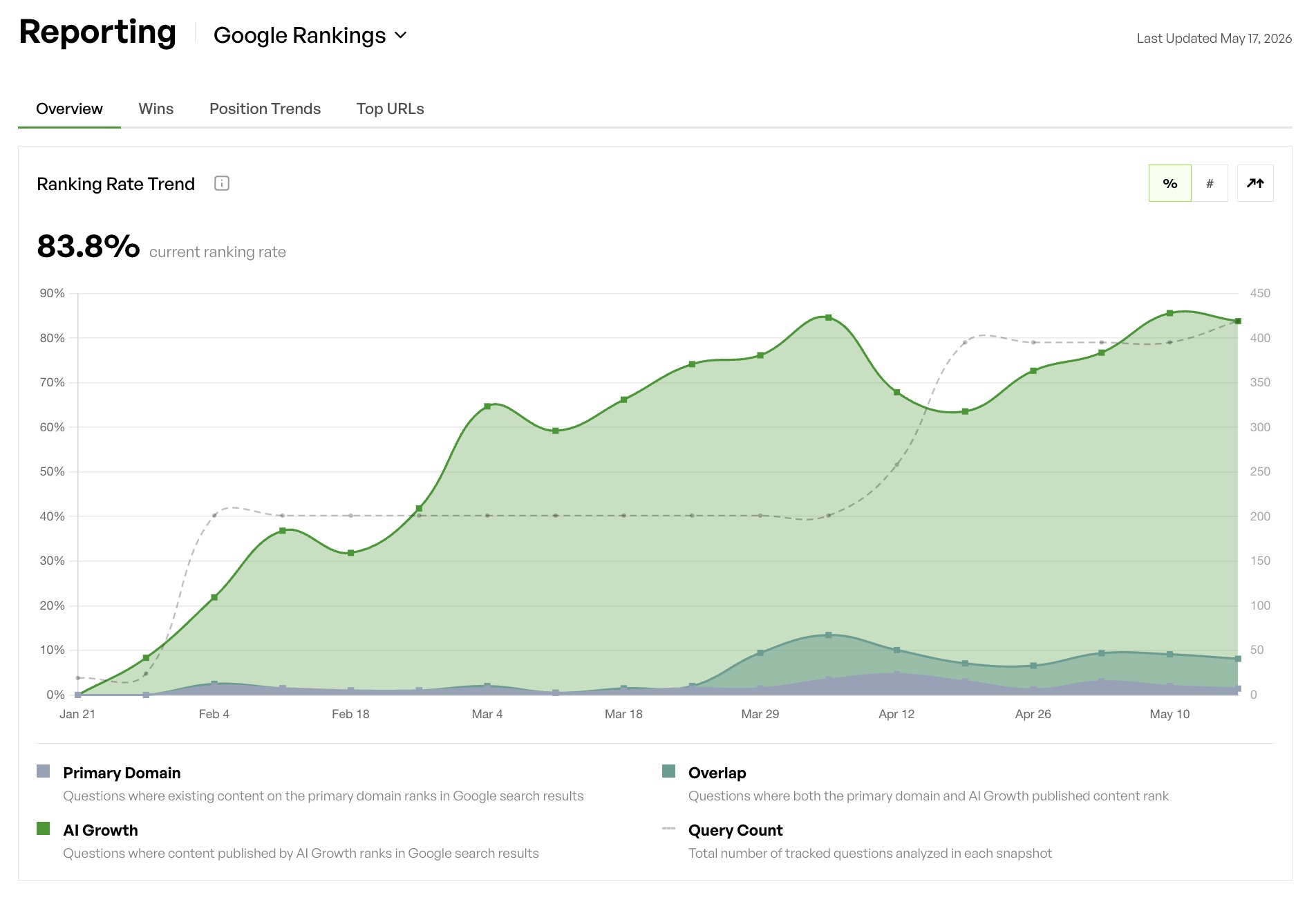
The universe AI Growth Agent maps is not a capped handful of tracked terms. A new account typically starts with three to four hundred queries and expands as it goes after more of the market. Mature clients reach universes of 1,600 or more queries, with the system running 3,000 or more searches every week just to refresh the snapshot. Prompt count is never a billed metric.
The brands establishing authoritative content in 2026 are training the next generation of models with their own narrative. The brands that wait are training the next generation with whatever happens to be sitting on the open web.
Frequently Asked Questions
How fast does content index after an AI search agency begins work?
With AI Growth Agent, the first article is typically live within one week of kickoff. Content has indexed in as little as ten days and often within two weeks. The standard engagement is a three-month pilot because indexing timelines vary by industry and domain authority, but clients consistently see bot traffic and citation movement in the early weeks. The technical stack that accelerates this includes instant indexing, a proper sitemap.xml, automated web stories with a dedicated web-stories sitemap, and agentic technical SEO layers like llms.txt and Blog MCP that make the content immediately readable by AI surfaces. The engine also monitors Google Search Console signals and refreshes content in response to them, so nothing stagnates after initial indexing.
What is the difference between an AI SEO agency and a traditional SEO agency?
A traditional SEO agency targets blue-link rankings on Google and measures success in clicks and keyword positions. An AI SEO agency targets the zero-click surfaces where customers now resolve decisions, including ChatGPT, Perplexity, Google AI Mode, and AI Overviews. Success is measured in citation frequency, share of voice inside AI answers, brand mention rate, and bot traffic from AI training and retrieval agents. The methodology differs at every layer. Traditional SEO content strategy begins with keyword volume exports. AI SEO strategy begins from entity authority and AI extractability, structuring content with clear definitions, FAQs, and structured data to earn citations. Traditional agencies scale by hiring junior strategists. AI Growth Agent replaces the entire team with one headless engine that maps the full universe, produces authoritative living content, and proves incremental visibility without requiring technical resources or additional headcount from the client.
Can an LLM SEO agency produce living content that self-heals?
Most cannot. The majority of AI search agencies and content tools produce content that is static from the day it ships. AI Growth Agent is built differently. Content is living by design and updates and self-heals over time rather than going stale. When the year turns, every article in a sector refreshes automatically. Every article’s relationships, performance, and bot and Search Console data are centralized so the engine can double down on what indexes well and use internal linking to lift what does not. Anti-hallucination controls run at every stage of generation, with every claim, source, and quote validated against evidence found online before anything ships. The result is content that holds up under client, regulator, and LLM reviews and that keeps compounding authority instead of decaying in place.
How do AI search optimization services handle entity and brand optimization at scale?
Entity and brand optimization at scale in 2026 requires a system, not a checklist. AI Growth Agent begins every engagement with a journalist-led interview that produces the brand manifesto, the single source of truth for every future generation. The manifesto feeds a keyword topology built from real-time Google and ChatGPT data, mapping the full universe of seed terms and the long-tail queries beneath them. Every article ships with the complete schema suite covering Article, FAQ, Organization, Product, Author, and more, provisioned automatically and kept current. Style memories carry brand voice rules and apply them to every future generation. Author schema, named authorship, and consistent entity descriptions across the owned site reinforce the signals AI systems use to categorize and cite the brand. The engine runs 3,000 or more searches every week to refresh the universe snapshot, so entity signals stay current as the market moves. No technical skill is required from the client at any stage.
Conclusion: Control the 2026 AI Narrative
The core problem for mid-market and enterprise brands in 2026 is not a lack of content. The core problem is a lack of architecture. Traditional SEO agencies are too slow and too narrow. In-house teams face a skill divide they cannot close. Monitoring platforms report the problem without solving it. Generic AI tools produce inconsistent output that never earns citations. Each of these paths leaves a brand invisible in the AI answers where customers now make decisions.
AI Growth Agent operates as the single engine that delivers the complete AI search agency offering in 2026. The stack includes visibility audits, AEO and GEO services, entity and brand optimization, AI visibility tracking, and incremental reporting, all from one flat-fee headless engine that requires no technical resources and no additional headcount. The first article is live within a week. The full technical and agentic SEO stack ships with every package. The content is living and self-healing. The universe is mapped in full, refreshed weekly, with prompt count never a billed metric.
The brands cited in AI search this year are training the next generation of models with their own narrative. The brands that wait are training the next generation with whatever happens to be sitting on the open web.
Schedule a consultation session with AI Growth Agent and see your first article live within a week.