Written by: Mariana Fonseca, Editorial Team, AI Growth Agent | Last updated: July 29, 2026
Key Takeaways for SaaS Teams
- AI Mode now replaces many traditional organic results, so SaaS teams must earn AI citations instead of chasing rankings alone.
- Traditional suites like Ahrefs and Semrush deliver strong keyword data but stop short of producing and publishing AI-cited content.
- Budget tools and AI visibility monitors provide useful insights yet leave content creation and technical SEO execution unresolved.
- Content optimization platforms score drafts effectively but still need a complete research-to-publishing stack to drive measurable citation gains.
- AI Growth Agent closes the full loop by mapping the query universe, producing authoritative content, and publishing with agentic SEO. See your first AI-cited article live within a week.
1. Traditional SEO Suites: Ahrefs and Semrush
Ahrefs 2026 pricing ranges from $29 to $1,499 per month and many SaaS teams use it for competitive gap analysis. Its Traffic Potential metric estimates total organic traffic a top-ranking page would receive across related queries rather than raw search volume. That metric gives SaaS marketers a more realistic signal for content planning. The Content Gap tool highlights competitor keywords a site does not rank for, and Organic Keywords 2.0 surfaces SERP features such as AI Overviews and People Also Ask next to each keyword. Ahrefs Brand Radar tracks brand mentions across ChatGPT, Google AIO, Claude, and Gemini using a large AI index, providing AI Share of Voice and citation tracking starting at the $129 per month Lite plan.
Semrush 2026 pricing ranges from $139 to $549 per month and supports all-in-one SaaS workflows. Its Keyword Magic Tool handles automatic semantic clustering, and Keyword Gap with Intent Filter isolates commercial and transactional keywords. Semrush now includes AI-powered features for predictive keyword difficulty scoring and automated SERP feature opportunity detection. Semrush also integrates AI Overview tracking and LLM tracking features into its SEO platform so hybrid teams can see keyword data and generative visibility in one place.
Both platforms remain industry standards for traditional keyword research and now include meaningful AI visibility modules. The operational limitation is identical for both tools. They surface data and flag opportunities, yet neither produces the content that earns citations, publishes it with full technical and agentic SEO, or keeps it updated over time. Data without execution keeps the gap open.
2. Budget and Historical-Data Tools: SpyFu and SE Ranking
SpyFu starts at $39 per month in 2026 and focuses on deep competitor PPC and organic history. It connects with Google Analytics, Google Search Console, and Zapier, which helps SaaS teams audit a competitor’s paid and organic history quickly. SpyFu delivers strong value at a low price point for research. Its weakness is the lack of AI citation tracking or generative search visibility features, so it functions as a research tool rather than a citation strategy platform.
SE Ranking’s Core plan is priced at $129 per month (or $103.20 per month billed annually), with the Growth plan at $279 per month (or $223.20 per month annually), verified on July 26, 2026. SE Ranking has invested more than most budget tools in AI visibility. Its AI Overviews Tracker tracks keyword presence in AI Overviews, reviews sources featured in AI snippets, examines cached SERPs with AI-generated answers, and estimates potential traffic from AI Overviews. The SE Visible add-on tracks AI Overview and LLM answers across ChatGPT, Google AIO, AI Mode, Gemini, and Perplexity with competitor benchmarking, sentiment analysis, and prompt insights, priced from $189 per month for 450 prompts and 5 brands.
SE Ranking works well for teams that want traditional keyword research and basic AI Overview monitoring in one platform at a lower price than Semrush or Ahrefs. The ceiling comes from prompt volume. SE Ranking’s AI search data uses real-time scraping from AI interfaces along with cached snapshots, and the add-on pricing model means teams pay more as they try to see more of their universe.
3. AI Visibility Monitors: Profound, Athena, and LLMrefs
A dedicated category of platforms now tracks brand presence in generative AI answers. Profound tracks brand citations, recommendations, and inclusion across ChatGPT, Gemini, and other generative engines while reporting competitive share of voice and GEO-focused content recommendations. AthenaHQ combines traditional SEO monitoring with generative visibility insights in a single platform so teams can connect AI exposure metrics with demand and conversion performance.
LLMrefs automatically generates conversational prompts from existing tracked keywords, aggregates responses across multiple LLMs into share-of-voice, citation count, and average position metrics, and reveals exact competitor source URLs cited in AI answers for content gap analysis. These platforms improve on traditional rank tracking for teams that need to understand their generative search footprint.
The structural gap in this category remains consistent. Monitoring does not equal action. These tools show a SaaS team where it is not appearing and which competitors are being cited. They do not produce the content that closes the gap, publish it with the technical and agentic SEO structure that AI crawlers require, or prove incremental visibility week over week. A team using only a monitor still needs a separate content, publishing, and technical SEO stack to act on what it sees.
Explore whether AI Growth Agent fits your SaaS team’s AI citation goals.
4. Content Optimization Platforms: Surfer SEO and Clearscope
Surfer SEO 2026 pricing ranges from $89 to $299 per month and generates SERP-based content briefs with word count, heading structure, and keyword density recommendations. It also provides real-time Content Score benchmarking against competitors. Surfer SEO starts at $99 per month on its Essential plan in 2026 and offers real-time Content Score plus native WordPress publishing for content optimization workflows.
Clearscope 2026 pricing ranges from $189 to $599 per month and functions as a post-discovery content optimization tool. It grades drafts on entity coverage and related terms aligned with top-ranking pages. Clearscope case studies report organic traffic lifts of 40% (Close), 52% (Optimizely), 50–100% (Pipedrive), 87% (Moosend), 120%+ (Minuttia), 130% (Webflow), over 2000% (Paired), and 10X (Bill Good Marketing).
Both platforms help at the content scoring stage after a keyword has been identified and a draft exists. Neither maps the full universe of seed terms and long-tail queries from real-time Google and ChatGPT data. Neither publishes with full schema and agentic technical SEO, and neither tracks whether the resulting content earns AI citations. They act as optimization layers that still need a complete research, production, and publishing stack around them to deliver results.
5. The Missing Piece: Full-Universe Mapping Plus AI-Cited Content Production
The four categories above, traditional suites, budget tools, AI monitors, and content optimizers, each solve one piece of the keyword-to-citation challenge. None of them connects all the pieces into a working system. Traditional suites provide keyword data. Budget tools provide historical competitive data. AI monitors track citation presence. Content optimization platforms score drafts. No category closes the loop from universe mapping to published, AI-cited, self-healing content.
The correlation between traditional Google search ranking and AI Overview citation collapsed from 76% in July 2025 to 38% by January 2026 after the Gemini 3 update, with 31% of citations now coming from pages ranking beyond position 100. That shift reframes the entire tool selection question. A SaaS team that optimizes only for traditional rankings now stays invisible to many AI citation sources. Winning AI citations requires content that covers the long tail of queries customers actually ask, structured so AI crawlers can read and trust it, published with the technical and agentic SEO stack that earns citations, and refreshed so it does not decay between model training sweeps.
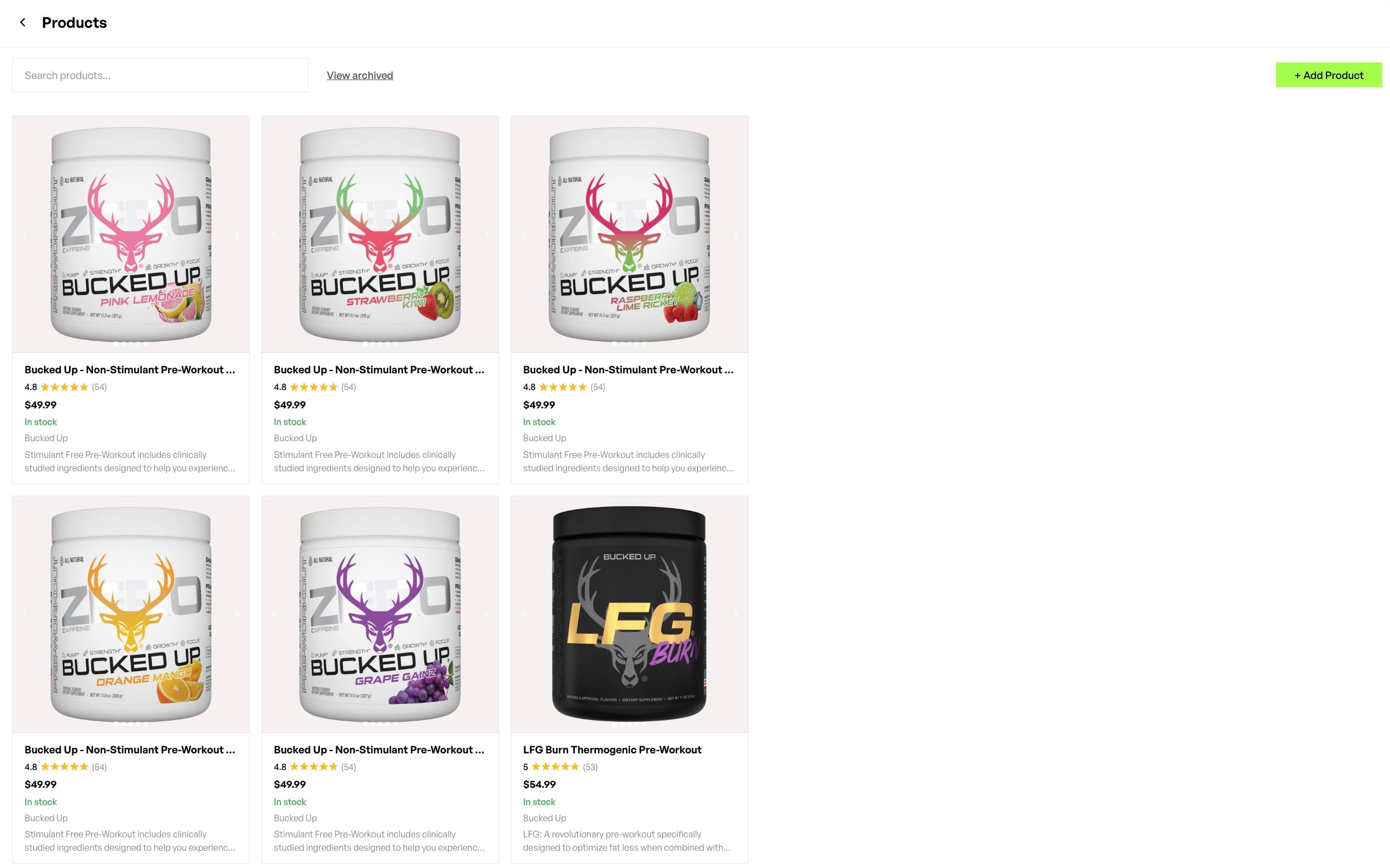
SaaS teams need an engine that maps seed terms and long-tail queries from real-time Google and ChatGPT data, produces authoritative content validated against primary sources, publishes with full schema and agentic technical SEO including Blog MCP, llms.txt, and agent discovery, and reports the incremental visibility it generates week over week. That requirement defines a different category from any of the tools above.
6. 5-Step SaaS Workflow: Turning Keyword Data into AI-Cited Content
- Map the full universe. Use real-time Google AI Overview and ChatGPT search results as the objective function to identify which seed terms and long-tail queries are worth pursuing. Do not limit the map to a handful of tracked head terms, because research shows that AI snippets often appear for long-tail queries, which means the long tail holds most AI citation opportunity. Mapping only head terms keeps the majority of citation opportunities invisible.
- Run competitive gap analysis. Export competitor rankings from Ahrefs Content Gap or Semrush Keyword Gap, entering your domain plus three to five SERP competitors. Teams using competitive gap analysis often discover more targeting opportunities than teams relying only on related keyword expansion. Filter for commercial and transactional intent terms that match bottom-of-funnel evaluation.
- Produce authoritative content at scale. For each long-tail cluster, create content that validates every claim against primary sources, applies full schema markup, and uses a structure AI crawlers can parse and cite. Schema-tagged pages receive up to roughly 2.4 times more AI citations in controlled tests, with other studies showing little or no lift.
- Publish with full agentic technical SEO. Ship every article with Blog MCP, llms.txt and llms-full.txt, agent discovery via /.well-known/, proper sitemaps, and advanced robots.txt so AI surfaces can find, read, and trust the content. 73% of sites have technical barriers such as robots.txt blocks, CDN restrictions, or JavaScript rendering issues that prevent AI crawlers from accessing content.
- Track incremental visibility and self-heal. Report week over week on bot visits, AI citations, and Google Search Console impressions isolated to new content. Refresh articles automatically so they do not decay between model training sweeps. AI-referred visitors convert at 4.4 times the rate of traditional organic search visitors, with ChatGPT referral conversion reaching 15.9% compared to 1.76% for Google organic.
7. Comparison Table: AI Visibility Features Across Tools
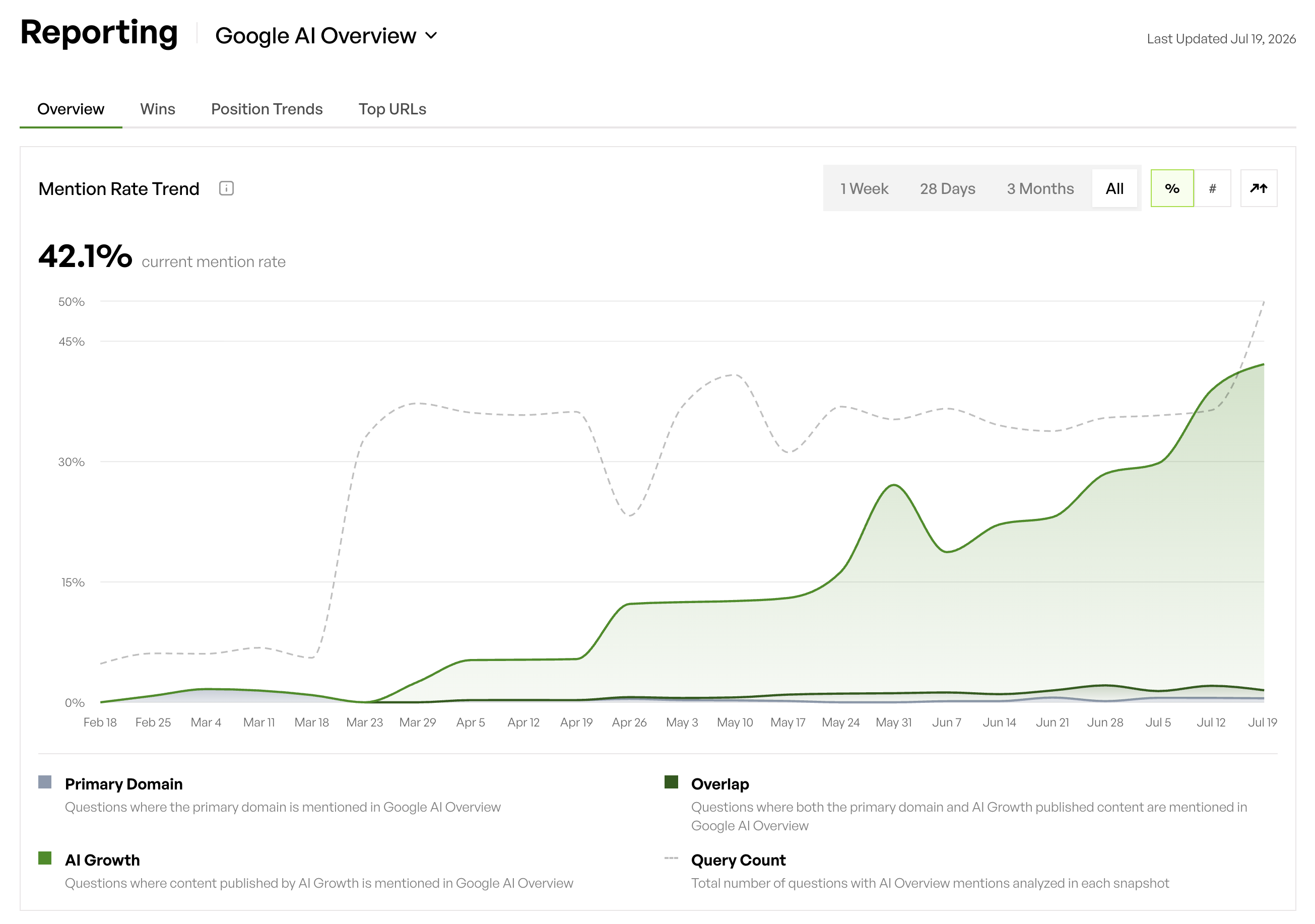
The table below shows how each platform handles traditional keyword research versus AI visibility tracking. Only AI Growth Agent closes the full loop from universe mapping through content production to citation tracking.
| Tool | 2026 Pricing | Traditional Keyword Features | AI Visibility Features |
|---|---|---|---|
| Ahrefs | $29–$1,499/mo | Content Gap, Traffic Potential, Organic Keywords 2.0 with SERP features | Brand Radar tracks mentions across ChatGPT, Google AIO, Claude, Gemini; AI Share of Voice from $129/mo Lite plan |
| Semrush | $139–$549/mo | Keyword Magic Tool, Topic Research, Keyword Gap with Intent Filter | AI Overview tracking and LLM tracking integrated into existing platform; AIO Visibility Checker |
| SE Ranking | $129–$279/mo (Core/Growth); SE Visible add-on from $189/mo for 450 prompts | Keyword research, rank tracking, competitor gap, backlink monitoring | AI Overviews Tracker; AIO Research Tool for citation frequency and brand mentions; real-time scraping from AI interfaces along with cached snapshots |
| SpyFu | From $39/mo | Competitor PPC and organic history; Google Analytics and Search Console integrations | None |
| Surfer SEO | $89–$299/mo | SERP-based content briefs, real-time Content Score, native WordPress publishing | None |
| Clearscope | $189–$599/mo | Entity coverage grading, related terms aligned to top-ranking pages | Answer Engine Optimization features for AIO visibility |
| Profound | Contact vendor | None | Citation and recommendation tracking across ChatGPT, Gemini, and other generative engines; competitive share-of-voice reporting |
| AI Growth Agent | Flat fee; no per-article charges, credit limits, or per-prompt billing | Full-universe seed term and long-tail mapping from real-time Google and ChatGPT data; weekly universe snapshots across 3,000+ searches | Full-universe AI citation production and publishing; Blog MCP, llms.txt, agent discovery, bot tracking, incremental visibility reporting; living self-healing content |
Map your full query universe and see your first AI-cited article live within a week.
8. Short Synthesis and Final Recommendation
For SaaS teams evaluating competitive keyword research and analysis software in 2026, the right tool depends on the outcome you need. Ahrefs and Semrush remain strong for traditional keyword research, competitive gap analysis, and basic AI Overview monitoring. SE Ranking offers a credible mid-market alternative with AI Overview tracking at a lower price point. SpyFu serves teams that need historical competitive data at a budget price. Surfer SEO and Clearscope help at the content scoring stage but still require a full stack around them. Profound, Athena, and LLMrefs provide dedicated AI citation monitoring but stop at observation.
The gap that none of these tools closes is the one that matters most in 2026. Teams must map the full universe of long-tail queries from real-time AI data, produce authoritative content that earns citations across ChatGPT, Perplexity, and Google AI Mode, publish with the complete agentic technical SEO stack that AI crawlers require, and prove the incremental visibility generated week over week. Google AI Overviews appeared in approximately 48% of all search queries as of March 2026, and B2B keywords now trigger Google AI Overviews 84% of the time. Given the decoupling between traditional rankings and AI citations described earlier, SaaS teams that monitor the landscape without acting on it are ceding the citation leaderboard to competitors who move faster.
AI Growth Agent is built to close that gap end to end. It maps the full query universe, produces authoritative self-healing content, stands up a fully optimized site the client owns within the first week, and reports the incremental AI citations, bot visits, and impression lift it generates.
Get a working AI citation engine and your first article live within a week.
Frequently Asked Questions
What is the difference between traditional keyword research tools and AI visibility tools for SaaS?
Traditional keyword research tools such as Ahrefs and Semrush track where pages rank in Google’s blue-link results, estimate search volume, and identify competitor keyword gaps. AI visibility tools track whether a brand is cited or mentioned inside AI-generated answers from platforms like ChatGPT, Perplexity, and Google AI Overviews. The two metrics have decoupled significantly. A page can rank in the top ten for a query and still not appear in the AI Overview for that same query. Pages ranking beyond position 100 now receive citations in AI answers. SaaS teams that rely only on traditional keyword tools measure a signal that no longer predicts AI citation outcomes reliably.
Which competitive keyword research tool works best for a SaaS team focused on bottom-of-funnel content?
For bottom-of-funnel content, Ahrefs and Semrush are the strongest traditional options. Their Content Gap and Keyword Gap tools identify competitor keywords with commercial and transactional intent, including comparison, alternative, and pricing queries that drive demo and trial conversions. A practical workflow exports competitor rankings, filters for commercial intent terms, clusters by topic, and maps each cluster to a dedicated comparison or alternative page. Teams that also need to win AI citations on those bottom-of-funnel queries must extend the workflow to content structured for AI crawlers and publishing with full schema and agentic technical SEO, which neither Ahrefs nor Semrush provides.
How does AI Growth Agent differ from monitoring platforms like Profound or Athena?
Monitoring platforms track whether a brand appears in AI answers for a capped set of prompts and act as diagnostic tools. They show a SaaS team where it is not showing up and which competitors are being cited. AI Growth Agent functions as an execution engine. It maps the full universe of seed terms and long-tail queries from real-time Google and ChatGPT data, produces authoritative content validated against primary sources, publishes with the complete agentic technical SEO stack including Blog MCP, llms.txt, llms-full.txt, and agent discovery, and reports the incremental visibility it generates week over week. Monitoring tools leave content production, publishing, and technical SEO work to the team. AI Growth Agent performs that work and proves the result.
What does full-universe mapping mean in practice for a SaaS company?
Most SaaS teams track a small set of head terms they already know. Full-universe mapping starts from a brand’s seed terms and expands to every long-tail query a potential customer might ask across traditional Google search and AI platforms. AI Growth Agent runs more than 3,000 searches every week to refresh that snapshot, covering hundreds of seed terms and the long-tail queries beneath them. Mature client universes reach 1,600 or more queries. Because prompt count is never a billed metric, clients see their entire universe rather than a capped slice. That visibility matters because the long tail holds most AI citation opportunity. The queries customers actually ask in conversational AI interfaces rarely match the head terms a brand pre-decided to defend.
How quickly can a SaaS team expect to see AI citation results after starting with AI Growth Agent?
The first article typically goes live within one week of kickoff. Content has indexed in as little as ten days and often within two weeks. Clients average more than 12,000 additional AI citations and mentions across the first twelve weeks, alongside more than 100,000 additional bot visits and a 20% or greater lift in impressions. Individual outcomes vary by industry, competitive landscape, and how aggressively the universe is pursued. The standard engagement runs as a three-month pilot because indexing timelines vary, yet clients consistently see citation movement early in that window. Leva Sleep, for example, reached more than 10,000 ChatGPT citations per month and closed $40,000 to $50,000 in deals within three weeks from buyers who discovered the brand through AI Growth Agent content.