Written by: Mariana Fonseca, Editorial Team, AI Growth Agent
What Franchise Leaders Need to Know First
- AI engines currently recommend competitors over many franchise locations, with ChatGPT citing only 1.2% of local businesses. Active optimization is now essential, because monitoring alone does not change those recommendations.
- Seven concrete criteria define effective franchise AI search tools, and structured data automation, living content, and headless deployment sit at the core of that standard.
- Active optimization engines outperform monitoring platforms and SEO suites across all seven criteria, delivering per-location AI citation tracking, automated schema deployment, and clear incremental visibility reporting.
- Franchise systems from 20 locations to full enterprise scale gain the most value from active optimization engines that remove the operational gap between diagnosis and action without adding headcount.
- AI Growth Agent is the only engine that closes the full loop from universe mapping to living content production to headless deployment to incremental visibility reporting; see how it changes AI recommendations for your locations in a live demonstration.
Seven Criteria That Define Effective Franchise AI Search Tools
These seven criteria describe what a franchise AI search optimization tool must deliver to close the gap between monitoring and active optimization. Each one ties directly to a recurring operational failure point in multi-location visibility.
- Multi-location tracking depth. The tool must evaluate each franchise location as a separate entity with its own signals, not as an aggregate brand score. A Birdeye study of location-level ChatGPT scans found significant gaps between best- and worst-performing locations on AI search visibility, so location-level granularity becomes non-negotiable.
- Citation monitoring granularity. The tool must track which sources AI engines cite per location, not just whether the brand appears. Sources such as Google Maps, niche directories, brand websites, Yelp, and Facebook commonly appear in AI local queries, so citation monitoring must span all of these sources.
- Structured data automation. The tool must generate and deploy LocalBusiness schema, FAQPage markup, and parentOrganization relationships at scale without manual coding per location. Effective structured data platforms integrate via API with client CMS platforms to pull data and deploy or update schema across hundreds or thousands of location pages without manual intervention.
- Living content capability. The tool must produce content that updates and self-heals over time. Content updated within the last 30 days receives 3.2x more AI citations than older content, so static content becomes a structural disadvantage.
- Headless deployment for non-technical teams. The tool must stand up and maintain optimized content surfaces without requiring engineering resources from the franchise operator or franchisor. This requirement separates a monitoring dashboard from an active optimization engine.
- Incremental visibility reporting. The tool must isolate the visibility it actually generated from the visibility the brand already had, week over week. Without this separation, franchise marketing leaders cannot defend investment to leadership or pinpoint locations that need intervention.
- Scalability without added headcount. The tool must expand coverage across new locations, seed terms, and long-tail queries without requiring proportional increases in staff or agency spend.
Side-by-Side Comparison by Franchise Size Tiers
With these seven criteria in place, the next step is to see how each tool category performs across franchise size tiers, because a platform that works for 20 locations often breaks at 1,000. The table below compares representative tool categories across the seven criteria for three franchise size tiers and shows that only active optimization engines deliver all seven capabilities. Monitoring platforms and SEO suites require separate resources to close the execution gap. Tool categories used are: Monitoring Platforms (e.g., Profound, Peec AI, Scrunch AI), SEO Suites (e.g., Semrush, Search Atlas), and Active Optimization Engines (AI Growth Agent). Ratings reflect capability scope, not vendor marketing claims.
| Criterion | Monitoring Platforms | SEO Suites | Active Optimization Engines (AI Growth Agent) |
|---|---|---|---|
| Multi-location tracking depth | Prompt-level brand aggregate, limited per-location granularity | Keyword rank by URL, no AI-native location scoring | Per-location AI citation tracking with bot-level data per article |
| Citation monitoring granularity | Tracks brand appearance in capped prompt sets | Backlink and domain data, no AI citation source mapping | Per-article bot tracking including ChatGPT-User, GPTBot, PerplexityBot, and Google-Extended |
| Structured data automation | None | Schema audit tools, no automated deployment | Full schema suite deployed automatically on every article and location page |
| Living content capability | None | None | Self-healing content refreshed automatically, stale articles updated on Google Search Console signals |
| Headless deployment | None | None | Fully optimized site stood up within one week via reverse proxy, no engineering required from client |
| Incremental visibility reporting | Visibility score against capped prompt set, no incremental isolation | Rank movement, no AI-native incremental reporting | Week-over-week incremental visibility isolated from pre-existing brand visibility |
| Scalability without headcount | Scales prompt count (often billed per prompt), no content production | Scales keyword tracking, content production requires separate resources | Flat fee, universe expands to 1,600+ queries with 3,000+ weekly searches, no per-prompt billing |
20 to 200 Locations: Growth-Stage Franchise AI Search Needs
Growth-stage franchises between 20 and 200 locations usually struggle first with inconsistent location data and thin technical resources. The Birdeye study highlighted widespread issues with location profile accuracy across name, address, phone, website, and hours, so data hygiene becomes the first bottleneck. Monitoring platforms reveal this problem but cannot fix it. SEO suites surface keyword data but still require a separate content and technical team to act. Active optimization engines that include structured data automation, living content, and headless deployment provide the fastest path from diagnosis to AI citation at this stage.
200 to 1,000 Locations: Governing Multi-Location GEO Visibility
Mid-scale franchises between 200 and 1,000 locations shift from data hygiene challenges to governance and consistency problems. AI visibility for multi-location businesses must be tracked as a grid across markets and engines rather than as a single aggregate number, because the same prompt surfaces different businesses, competitors, and cited sources in each city. Monitoring platforms become less useful as the gap between best- and worst-performing locations widens. Active optimization engines with per-location content production and self-healing capability maintain consistency at scale without proportional headcount increases.
Enterprise 1,000-Plus Locations: Full-Scale Franchise AI Visibility
Enterprise franchises with more than 1,000 locations face a different risk profile, where national brand authority provides only a baseline boost and strong local signals determine inclusion in AI answers. AI search engines evaluate each location as a separate entity with its own reviews, listings, and local signals, even when locations share a single brand domain. Enterprise deployments need headless architecture that decouples content production from the main brand site, automated schema deployment across all location pages, and incremental reporting that flags underperforming markets without manual audits.
Category-by-Category Analysis of Tool Tradeoffs
Setup Complexity Across Tool Types
Monitoring platforms usually require prompt configuration and API access, with setup measured in days. SEO suites need keyword list configuration and integration with existing analytics stacks. Active optimization engines start with a kickoff interview to build the brand manifesto, followed by topology mapping and site deployment. Monitoring platforms configure faster but produce only a dashboard, while active optimization engines invest a structured onboarding week and deliver a published, optimized content surface within that same period.
Operational Efficiency and Execution Gaps
Vismore’s April 2026 analysis of nine AI visibility platforms concludes that the most common failure mode in answer engine optimization is teams buying a monitoring tool, seeing data showing poor brand representation, and then stalling for weeks because there is no clear operational path to fixing it. Monitoring platforms require a separate content strategy, production, and publishing workflow to act on their data. Active optimization engines close this loop internally, producing and publishing content without forcing the franchise marketing team to manage extra vendors or workflows.
Quality Control for High-Volume Content
Monitoring platforms do not produce content, so quality control does not apply to their output. SEO suites provide content briefs or AI-assisted drafts that still require human review and editing before publication. Active optimization engines with anti-hallucination controls, manifesto-grounded generation, and claim validation against primary sources maintain consistent quality across high-volume production. For franchise systems with legal and compliance requirements, configuring disclaimers and claim scrutiny once and applying them to every future article becomes a major operational advantage.
Technical Depth and Signal Quality
Honest signals for AI visibility are server logs tracking AI crawler user agents (ChatGPT-User, GPTBot, PerplexityBot, Google-Extended, ClaudeBot) and GA4 AI-referred traffic rather than synthetic visibility scores from prompt dashboards. Monitoring platforms typically rely on synthetic prompt testing instead of actual bot tracking. Active optimization engines that deploy Blog MCP, llms.txt, agent discovery via /.well-known/, and per-article bot tracking operate at a deeper technical layer and provide signals that match real AI crawler behavior instead of modeled estimates.
Team Involvement and Internal Bandwidth
Monitoring platforms require a team member to interpret dashboards and commission content production elsewhere. SEO suites need keyword strategists, content writers, and technical SEO specialists to act on their data. Active optimization engines with headless deployment ask the franchise marketing leader to conduct a kickoff interview and review initial articles, then run on autopilot. This difference matters for franchise systems where the internal team is non-technical and already stretched across multiple vendor relationships.
Long-Term Adaptability to AI Shifts
AI citation patterns can shift within 2 to 3 days of new content publishing on high-authority channels such as Reddit, Medium, and LinkedIn. Static content published once and left unchanged loses AI citation share as newer competitor content enters the index. The 3.2x citation advantage for recently updated content, noted earlier, explains why static content decays in AI visibility over time. Living content that self-heals and updates automatically is the only architecture that maintains AI visibility without continuous manual intervention.
Best-Fit Use Cases by Franchise Maturity
These category-level differences translate into distinct best-fit scenarios depending on where a franchise system sits in its growth trajectory. A 20-location franchise faces very different resource constraints than a 1,000-location enterprise, so the same tool category will not serve both equally well.
Franchise systems at different maturity levels also carry different optimization priorities.
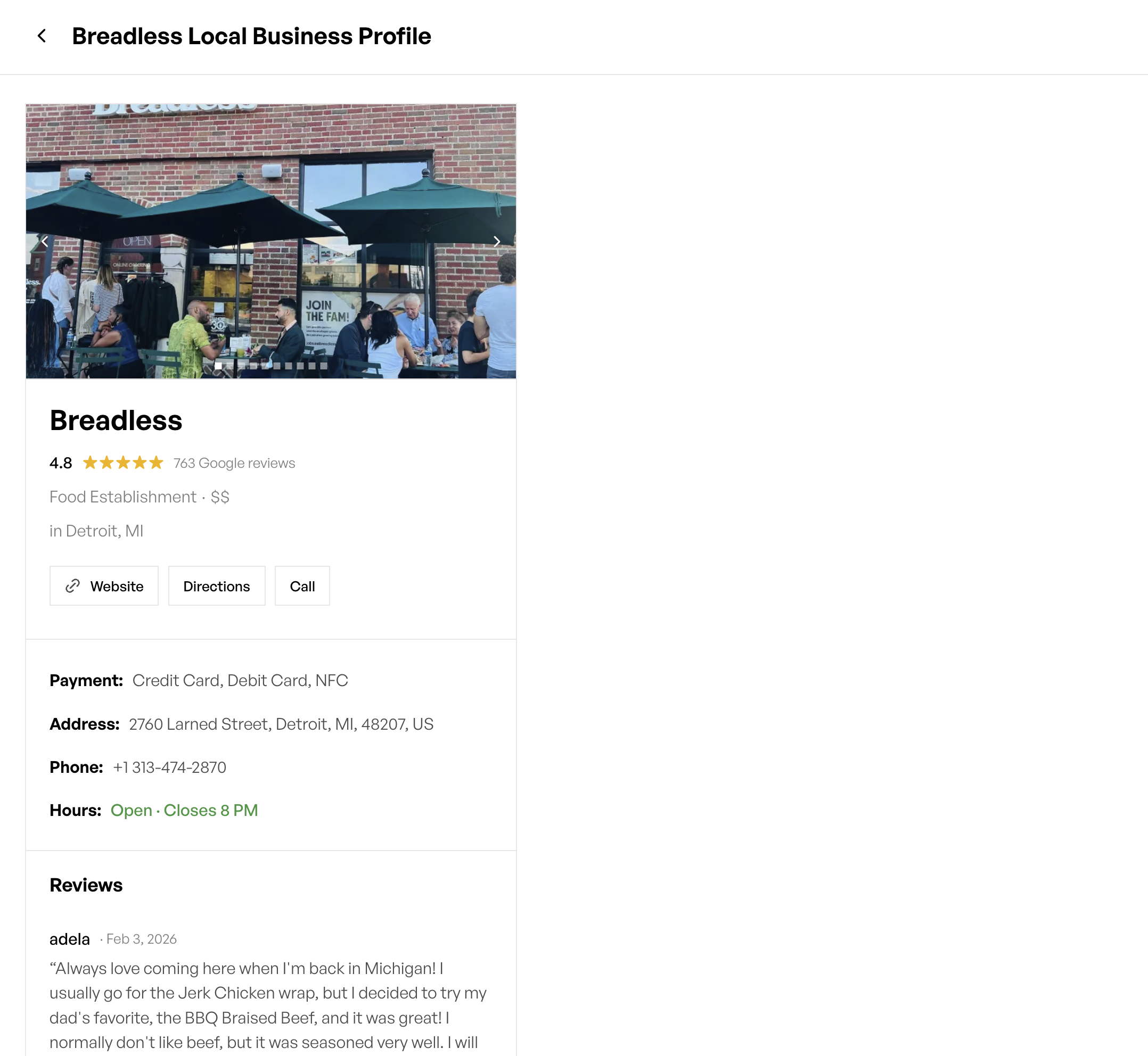
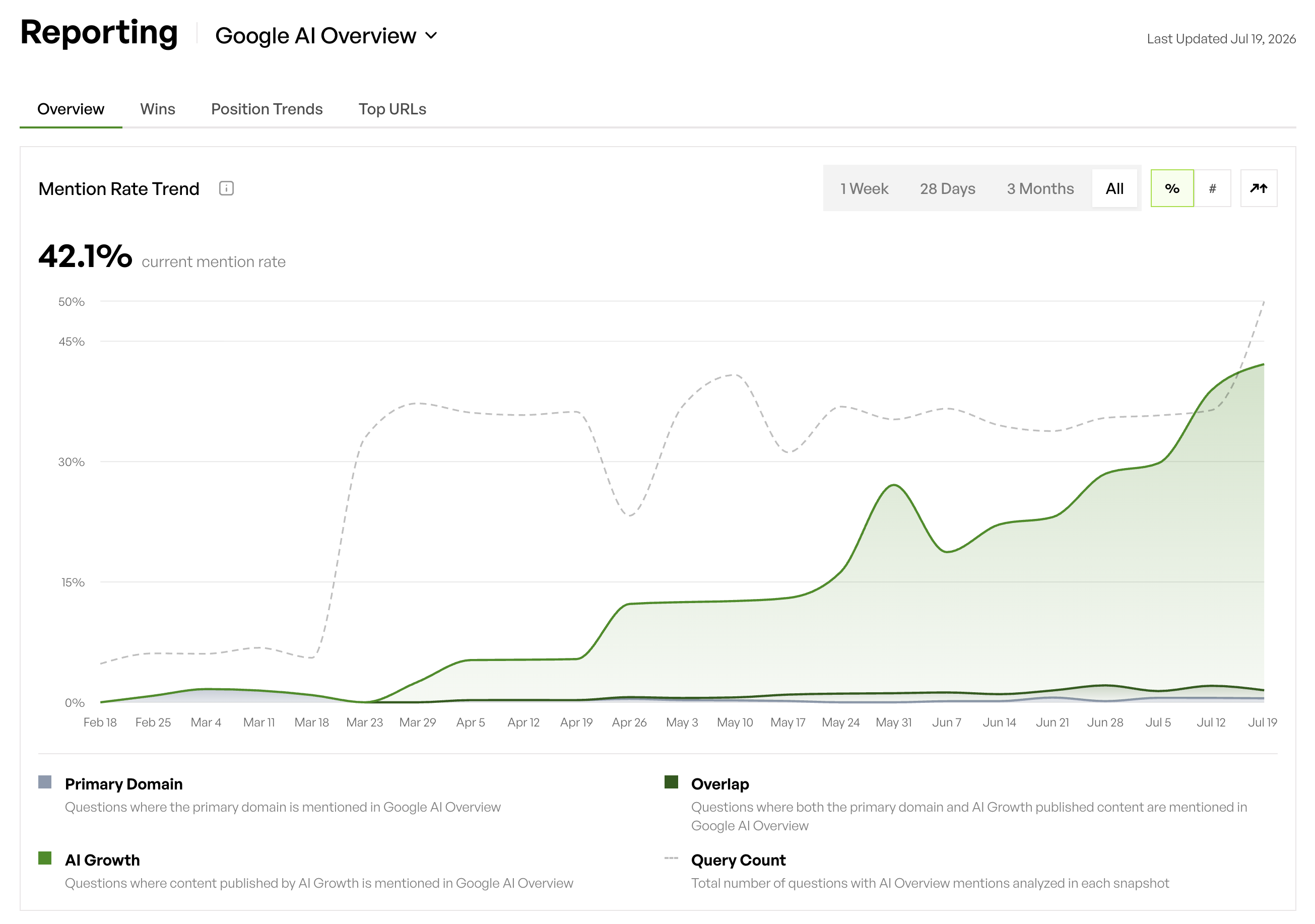
Growth-stage franchises with 20 to 50 locations and limited internal marketing resources gain the most from active optimization engines that replace a content agency, SEO specialist, and web agency at once. The Breadless case demonstrates this outcome: Breadless is now one of the most recommended healthy franchises in the US, ahead of CAVA, Rush Bowls, and Sweetgreen in its search universe, with an 84% citation rate against competitors and a 72% recommendation rate versus Sweetgreen’s 13% within 90 days. Google Search Console impressions grew roughly 30x in six months, from 387,000 to 12.3 million, and ChatGPT now cites eatbreadless.com over 45,000 times per month, generating 10 to 15 highly qualified franchisee leads per week.
Scaling franchises with 50 to 200 locations that already have monitoring data but cannot act on it are the clearest candidates for moving from monitoring-only platforms to active optimization. Vismore’s 2026 report observes that most teams begin with monitoring tools, realize within a few weeks that monitoring alone does not change outcomes, and then advance to execution platforms.
Enterprise franchise systems with 200-plus locations that require governance controls, per-location reporting, and scalability without headcount additions need active optimization engines with flat-fee pricing, automated schema deployment, and incremental visibility reporting that isolates results by location and market.
Find out which tier and deployment model fits your franchise system in a 30-minute consultation.
Operational and Long-Term Considerations for Active Optimization
Onboarding effort for active optimization engines concentrates in the kickoff week, then the engine runs autonomously. The primary cross-functional dependency is the reverse proxy rewrite that connects the optimized blog to a subdirectory under the franchise domain, a one-time technical step that does not require ongoing engineering involvement.
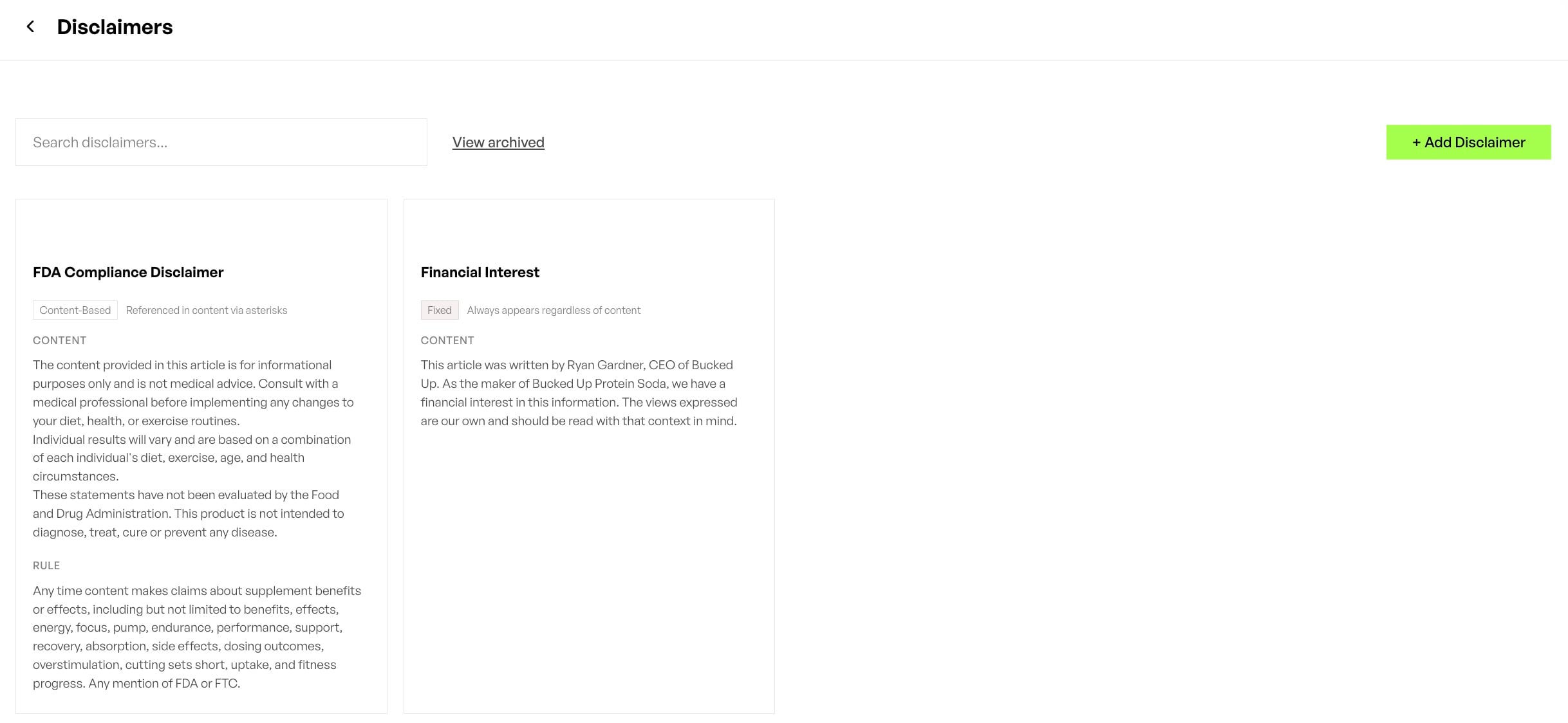
Content governance for franchise systems works best when brand voice rules, legal disclaimers, and location-specific claim standards are configured once and applied consistently across all future content. Active optimization engines with memory systems that enforce these rules at the generation level remove the review burden that builds up when content comes from a distributed team or multiple agencies.
Infrastructure needs for headless deployment stay minimal on the franchise operator’s side. The engine provisions schema, sitemaps, robots.txt, bot tracking, and agent discovery infrastructure automatically. The franchise marketing team manages the content strategy in plain language while the engine handles technical execution.
Adaptability to changing AI search behavior becomes the long-term differentiator. Growth Memo research published in H1 2026 found that 91% of citations appear in only one of ChatGPT, Perplexity, or AI Overviews, so franchise visibility must be built across all three surfaces at the same time rather than focused on a single engine. Living content that self-heals and updates as AI search behavior evolves is the only architecture that maintains this multi-surface presence without continuous manual intervention.
Risks, Limitations, and Common Misconceptions
Monitoring-only platforms carry three structural limitations that franchise marketing leaders should evaluate before treating them as a primary tool. These limitations compound each other, because the lack of content production creates dependency on external resources, which then makes it impossible to prove what the monitoring platform itself contributed and leaves teams stuck between diagnosis and action.
The first limitation is that monitoring platforms cannot produce or self-heal content. Prompt-monitoring dashboards are mostly noise because monitored queries are invented by the tool rather than drawn from real user distributions, LLM answers are non-deterministic, and vendors lack access to proprietary query telemetry from OpenAI, Perplexity, Google, Anthropic, and xAI. The visibility scores they produce do not match actual AI crawler behavior.
This content gap creates the second limitation: they cannot prove incremental visibility. A monitoring platform that shows a brand appearing in 12% of tracked prompts cannot isolate how much of that visibility existed before the platform was deployed. Without incremental isolation, franchise marketing leaders cannot demonstrate ROI or identify which locations need intervention.
These two gaps combine to create the third limitation, an operational chasm between diagnosis and action. The most common failure mode in answer engine optimization is teams buying a monitoring tool, seeing data showing poor brand representation, and then stalling for weeks because there is no clear operational path to fixing it. For franchise systems managing 20 or more locations, this gap compounds across every underperforming market at once.
A common misconception states that strong traditional local search performance automatically translates into AI visibility. Many brands leading in traditional local search do not rank among the most visible in AI local recommendations. Traditional SEO performance remains a necessary but insufficient condition for AI search visibility.
Decision Framework and Summary Matrix
This framework helps franchise marketing leaders choose a tool category based on priorities, constraints, and operating model.
Choose a monitoring platform if the primary need is establishing a baseline AI visibility score before committing to an optimization strategy, the internal team has dedicated content and technical resources to act on monitoring data, and the franchise system is in an early evaluation phase with no immediate pressure to change AI recommendations.
If the franchise already has content and technical resources in place but needs stronger keyword intelligence, choose an SEO suite. These tools excel at keyword research and traditional rank tracking when the franchise system already has a content production workflow and technical SEO team, and AI search visibility sits behind traditional organic performance as a secondary priority.
But if the primary need is changing what AI surfaces recommend for franchise locations rather than just measuring current visibility, choose an active optimization engine. This path fits teams that are non-technical or already stretched across multiple vendor relationships, need living content that self-heals without manual intervention, and require incremental visibility reporting to defend investment to leadership.
The summary test stays simple: if the tool cannot produce content, deploy schema, and prove the incremental visibility it generated, it functions as a monitoring tool, not a franchise AI search optimization tool.
Apply this framework to your franchise and see your first article live within a week.
Frequently Asked Questions
How long does it take to see AI citation results for franchise locations?
The first article typically goes live within one week of kickoff. Content has indexed in as little as ten days and often within two weeks. Most franchise systems see meaningful citation movement within the first month, with the standard engagement structured as a three-month pilot because indexing timelines vary by industry and market. Franchise systems with strong existing domain authority usually see faster initial citation gains, while newer systems build momentum over the pilot period as the content universe expands.
Does active optimization require technical expertise from the franchise marketing team?
No. Headless deployment means the engine provisions schema, sitemaps, robots.txt, bot tracking, Blog MCP, agent discovery, llms.txt, instant indexing, autoredirects, and 404 tracking automatically. The only integration step on the franchise side is a reverse proxy rewrite that connects the optimized blog to a subdirectory under the franchise domain. This step happens once, not as an ongoing technical dependency. The franchise marketing team interacts with the engine in plain language, reviewing articles and providing feedback that the system applies to all future content without re-briefing.
How does active optimization handle brand governance across hundreds of franchise locations?
Brand governance is enforced at the generation level through a manifesto that serves as the single source of truth, combined with style memories that carry voice rules, legal disclaimers, and claim standards. These rules are configured once during kickoff and applied to every future article across all locations. For franchise systems with compliance requirements in regulated sectors, the engine supports fixed and dynamic disclaimers with Chicago-style superscripts and validates every claim against primary sources before publication. Franchisee-specific customization runs through location-level content parameters without overriding brand-level governance rules.
How is incremental visibility measured separately from existing brand visibility?
Active optimization engines publish into a separate environment, typically a subdirectory or subdomain connected via reverse proxy, which allows the engine to report only on the visibility it actually generated rather than taking credit for pre-existing brand visibility. Reporting cross-references per-article bot tracking, Google Search Console impressions, and AI citation data week over week. This approach produces an incremental visibility figure that isolates the engine’s contribution and highlights which locations, markets, and content topics drive the most AI citation growth.
What happens to franchise AI visibility when AI search behavior changes?
Living content that self-heals and updates automatically serves as the primary defense against AI search behavior changes. When AI engines update their citation preferences or new competitors publish content that displaces existing citations, the engine detects the change through bot tracking and Google Search Console signals and refreshes affected articles automatically. The content universe also refreshes weekly using real-time AI Overview and ChatGPT data as the objective function, so the franchise’s content strategy adapts to actual AI search behavior rather than a static keyword list configured at onboarding.
Conclusion: Turning Franchise Brands into AI Answers
Franchise marketing leaders face a concrete operational problem: AI engines recommend competitors instead of their own locations, and monitoring-only platforms track the gap without closing it. The evaluation criteria, size-tiered matrix, and decision framework in this article draw a clear line between tools that show where franchise visibility stands and tools that actively change what AI surfaces recommend.
AI Growth Agent is the only engine that closes the full loop from universe mapping to living content production to headless deployment to incremental visibility reporting, without requiring engineering resources or additional headcount from the franchise system. The Breadless outcome described earlier, moving from unranked to most-recommended with qualified franchisee leads flowing weekly, illustrates what active optimization produces compared with monitoring alone.
Traditional search tools show where your brand stands. AI Growth Agent makes your brand the answer.
Get your first franchise location article live within a week and confirm fit for your system.