Written by: Mariana Fonseca, Editorial Team, AI Growth Agent
Key Takeaways
- AI search now drives over half of B2B SaaS research, shrinking consideration sets from 12 vendors to 3 to 5 and leaving most brands unseen.
- Four pillars, Search Intelligence, AI Analytics, Bot Tracking, and AI Ranking, decide whether a brand appears in AI answers or disappears from them.
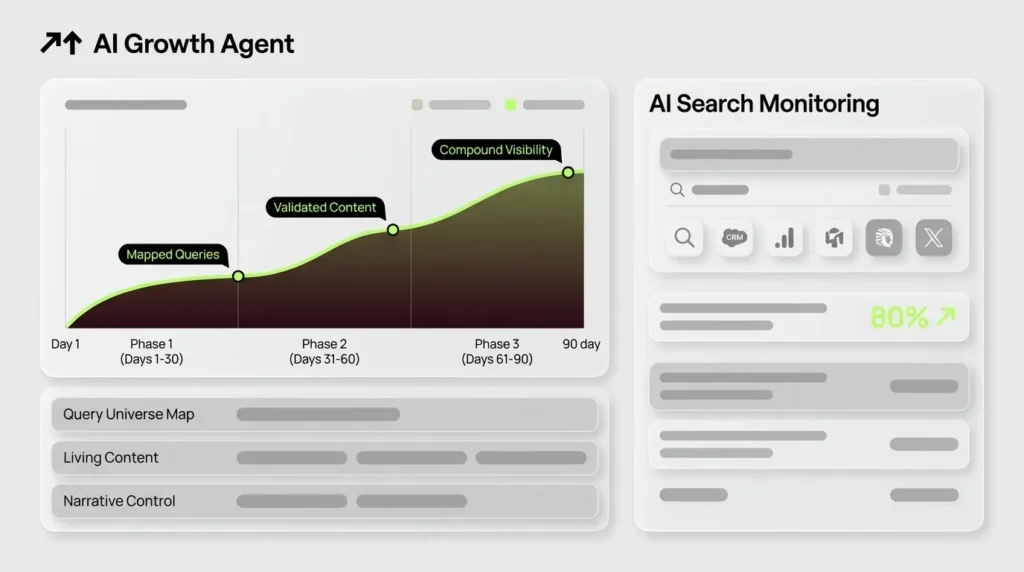
- A 90-day headless marketing plan maps the full query universe, ships validated living content, and grows citations across ChatGPT, Perplexity, and Google AI Mode.
- Brands that follow the Map, Build, and Compound phases consistently reach 12,000+ new citations and a 20%+ lift in impressions within the first twelve weeks.
- AI Growth Agent automates this engine so marketing teams control their narrative without agencies; book a demo to start mapping your universe today.
Why B2B SaaS Brands Vanish From AI Search Results
B2B buyers have shifted from blue links to AI answers faster than most marketing teams have adapted. G2’s April 2026 survey of 1,076 B2B software buyers found that 51% now begin their software research with an AI chatbot more often than with Google, up from 29% 11 months prior. Forrester’s 2026 Buyers’ Journey Survey of nearly 18,000 global business buyers found that 94% used AI in their B2B purchase process. MEMETIK’s analysis of 50,000+ B2B buying journeys found that 70% of B2B purchases now start with AI assistant queries, with consideration sets shrinking from approximately 12 vendors to 3 to 5.
Four pillars determine whether a brand appears in those answers or disappears from them entirely, and the 90-day plan systematically addresses each one.
- Search Intelligence maps the full traditional search landscape, including positioning, competition, search volume, and who already wins each result.
- AI Analytics tracks brand value and buyer behavior across the journey, from external AI-tool queries through content consumption and sentiment.
- Bot Tracking records every crawler and AI training agent interaction, including each crawl, citation, and training sweep.
- AI Ranking measures order of mention and citation context, the new leaderboard in a world without static ranked lists.
The scale of the invisibility problem is concrete. An April 2026 Cited Research Team study of 100 B2B SaaS companies across 15,000 query-platform combinations on ChatGPT, Claude, and Perplexity found that only 12 companies appeared in AI recommendations, with the average company appearing in only 0.8% of relevant queries. DerivateX’s 2026 benchmark of 50 B2B SaaS companies across 1,400 buyer-intent prompts found that 44% scored below 50 on the AI Presence Score, with the median at 63.5 out of 100 and an 87-point gap between the top scorer (Clio at 89) and the bottom (LeadSquared at 2).
The source of citations compounds the problem. Lesli’s 2026 analysis of 21,311 brand mentions found that 85% of AI citations come from third-party sources rather than owned domains. This dependency on third-party validation means brands cannot simply improve their own sites and wait. They must actively map, build, and compound citations across the entire AI ecosystem.
How to Win Brand Visibility in AI Search
A focused 90-day headless marketing plan replaces the agency stack with one engine. Marketing by and for the robots means publishing content in formats and structures AI surfaces can read, trust, and cite at a scale no agency or internal team can sustain manually. The three phases below, Map, Build, and Compound, activate all four pillars in sequence: Search Intelligence drives the Map phase, AI Analytics and Bot Tracking power the Build phase, and AI Ranking measures success in the Compound phase.
Phase 1: Map Your AI Query Universe (Days 1 to 30)
Step 1: Run Search Intelligence across the full universe. The first task is capturing a complete picture of the competitive landscape before producing a single word of content. AI Growth Agent begins by ingesting the brand manifesto and primary sources, then runs 3,000+ weekly searches to build a Content Topology, a hierarchy of seed terms with dozens of long-tail queries beneath each one, grounded in real-time Google and ChatGPT data. This topology becomes the universe snapshot, 300 to 400 queries with citation gaps, that the CMO or founder approves before any content enters production. The table below shows a sample Content Topology with four seed terms, illustrating how citation gaps are prioritized for the Build phase.
| Seed Term | Current Citation Share | Gap Priority | Phase |
|---|---|---|---|
| B2B SaaS brand presence AI | 0% | High | Build |
| AI search visibility B2B | 4% | High | Build |
| Headless marketing SaaS | 0% | Medium | Build |
| ChatGPT brand citations | 2% | High | Build |
Map your full universe and see where your brand stands across every AI surface.
Step 2: Analyze citation context and entity consistency. Once the universe is mapped, the next task is diagnosing why competitors own the narrative. AI Growth Agent pulls competitor domain rankings, reviews platform signals, and audits sameAs links across G2, Crunchbase, and LinkedIn. Companies with strong E-E-A-T signals can reach higher citation rates in AI results. Inconsistent brand information across platforms such as LinkedIn, Crunchbase, G2, and Wikidata reduces AI citation confidence, which causes systems to default to not mentioning the brand. The validation target is an Entity Resolution Rate above 80%, meaning most AI engines correctly identify and categorize the brand before content production begins.
Step 3: Prioritize the long tail with evidence-based prompts. Long-tail queries hold the real opportunity because robots search there and most brands remain completely blind to it. Strong entity resolution in Step 2 enables precise long-tail prioritization in this step. Companies with structured comparison pages can be more likely to earn citations in AI responses. AI Growth Agent ranks prompts by buyer intent and citation velocity using real-time AI Overview and ChatGPT results as the objective function, then selects the first 100 queries for the Build phase. The CMO or founder approves the priority seed set before production begins.
Phase 2: Build Validated Living Content (Days 31 to 60)
Step 4: Generate authoritative, validated content single-shot. Content production in AI Growth Agent runs as a multi-agent orchestration across OpenAI, Anthropic, Gemini, Grok, Perplexity, Exa, and Firecrawl. Every claim is validated against primary sources before anything ships. Websites with complete schema can be cited more often in AI results. The engine applies schema automatically, runs a cascade of anti-hallucination checks, and saves memories so no correction repeats. The goal is 50 to 100 living articles published, each passing anti-hallucination validation before indexing. The table below shows three sample articles at different stages of the production pipeline, demonstrating how schema is applied and content moves from queued to live.
| Article Title | Target Query | Schema Applied | Status |
|---|---|---|---|
| Best CRM for B2B SaaS | best crm b2b saas 2026 | Article, FAQ, SoftwareApp | Live |
| ChatGPT vs Perplexity for Vendor Research | ai tools vendor research b2b | Article, Comparison | Queued |
| Headless Marketing Guide | headless marketing b2b saas | Article, Organization | In Review |
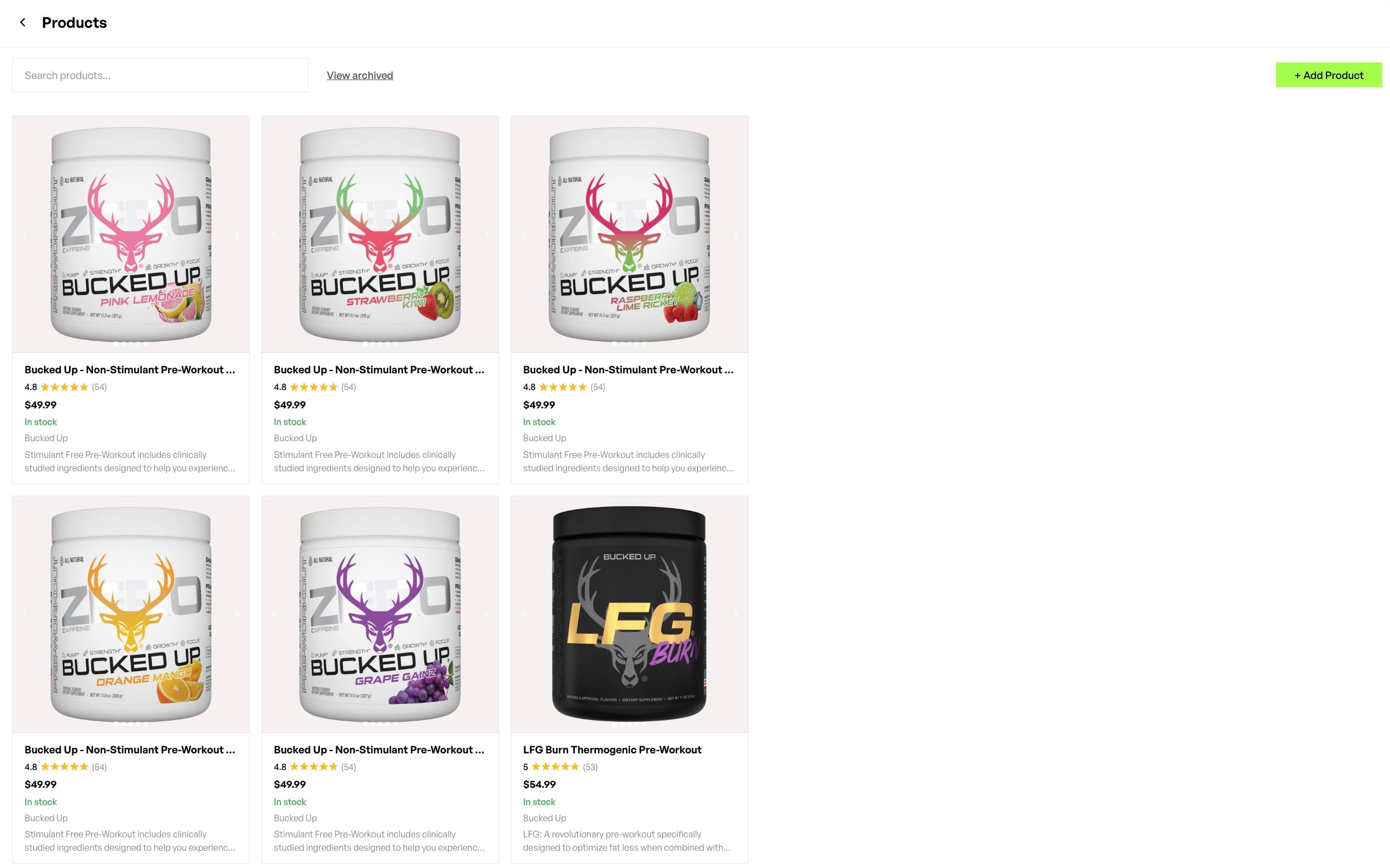
Step 5: Stand up the owned, AI-ready blog in one week. AI Growth Agent provisions a fully configured WordPress blog styled to match the brand, connected through a reverse proxy rewrite under a subdirectory or subdomain. The stack ships automatically with all the components AI agents need to discover and trust the content, including Blog MCP, llms.txt and llms-full.txt, sitemaps, advanced robots.txt, instant indexing, autoredirects, and 404 tracking. Because these components are provisioned automatically, no website agency, RFP, or engineering hours are required on the client side. The first article is typically live within a week of kickoff, with content indexing in as little as ten days. The validation target is a site that passes all agent discovery tests before the Build phase closes.
Get your first article live within a week, with no agency dependency.
Step 6: Activate living, self-healing content and bot tracking. Content that ships and then goes stale loses value quickly. AI Growth Agent enables self-healing rules so every article updates automatically as the world changes. Per-article bot tracking logs every interaction from traditional crawlers and AI training agents alike. The CMO monitors the Incremental Visibility dashboard, and the validation target is first bot citations logged before the Build phase ends.
Phase 3: Compound AI Visibility and Narrative Control (Days 61 to 90)
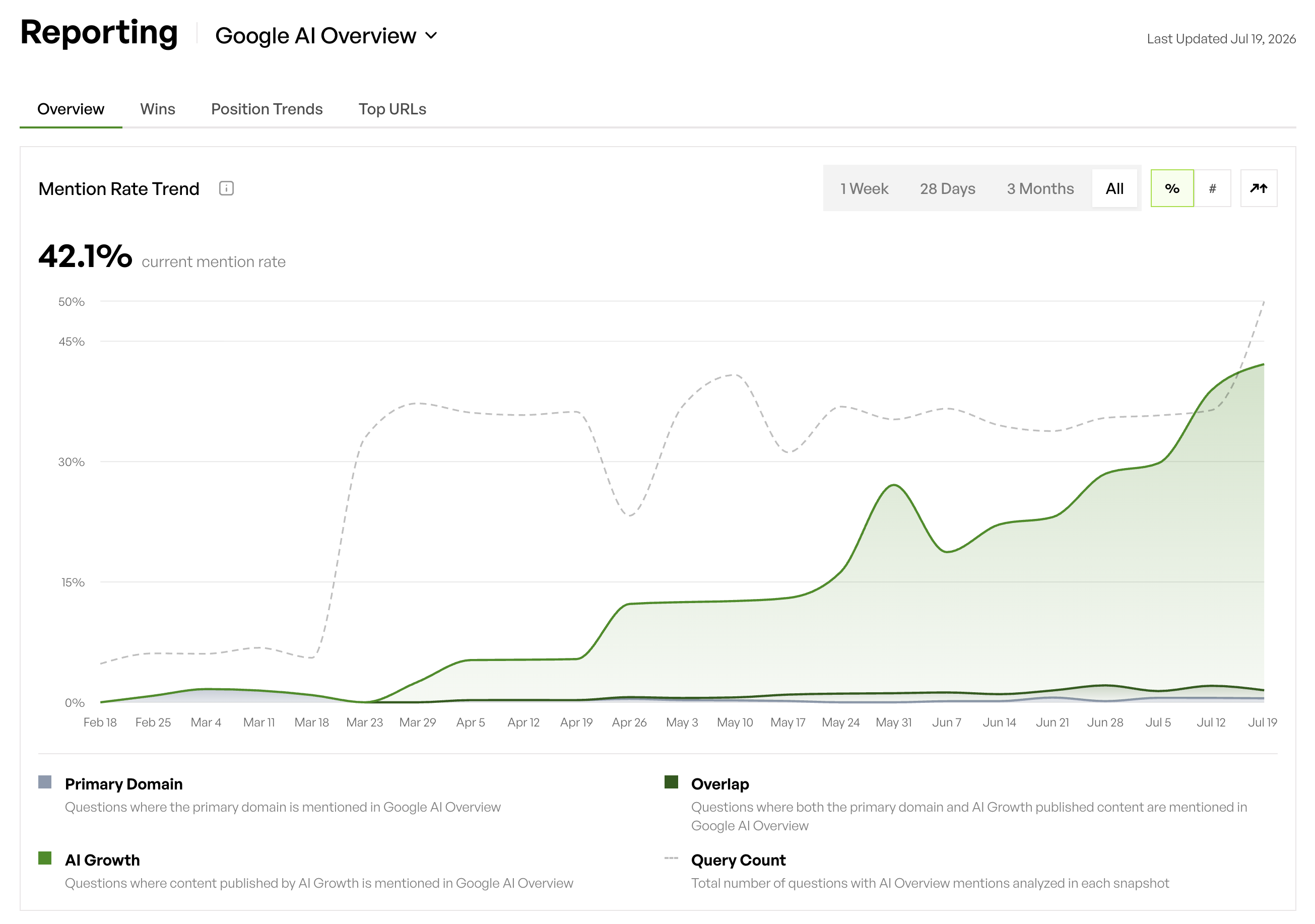
Step 7: Measure Incremental Visibility and citation context weekly. AI Growth Agent publishes into a separate environment so it reports only the visibility it actually generated, never taking credit for what the brand already had. The engine cross-references Google Search Console, bot traffic, and citation data weekly. AI-referred traffic converts at 14.2% versus 2.8% for Google organic, which makes citation share a direct leading indicator of high-intent pipeline. The target across the first twelve weeks is to reach the benchmark results established across existing clients. The table below shows typical progression across the 90-day pilot, illustrating how citations and bot visits compound week over week.
| Week | New Citations | Bot Visits | Impression Lift |
|---|---|---|---|
| Week 4 | 800 | 6,000 | +4% |
| Week 8 | 4,200 | 38,000 | +11% |
| Week 12 | 12,000+ | 100,000+ | +20%+ |
Step 8: Expand the universe and refresh living content. Mature AI Growth Agent clients reach universes of 1,600+ queries. The Compound phase adds the next seed terms, heals existing articles against updated Google Search Console signals, and strengthens internal links to lift content that has not yet indexed at target depth. The CMO approves new seeds, and the validation target is citation retention above 90% across existing articles while the universe grows.
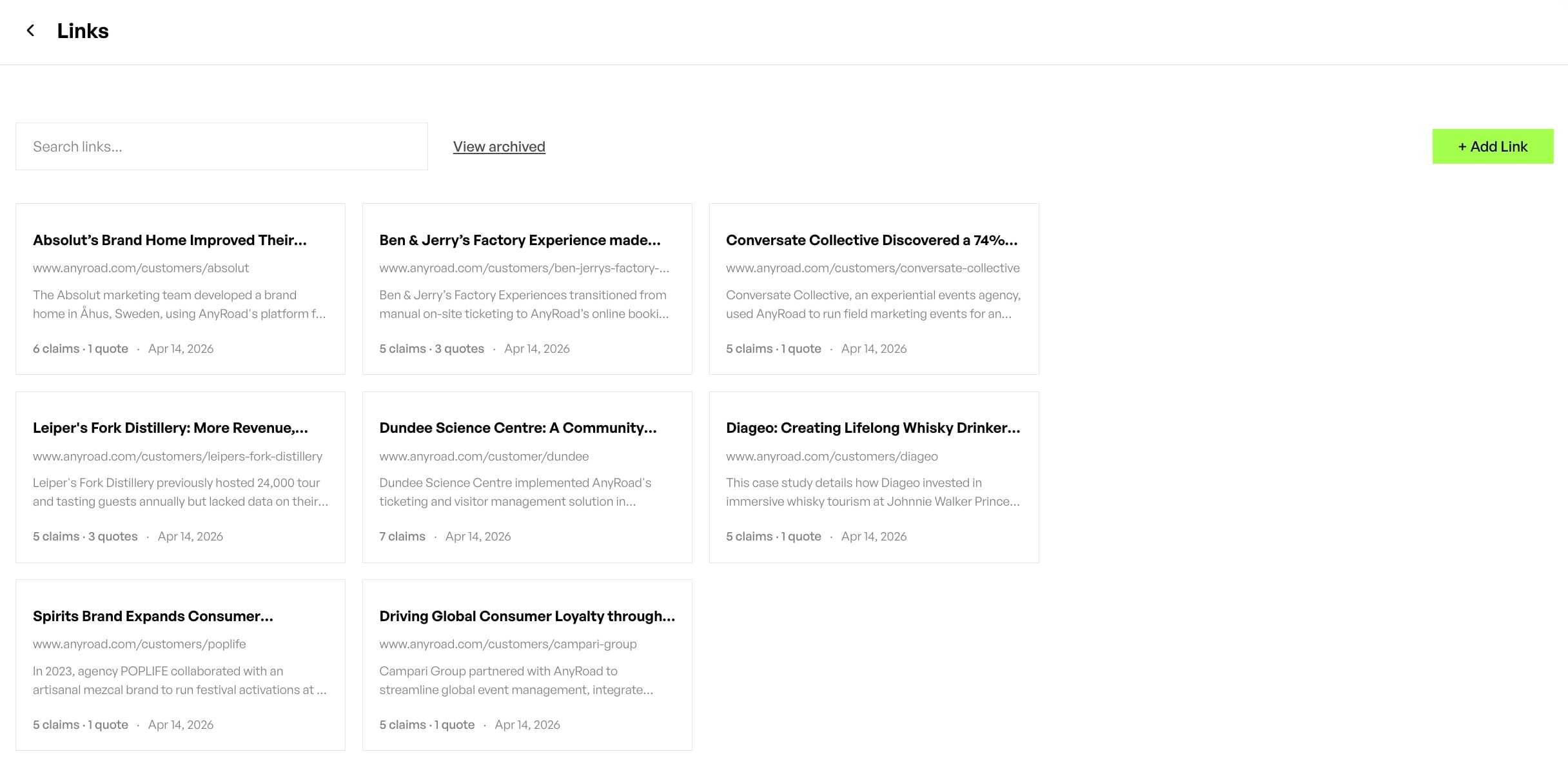
Step 9: Scale narrative control across all four pillars. The final step layers additional third-party validation, expands comparison pages, and locks brand voice memories so every future generation reflects the narrative the CMO and founder have approved. The validation target is a top-three citation share in the priority category, with Share of Citation tracked weekly across ChatGPT, Perplexity, and Google AI Mode.
Start compounding narrative control across every AI surface your buyers use.
Frequently Asked Questions
How long does the 90-day plan take to show first citations?
The first article is typically live within a week of kickoff, and content has indexed in as little as ten days. First bot citations are usually logged during the Build phase, between days 31 and 60, depending on the brand’s existing entity authority and the competitiveness of the category. The standard engagement is a three-month pilot because indexing timelines vary by industry, but clients consistently see movement well before the pilot closes. Clients consistently hit the benchmarks mentioned earlier in the pilot timeline.
Who owns the process inside a non-technical marketing team?
The CMO or founder owns the strategic decisions, including approving seed terms, reviewing the Content Topology, and signing off on the priority query set. The engine handles everything technical, including schema, the WordPress plugin, robots.txt, sitemaps, Blog MCP, agent discovery, llms.txt, instant indexing, autoredirects, and bot tracking. No engineering hours are required on the client side beyond the one-time reverse proxy rewrite that connects the blog to a subdirectory under the brand’s domain. Feedback is given in plain language through the studio, and the engine saves memories so no correction is ever repeated.
What tooling is required beyond the single engine?
Nothing beyond what AI Growth Agent provisions automatically. The engine replaces the SEO agency, the content tool, the web agency, the GEO monitor, the schema plugin, the analytics stack, and the PR firm. Google Search Console serves as an independent audit alongside AI Growth Agent’s own Incremental Visibility reporting. The only client-side integration is the reverse proxy rewrite, and setup documentation is generated for the client’s specific host, whether Cloudflare, Vercel, or another provider.
Are there any technical dependencies on the client side?
The only dependency is the reverse proxy rewrite that connects the AI Growth Agent blog to a subdirectory or subdomain under the brand’s domain. Everything else ships automatically with every package, including the WordPress plugin, full schema suite, Blog MCP, llms.txt and llms-full.txt, sitemaps, advanced robots.txt, web stories, instant indexing, autoredirects, and 404 tracking. The internal marketing team needs no technical background to operate the engine day to day.
How is success measured beyond traditional rankings?
AI Growth Agent commits to brand mention rate and citation rate as primary metrics, accompanied by Google Search Console impressions and bot traffic as independent audits. Incremental Visibility reporting isolates exactly what the engine generated week over week, separate from visibility the brand already had. Citation context, meaning where the brand appears in an AI answer and what claim it is cited for, replaces the old idea of a ranking number. AI-referred traffic conversion rate is a secondary indicator, and the roughly 5x conversion advantage over organic search means a sustained lift in AI citations produces a measurable pipeline effect within the 90-day window.
How does the system scale past the first 500 articles?
The Content Topology expands with each Search Intelligence pass, adding new seed terms and the long-tail queries beneath them. Mature clients reach universes of 1,600+ queries, with the engine running 3,000+ searches every week to refresh the universe snapshot. Living, self-healing content means existing articles update automatically rather than going stale, so authority compounds instead of decaying. Internal linking across the full universe lifts content that has not yet reached target citation depth, and the engine produces between 2 and 50 articles per day per client, up to roughly 500 per month, with memory systems that enforce brand voice and citation standards at any volume.
Periodic Review to Protect Narrative Control
The discovery shift rewards brands that treat AI surfaces as the primary reader and run headless marketing on autopilot. The leaderboard in AI search is being written now, and brands that establish authoritative content in 2026 are training the next generation of models with their own narrative. Brands that wait are training the next generation with whatever happens to be sitting on the open web.
AI Growth Agent maps the universe, produces validated living content, and reports Incremental Visibility so your brand becomes the answer across ChatGPT, Perplexity, and Google AI Mode. The Map phase begins with a kickoff interview, the Build phase delivers your first article on the timeline established in the pilot, and the Compound phase locks citation leadership before the 90-day pilot closes.
Begin the Map phase and see your first article live within a week.