Written by: Mariana Fonseca, Editorial Team, AI Growth Agent
Key Takeaways for Fintech LLMO
- Fintech LLMO depends on named credentialed authors, primary-source validation, and clear regulatory disclaimers to earn AI citations on YMYL financial queries.
- Traditional SEO metrics such as rankings and backlinks give way to citation frequency, AI share of voice, and extractability in zero-click answers.
- Content needs FinancialService schema, in-section disclaimers, and agent-focused technical signals such as llms.txt and instant indexing so AI systems can surface it reliably.
- Every material claim requires validation against regulatory primary sources, and living content must refresh quarterly or immediately when rates or compliance rules change.
- AI Growth Agent delivers an eight-step framework that maps query universes, builds E-E-A-T infrastructure, and tracks incremental visibility for fintech brands. See your first compliant article go live within a week.
SEO Versus LLMO: Why Fintech Needs a New Playbook
Traditional SEO and LLMO function as different disciplines. They rely on different logic, reward different signals, and create different outcomes. For fintech CMOs and founders, this distinction now affects revenue because many US consumers use AI tools at the product-discovery stage for financial decisions. The channel has shifted. The playbook has not caught up.
The following table highlights four core differences between traditional SEO and LLMO that fintech teams must understand to compete on AI-driven discovery.
| Dimension | Traditional SEO | LLMO for Fintech | Why It Matters |
|---|---|---|---|
| Success metric | Ranking position, click-through rate | Citation frequency, AI share of voice | GEO success is measured by citation frequency and share of voice within AI-generated responses |
| Traffic model | User clicks through from a ranked list | Zero-click: AI answers the query directly | Google AI Mode searches show approximately 93% zero-click behavior versus approximately 60-68% in traditional Google search |
| Authority signal | Backlink volume, keyword density | Named credentialed authors, regulator references, primary-source citations | Trust signals and schema markup can improve citation rates in AI Overviews, Perplexity, and ChatGPT for fintech content |
| Content freshness | Annual or ad-hoc updates | Quarterly refresh minimum, immediate on regulatory change | 65% of AI bot hits target content published within the past year |
Traditional SEO shows where your brand stands. LLMO turns your brand into the answer that AI systems quote.
See how AI Growth Agent maps your fintech query universe and builds content that earns citations.
Step 1: Map the Full Query Universe with Real-Time Google and ChatGPT Data
The financial consumer’s discovery behavior has shifted toward AI. PwC’s Consumer Lending Radar Survey 2026 found that 67% of borrowers expect AI to inform their next borrowing decision. The BridgeWise 2026 State of AI for Wealth report found that 78.3% of respondents already use AI tools for investment-related queries. TD’s 2026 U.S. AI Insights Report found that 55% of Americans use AI to aid their financial management decisions, up from 10% the prior year.
Mapping the query universe means running hundreds of real searches across Google AI Overviews and ChatGPT. This process identifies which long-tail queries generate AI answers, which competitors receive citations, and where white space exists. Seed terms such as “best personal loan rates” or “how to invest in index funds” expand into dozens of long-tail variants that AI surfaces answer differently. A fintech brand that tracks only head terms misses most of its actual market. This methodology treats real-time AI Overview and ChatGPT results as the objective function, not a static keyword database.
Step 2: Build E-E-A-T with Named Experts and Original Fintech Survey Data
Google’s Search Quality Rater Guidelines treat trust as the most important factor for YMYL pages, with weak trust signals leading to systematic demotion and removal from AI citation candidate sets entirely. For fintech, anonymous content cannot support that trust bar.
Every piece of content on loans, cards, or investing needs a named, credentialed author whose expertise matches the subject. For YMYL financial topics such as Roth conversion rules, pages must name both a credentialed author and a credentialed reviewer whose expertise exactly matches the subject, rather than relying on a generic advisory board. Author and reviewer bio pages must include full name, license number and jurisdiction, board certification, education, current practice, years of experience, and direct links to public verification registries such as FINRA BrokerCheck, CFP Board verification, or SEC IAPD.
Original survey data acts as a citation multiplier. The Neobanks AI Visibility Index 2026 analyzed 31,500 prompts across ChatGPT, Claude, Gemini, Perplexity, and Google AI Overviews to produce citable Citation Share data for more than 40 neobanks, showing that proprietary benchmark data earns citations that generic commentary cannot. Research indicates that many AI Overview citations in finance come from sources outside the top organic results, which confirms that authority in AI search does not flow directly from traditional rankings.
Learn how AI Growth Agent builds E-E-A-T infrastructure for fintech content at scale.
Step 3: Structure Content with Financial Schema and Embedded Disclaimers

To capture this schema advantage, fintech brands need the following minimum baseline across their content stack.
- Organization plus FinancialService at the site level
- Person schema for every author and reviewer with hasCredential links to public registries
- WebPage plus Article with reviewedBy and dateReviewed fields
- FAQPage schema for extractable answer blocks
- LoanOrCredit or InvestmentOrSavingsProduct schema on relevant product pages
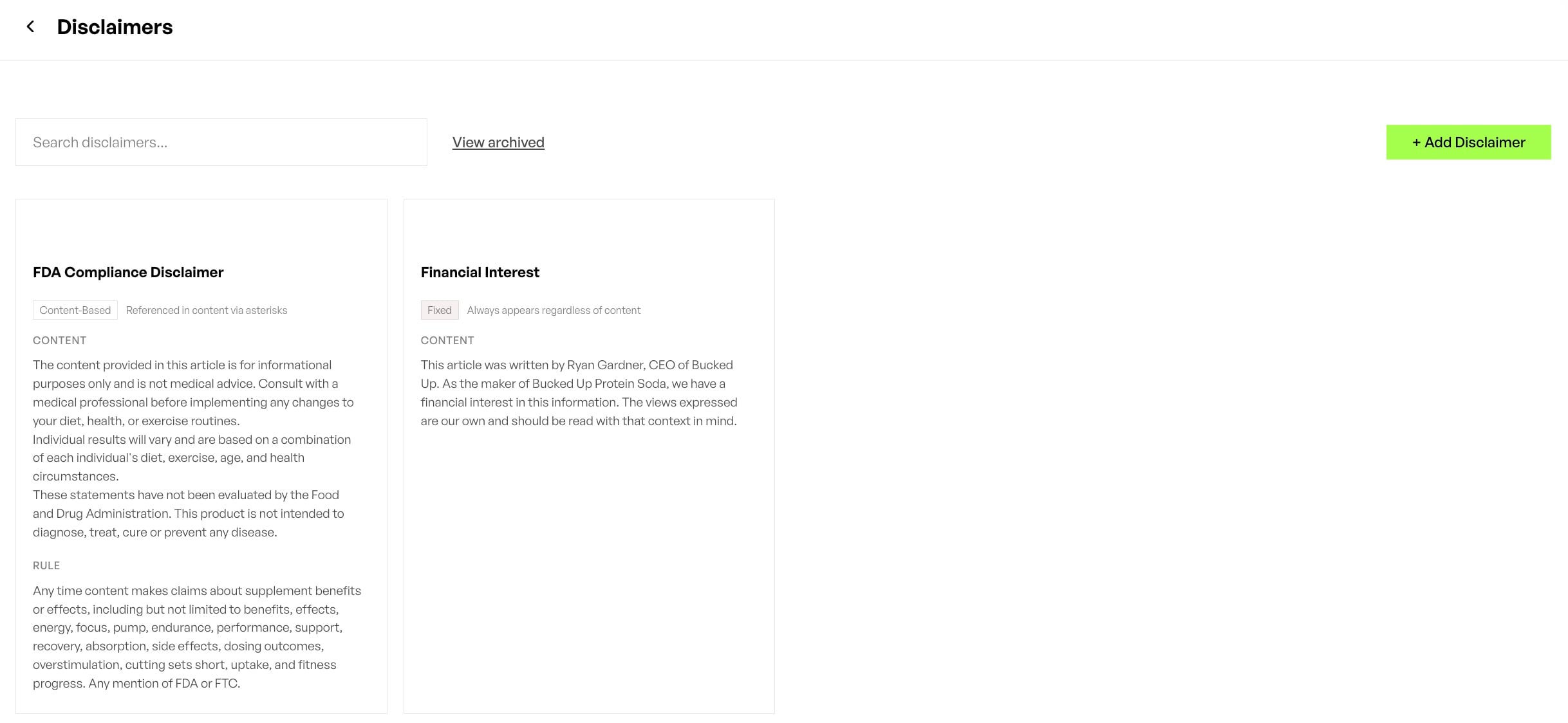
Disclaimers belong inside the body of the content, not only in the footer. AI systems often extract passages out of context and may miss footer-only disclosures, which makes in-section placement required for YMYL topics like loans, cards, and investing. Compliance review and GEO formatting should happen together so content is both accurate and extractable by AI systems, with legal teams approving facts and disclaimers before content teams format them into capsules, tables, and definitions.
Step 4: Validate Claims with a Fintech Primary-Source Cascade
Between 50% and 90% of LLM-generated citations do not fully support their claims, which creates direct compliance exposure for fintech brands that publish AI-assisted content without rigorous validation. The Cambridge Centre for Alternative Finance 2026 Global AI in Financial Services Report found that 70% of regulators cite hallucinations and unreliable outputs as a top AI risk, and in regulated financial services a hallucination can quickly become a liability event.
The primary-source cascade for fintech content sets a clear validation hierarchy so teams know which sources to prioritize.
- Regulatory primary sources such as SEC EDGAR, FINRA BrokerCheck, IRS publications, CFPB guidance, Federal Reserve data, FDIC, NCUA, SIPC, FCA, and ASIC
- Audited financials and official prospectuses
- Peer-reviewed research and academic literature
- Named analyst reports from recognized institutions
- High-authority financial press with named bylines
Secondary commercial blogs do not qualify as credible citations for individual claims on YMYL financial topics. Any claim that cannot be traced to a primary source must be removed or softened before publication. The immutable audit trail is the single most important element of a compliant AI workflow because FINRA Rule 2210 and similar regulations require firms to demonstrate exactly how content was created, reviewed, and approved.
See how AI Growth Agent’s anti-hallucination cascade validates every claim before publication.
Step 5: Use Agentic Technical SEO with Blog MCP, llms.txt, and Instant Indexing
Traditional technical SEO still forms the base. Structured HTML, full metadata, rich schema markup, internal linking, proper sitemaps, and a detailed robots.txt remain essential. AI citation pipelines for financial content apply four sequential stages, query fan-out, chunking and retrieval, passage selection, and attribution, while filtering finance pages primarily by source credibility scoring, author and entity verification, compliance and disclosure presence, and extractability of short declarative passages. Content that AI crawlers cannot access will not earn citations, regardless of its quality.
Agentic technical SEO adds AI-specific access and guidance so agents can read, interpret, and reuse your content correctly.
- Blog MCP with schema, manifest, discovery, and capability guidance exposed to agents
- OpenAI discovery and Agent Card guidance served via /.well-known/
- Natural language query parameters via /?s={query} that return personalized, internally linked responses to agents
- Markdown served directly to agent crawlers
- llms.txt and llms-full.txt published so AI surfaces can read the brand in the format they need
- Instant indexing so new fintech content enters AI training and retrieval cycles without delay
Educational finance queries such as those about IRAs or 401(k) contributions reach 91% AI Overview coverage, so the technical infrastructure to capture those citations must exist before publication.
Explore the full agentic technical SEO stack AI Growth Agent deploys on day one for fintech brands.
Step 6: Track AI Citation Share and Share of Voice
AI answers do not present a static ordered list, so citation context replaces the ranking number. Teams need to know where the brand appears in the answer, which claim it supports, and which competitors appear alongside it. The Neobanks AI Visibility Index 2026 calculated an AIV Score as a composite of citation frequency, cross-engine breadth, query-type breadth, extractability, and crawl access, which provides a standardized framework for measuring AI visibility across fintech brands.
Yext’s analysis of more than 6.8 million citations across 1.6 million responses from Gemini, ChatGPT, and Perplexity showed that Gemini cites brand-owned websites 52.15% of the time and favors structured factual content with schema markup, while ChatGPT rewards broad distribution across third-party sources and Perplexity leans on niche industry directories and customer reviews. Each platform needs its own measurement approach. A single prompt-tracking tool that caps coverage at 50 or 100 prompts misses the long tail where most financial queries live.
Step 7: Refresh Living Content When Regulations or Markets Shift
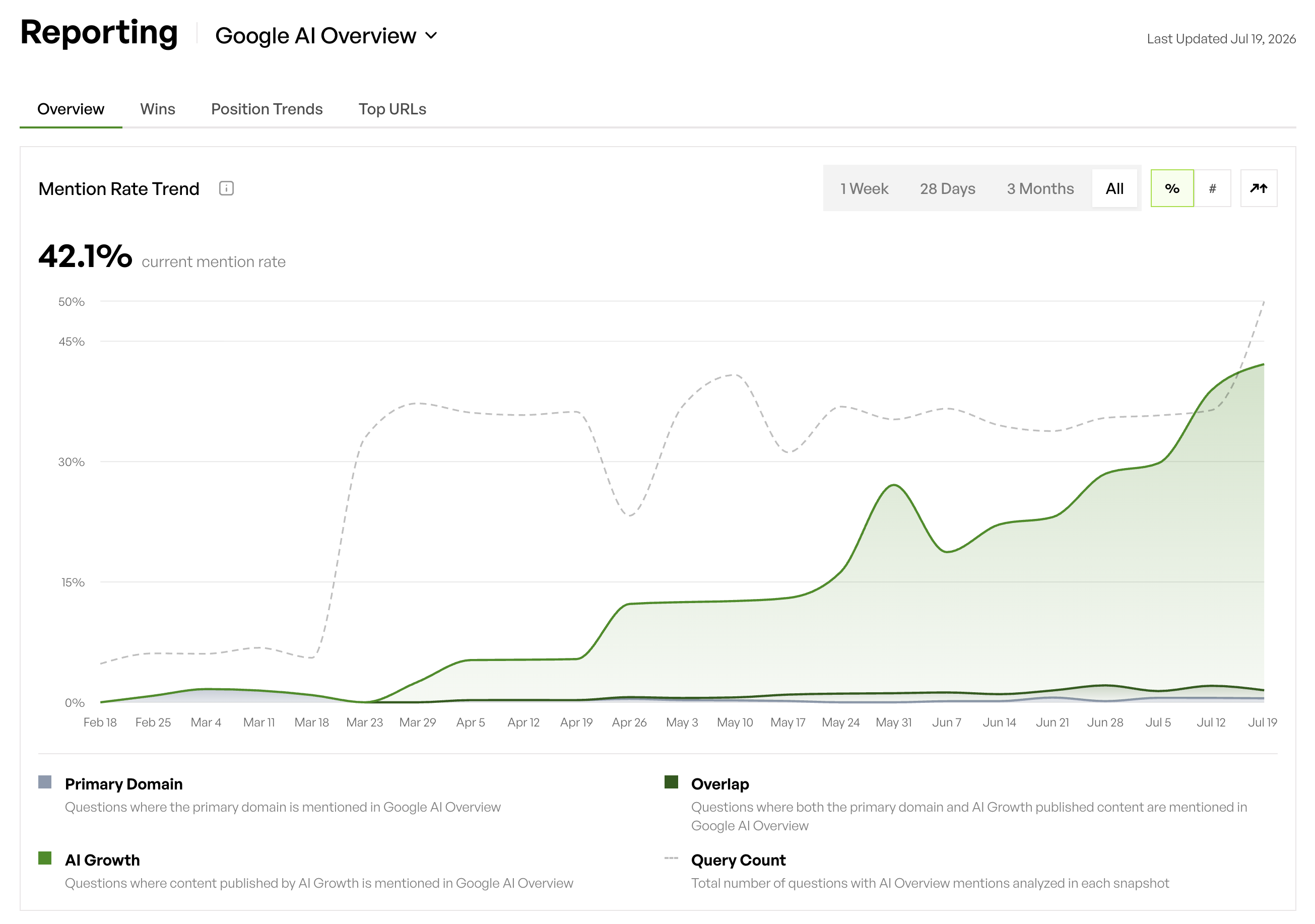
Financial content ages faster than content in most other verticals. Rate changes, regulatory updates, and product modifications can make published content inaccurate within weeks. Finance content tied to rates, regulations, or products should be reviewed at least quarterly, and sooner when underlying numbers change, because 65% of AI bot hits target content published within the past year.
AI Overview content changes 70% of the time for the same query, with nearly half of citations replaced on each regeneration, which makes continuous monitoring essential for regulated financial content. A publish-and-forget model fails in fintech. Content needs a self-healing mechanism so that when a rate changes, the article updates, and when a regulation is amended, the relevant passages are revised and the reviewedBy and dateReviewed schema fields update to reflect the new review cycle.
The self-healing mechanism also protects compliance standing. Only 29% of organisations actively track where their AI adoption fails or breaks down, leaving 71% without behavioural visibility into whether systems operate consistently with declared policies. Living content with documented refresh cadences closes that visibility gap.
Step 8: Measure Incremental Visibility Separate from Existing Brand Presence
Attribution creates the core measurement challenge in fintech LLMO. A brand with strong existing organic presence cannot easily see whether new AI citations come from legacy authority or from fresh content investment. Incremental visibility reporting solves this by publishing into a separate environment and isolating exactly what new content generates, week over week.
Forrester’s 2025 Buyers’ Journey Survey found that generative AI now ranks as the single most cited interaction type for purchase research, ahead of vendor websites, peer recommendations, and analyst reports. The BridgeWise 2026 State of AI for Wealth report found that 65.1% of respondents plan to replace portions of their manual investment research with AI tools within the year. This growth rate means measurement gaps quickly turn into strategic blind spots.
Cross-referenced signals provide the most defensible picture. Per-article bot tracking, Google Search Console impressions, citation context across platforms, and organic lead attribution at the conversion moment combine into a clear view. AI search visitors often carry higher value than average traditional organic visitors for high-consideration financial products such as mortgages and managed portfolios, so accurate measurement of this channel becomes a direct revenue priority.
90-Day Implementation Roadmap for Fintech LLMO
The roadmap below breaks the eight-step framework into four phases over 90 days and shows the activities and milestones that move a fintech brand from kickoff to a fully operational AI citation engine.
| Phase | Weeks | Key Activities | Milestone |
|---|---|---|---|
| Kickoff and Topology | 1–2 | Journalist interview, manifesto build, compliance configuration, query universe mapping across Google AI Overviews and ChatGPT, seed term and long-tail topology | First article live, full query universe mapped with 300–400 initial queries |
| Foundation Content | 3–5 | E-E-A-T infrastructure with named authors, reviewer schema, and credential links, first batch of YMYL-compliant articles with FinancialService schema, disclaimer frameworks, and primary-source validation | Content indexed, agentic technical SEO stack live including Blog MCP, llms.txt, and instant indexing |
| Scale and Measurement | 6–9 | Full content production cadence, AI citation share tracking established, share-of-voice baseline set across ChatGPT, Perplexity, and Google AI Overviews, bot tracking active | Citation share baseline documented, incremental visibility reporting live |
| Refresh and Optimize | 10–12 | First quarterly content refresh cycle, regulatory change monitoring active, self-healing triggered on any rate or compliance update, internal linking audit to lift underperforming pages | Living content system operational, 90-day incremental visibility report delivered |
This roadmap is customized for each fintech brand based on existing content infrastructure, compliance requirements, and competitive positioning. The FAQ section below addresses common questions about implementation, compliance, and measurement.
Frequently Asked Questions
How long does it take for fintech content to earn AI citations?
The first article typically goes live within one week of kickoff. Content often indexes within ten to fourteen days. AI citations begin appearing as content is crawled and incorporated into model retrieval systems, with meaningful citation share usually visible within the first 30 days for well-structured, compliant content. The standard engagement runs as a three-month pilot because indexing timelines vary by topic competitiveness and regulatory sensitivity. Fintech brands with strong E-E-A-T infrastructure and primary-source validation see movement earlier. Brands that launch with named credentialed reviewers, FinancialService schema, in-section disclaimers, and agentic technical SEO from day one earn citations faster than those that retrofit these elements later.
How does LLMO handle compliance requirements for financial content?
Compliance requirements are configured once and then applied to every future content generation. This configuration includes pre-approved disclaimer libraries, prohibited language lists that cover terms such as “guaranteed returns” or “risk-free,” required regulatory references for the relevant jurisdiction such as SEC, FINRA, CFPB, FCA, ASIC, and MiCA, and tiered review frameworks that route high-risk content such as performance claims and testimonials to full legal review before publication. Named credentialed reviewers with verifiable credentials such as CFA, CPA, or CFP appear in both the human-readable byline and the machine-readable reviewedBy schema field, consistent with the E-E-A-T framework described earlier. Every claim is validated against primary sources before publication, and an immutable audit trail documents prompts, sources, drafts, and approvals to satisfy FINRA Rule 2210 and equivalent regulatory requirements. Compliance review and content formatting happen together so disclaimers sit next to the claims they qualify rather than in a footer that AI extraction systems may miss.
What metrics should fintech CMOs track for AI visibility?
Fintech CMOs should track citation frequency, AI share of voice, and citation context across ChatGPT, Perplexity, and Google AI Overviews. Citation frequency measures how often the brand appears in AI answers for target queries. Share of voice measures the brand’s proportion of total citations within a defined query set relative to competitors. Citation context captures where in the answer the brand appears, which claim it supports, and which competitors appear alongside it. Supporting metrics include per-article bot traffic, which shows which content AI crawlers actively read, Google Search Console impressions as an independent audit, and incremental visibility isolated from existing brand presence. For fintech, the AIV Score framework, a composite of Citation Frequency, Cross-Engine Breadth, Query-Type Breadth, Extractability, and Crawl Access, provides a standardized benchmark for comparing performance across platforms and over time. Organic lead attribution at the conversion moment, capturing source when a prospect submits an application or requests a consultation, connects AI visibility directly to revenue.
Who owns the content and the site in an LLMO engagement?
The fintech brand owns the site and all content from day one. AI Growth Agent stands up a fully optimized blog connected to the brand’s domain through a reverse proxy rewrite, typically under a subdirectory, or through a subdomain. The brand’s existing main site and its structure remain unchanged. The blog is styled to match the brand’s own pages and remains a property the brand controls directly, with no agency dependency or lock-in. This structure matters for compliance because regulated financial institutions must demonstrate that they, not a third-party vendor, are responsible for all client-facing communications under FINRA Rule 2210 and equivalent regulations. The content engine handles technical SEO, schema, bot tracking, publishing, and self-healing. The brand retains editorial oversight, compliance sign-off authority, and full ownership of every asset produced.
Conclusion: Own the Narrative Before Someone Else Does
The financial consumer’s discovery journey now runs through AI surfaces before it reaches a brand’s website. EY’s 2026 Global AI Sentiment Survey of 18,152 respondents across 23 countries found that 49% of global consumers used AI to support savings and investment decisions in the past six months. As noted earlier, PwC found that a majority of US consumers now use AI at the product-discovery stage for financial decisions, which makes AI citation the new front line for brand visibility. The brands cited in those answers train the next generation of models with their own narrative. The brands that remain absent allow the next generation to train on whatever happens to sit on the open web.
The eight-step framework in this guide functions as an execution system rather than a monitoring checklist. Query universe mapping, E-E-A-T infrastructure, financial-specific schema, primary-source validation, agentic technical SEO, citation share tracking, living content refresh, and incremental visibility measurement operate together as a single engine. Implementing only a subset of these steps produces partial results because AI citation algorithms evaluate content holistically. A page with perfect schema but weak E-E-A-T, or strong authority but poor extractability, will lose citations to competitors that satisfy all criteria. When all eight steps are in place, they create a defensible, compliance-safe AI presence that compounds over time as each new citation trains models to associate your brand with authoritative answers in your category.
Traditional SEO agencies move too slowly and operate too fragmentedly to deliver this outcome. DIY chatbot content fails compliance and citation standards on YMYL topics. Monitoring tools reveal the gap without closing it. AI Growth Agent replaces that fragmented stack with a single engine that produces authoritative self-healing content at scale and maintains full compliance controls from kickoff through every quarterly refresh.
The leaderboard for AI citations in fintech is being written this year. Schedule a consultation session with AI Growth Agent and see your first article live within a week.