Written by: Mariana Fonseca, Editorial Team, AI Growth Agent
Key Takeaways for Growing AI Visibility
- AI brand visibility measures whether generative engines like ChatGPT and Perplexity name, describe, and cite your brand in answers instead of ranking pages for clicks.
- Google AI Mode now exceeds 1 billion monthly users, and 80% of searchers rely on AI summaries at least 40% of the time, which drives more zero-click outcomes.
- The 7-step framework of Search Intelligence, Content Topology, authoritative content production, agentic technical SEO, third-party citations, bot tracking, and incremental reporting delivers measurable results inside a 90-day pilot.
- Clients typically see more than 12,000 additional AI citations, 100,000 bot visits, and a 20%+ lift in impressions within the first 12 weeks.
- Traditional search tools show you where your brand stands. Schedule a consultation session and see your first article live within a week.
Prerequisites and Starting Conditions for AI Growth Agent
Before AI Growth Agent can map the full universe of queries your brand should own, you need four foundational inputs.
- A brand manifesto capturing voice, factual references, deny lists, and compliance requirements
- Domain access for the reverse proxy rewrite that connects the blog to your subdirectory or subdomain
- Google Search Console access for independent impression and click data
- A current content inventory so the engine can identify what exists, what is stale, and where gaps are largest
These inputs enable the engine to map the full universe of seed terms and long-tail queries, produce compliant authoritative content from day one, and avoid repeating corrections across every future generation. That last benefit, avoiding repeated corrections, depends on the manifesto serving as the single source of truth. The more detail it holds, the stronger every output that follows, because the engine applies those rules to every article without re-briefing.
Process Overview: The Seven-Stage Visibility Framework
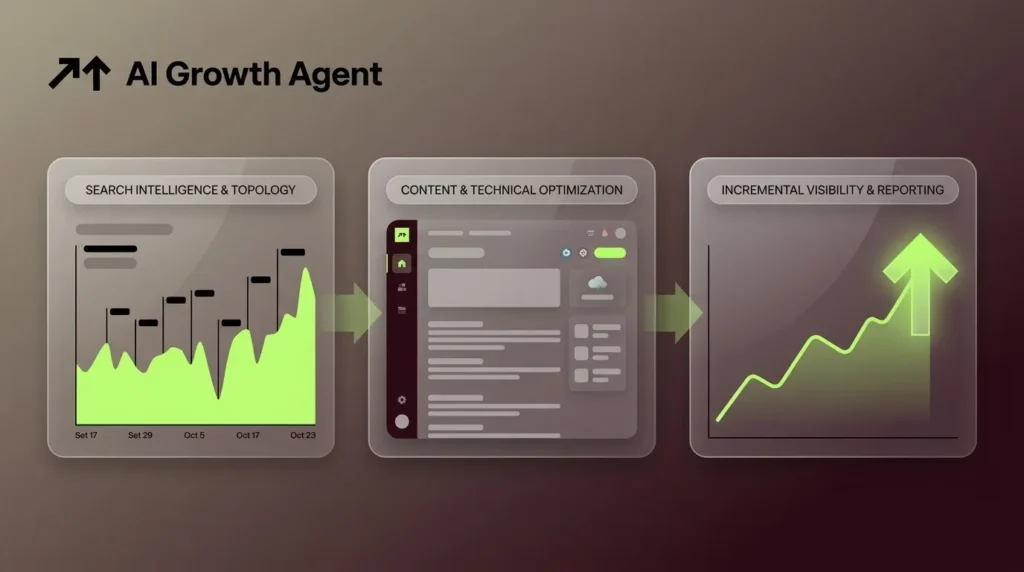
The framework moves through seven sequential stages, and each stage builds on the previous one to move your brand from invisible to cited in AI answers. With the prerequisites in place, the engine can execute this full system and show measurable citation growth.
- Search Intelligence: mapping the full universe of queries
- Content Topology: organizing seed terms and long-tail queries into a strategic hierarchy
- Authoritative content production: generating validated, living articles at scale
- Agentic technical SEO: deploying Blog MCP, llms.txt, schema, and the full bot-readable stack
- Third-party citation building: earning mentions across the sources AI surfaces trust most
- Bot tracking: monitoring every crawl, citation, and training sweep
- Incremental visibility reporting: isolating what the engine generated versus what the brand already had
Step-by-Step Guide to the AI Growth Agent System
Step 1: Search Intelligence Across Traditional and AI Search
Search Intelligence produces a complete portrait of the traditional search landscape and the AI search landscape at the same time. The engine runs hundreds of real searches in your space and processes signals such as title structures, forum discussions, People Also Ask results, query fan-out, and which competitors appear for each result. Ahrefs analysis of 863,000 keywords found that only 38% of AI Overview citations now come from pages ranking in Google's top 10, down from 76% in mid-2025, because fan-out retrieval expands queries into sub-queries. Winning the long tail now determines who appears in AI answers.
The four pillars that feed this stage are Search Intelligence for positioning, competition, and search volume, AI Analytics for brand value and consumer behavior across the full journey, Bot Tracking for every crawl and citation, and AI Ranking for order of mention and citation context as the new leaderboard. Because AI answers and competitor positioning shift constantly, AI Growth Agent refreshes this snapshot every week, running more than 3,000 searches to keep the picture current and catch emerging opportunities before competitors do.
Step 2: Content Topology and Query Universe Design
Content Topology organizes the universe into a hierarchy of seed terms, each backed by real-time Google and ChatGPT data, with dozens of long-tail queries beneath each seed. Real-time AI Overview and ChatGPT results act as the objective function for which long-tail queries deserve coverage. A new account typically starts with 300 to 400 queries, and mature clients reach universes of 1,600 or more queries.
ConvertMate's analysis of 10,000+ domains identified referring domains as the strongest predictor of ChatGPT citations, followed by brand search volume, Reddit and Quora community presence, content depth, and content freshness. The topology is designed to support all five dimensions, not just the head terms a brand pre-decided to defend.
Step 3: Authoritative Content Production at Scale
Content production runs as a multi-agent orchestration across OpenAI, Anthropic, Gemini, Grok, Perplexity, Exa, and Firecrawl. The engine analyzes each specific search to decide what kind of content should exist, then spawns parallel research agents that gather evidence. Those agents validate every source and claim against material found online, and the system runs a cascade of anti-hallucination checks before anything ships.
A Princeton and Georgia Tech study presented at KDD 2024 found that adding statistics, quotations, and source citations to content improved a source's visibility in generative AI answers by 30 to 40%. Every article AI Growth Agent produces opens with a clean 40 to 60 word answer block, uses structured headings around real buyer questions, and embeds sourced statistics throughout. Pages that include expert quotes often earn more AI citations, and pages with substantial data points tend to receive more ChatGPT citations than data-light pages. The engine produces between 2 and 50 articles per day per client, up to roughly 500 per month, with memory systems that enforce brand voice and cite external research in APA format. These structural elements not only improve citation rates but also drive higher-quality traffic, a pattern quantified later in the Results Validation section.
If you want to see how this multi-agent content engine would handle your specific market, schedule a demo to review your universe map and publish your first article within a week.
Step 4: Agentic Technical SEO and Bot-Readable Infrastructure
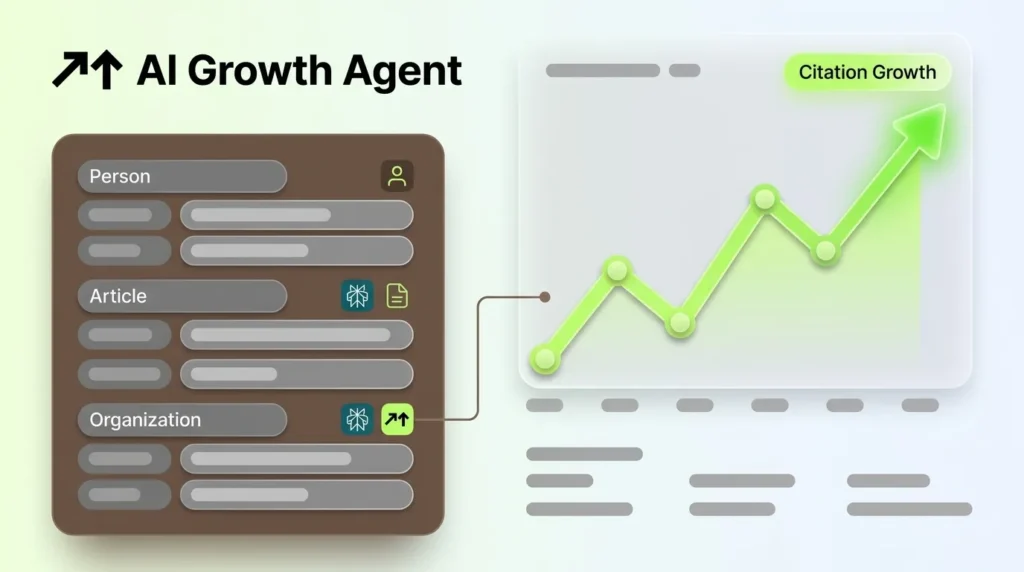
Every article and every site AI Growth Agent publishes ships with traditional technical SEO and agentic technical SEO from end to end. Traditional technical SEO includes highly structured HTML, full Open Graph metadata, rich schema markup across the Article, FAQ, Author, Organization, Product, and Software Application types, internal linking that compounds authority across the universe, and automatic content refreshes triggered by Google Search Console signals.
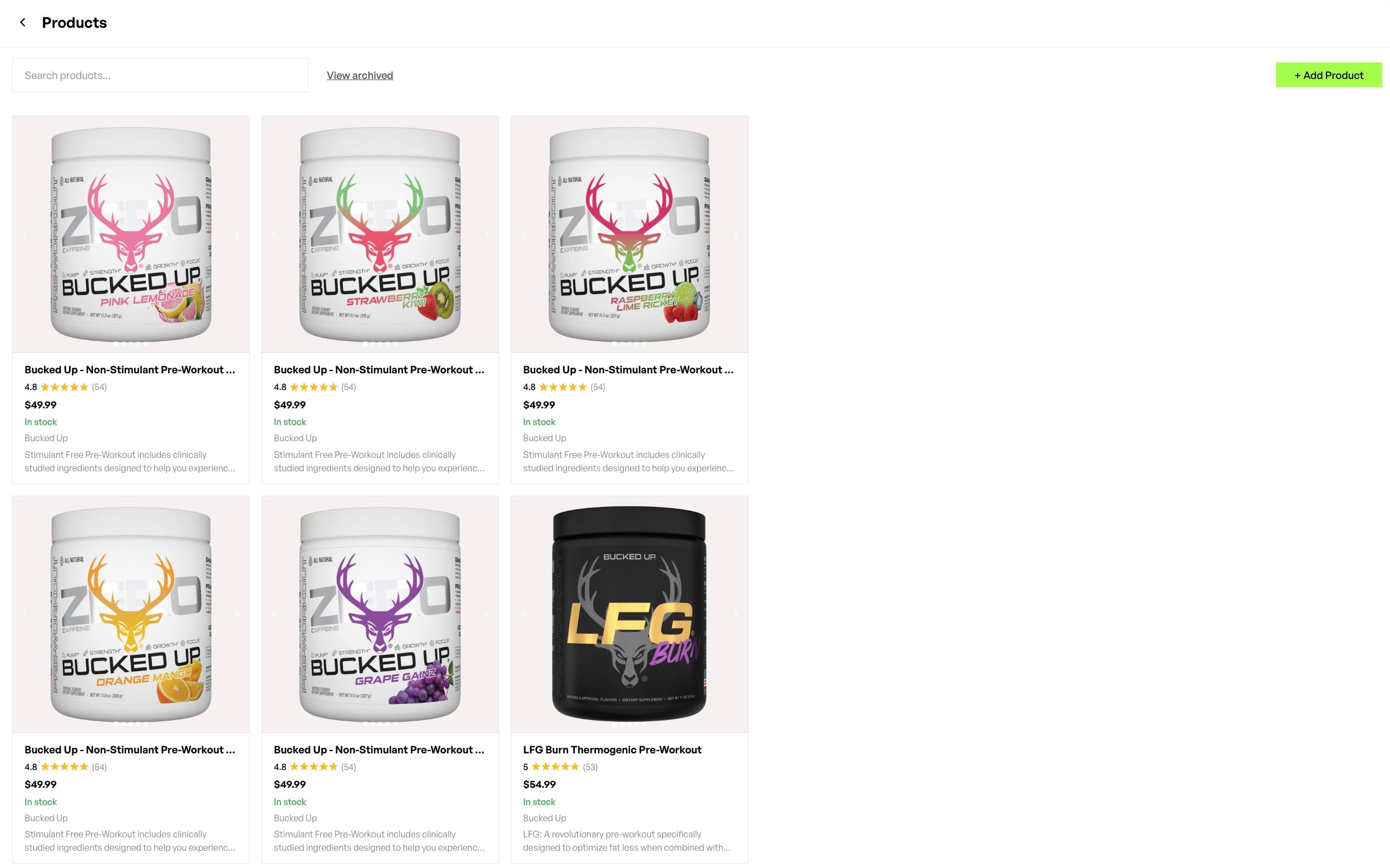
Agentic technical SEO goes further by making your content natively readable and actionable for AI agents, not only for traditional crawlers. AI Growth Agent was the first to bring Blog MCP to market in the summer of 2025, and every client site now ships with a full agentic stack that tells AI systems how to read, query, and cite your content.
- Blog MCP, compatible with Chrome 146+ and other WebMCP-enabled browsers, with schema, manifest, discovery, and capability guidance exposed to agents
- OpenAI discovery and Agent Card guidance served via /.well-known/
- Natural language query parameters via /?s={query} that auto-trigger personalized, internally linked responses for agent crawlers
- Markdown served to agent crawlers
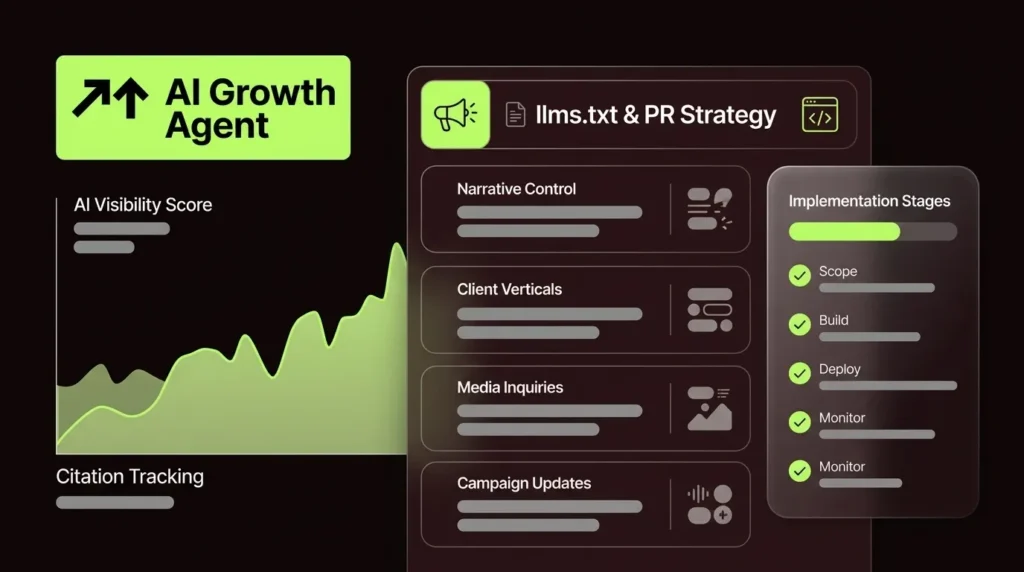
- llms.txt and llms-full.txt published so AI surfaces can read the brand the way they need to
- Proper sitemap.xml, advanced robots.txt, instant indexing, autoredirects, and 404 tracking
- Automated web stories for every article, served through a dedicated web-stories sitemap
Cloudflare's 2025 data shows Googlebot crawls more than three times as many unique pages as GPTBot, which makes robots.txt misconfigurations the single highest-leverage technical issue for AI visibility. The client does nothing, because every package includes the full stack live on day one. If you want to see this full agentic stack running on your domain, schedule a demo to preview Blog MCP, llms.txt, and the rest of the technical foundation for your brand.
Step 5: Third-Party Citation Building Across Trusted Sources
AI surfaces trust what they find across multiple independent sources, not only on your own site. AirOps found that 85% of citation-driving brand mentions originate from third-party domains. Domains with significant brand mentions on Reddit and Quora tend to receive more ChatGPT citations.
The citation-building strategy targets the sources AI surfaces draw from most heavily.
- Review platforms such as G2, Capterra, and Trustpilot, where being listed on multiple review platforms is associated with higher ChatGPT citations
- Community forums including relevant subreddits and Quora threads
- Earned media placements in industry publications, where Muck Rack's May 2026 analysis of more than 25 million cited links found earned media accounted for 84% of all AI citations
- YouTube, where YouTube mentions showed the highest single correlation (0.737) with AI visibility in Ahrefs' December 2025 study
- Original research and proprietary data that earns secondary citations, where pages anchored by original research earn approximately 2.5 to 4 times more citations than equivalent pages relying on aggregated or opinion content
Step 6: Bot Tracking and Feedback Loops
Bot tracking records every bot interaction, across traditional crawlers and AI training agents, including every crawl, citation, and training sweep. The WordPress plugin ships with real-time bot tracking out of the box, so you can see which agents are reading which pages. If you cannot see who is reading you, you cannot tell whether you are being read at all.
HUMAN Security data showed automated traffic grew 23.5% year over year in 2025 versus 3.1% for human traffic, with average monthly AI-driven traffic rising 187% and AI agents surging nearly 8,000%. Bot tracking surfaces which articles ChatGPT is citing, which training agents are sweeping the blog, and where the content earns citation context versus where it is ignored. That signal feeds directly back into the content plan so the engine can reinforce what works and repair what does not.
Step 7: Incremental Visibility Reporting and Case Outcomes
Incremental visibility reporting isolates exactly what AI Growth Agent generated, separate from the visibility the brand already had. The engine publishes into a separate environment and reports week over week where new visibility appears, cross-referencing bot traffic, Google Search Console impressions, and citation data.
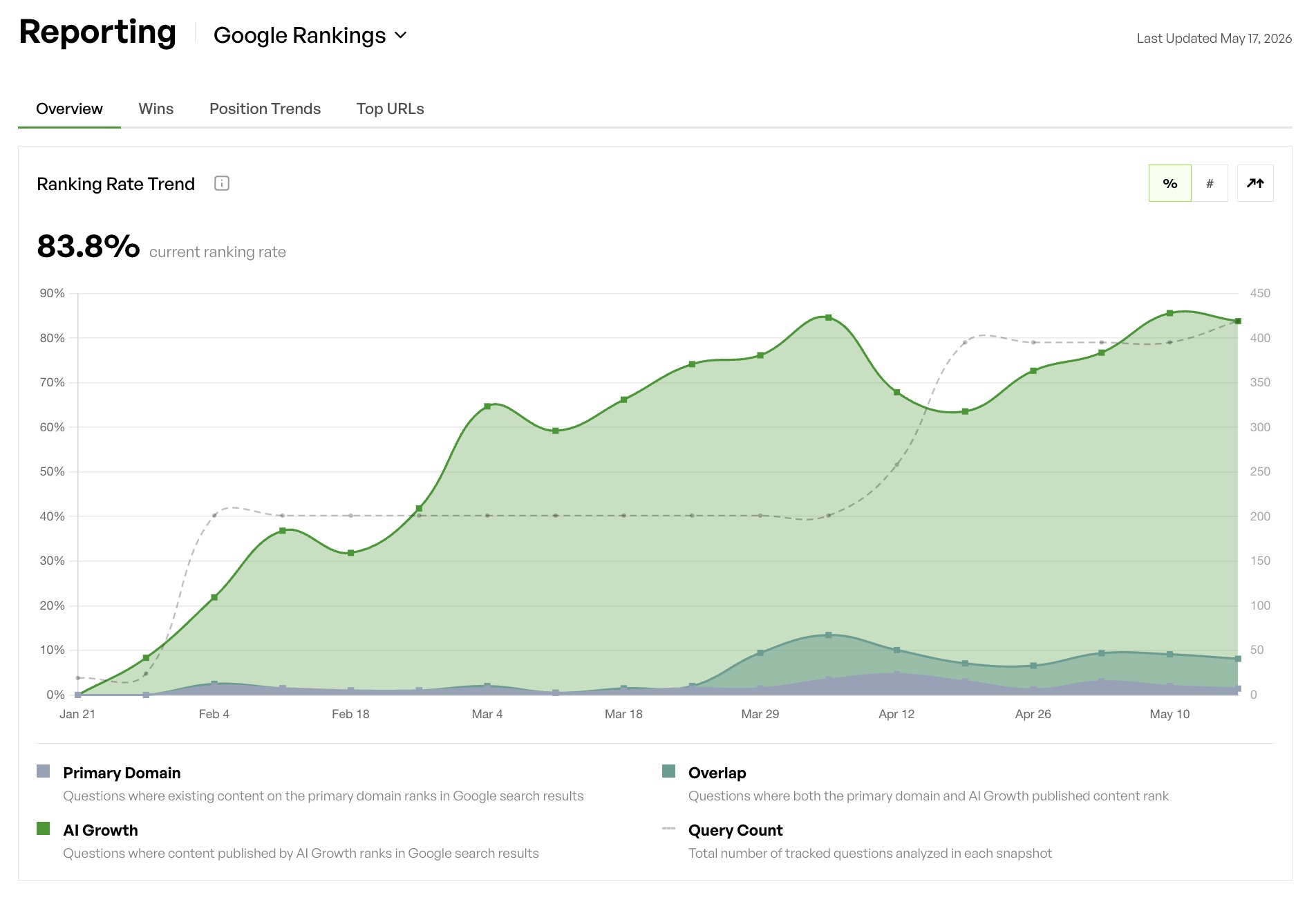
The 12-week reporting window captures the full indexing cycle and shows where each new citation appeared, which articles drove the most bot traffic, and how impression growth correlates with citation context. Breadless grew Google Search Console impressions roughly 30x in six months, from 387,000 to 12.3 million, with ChatGPT citing eatbreadless.com more than 45,000 times per month. Leva Sleep closed $40,000 to $50,000 in deals in under three weeks from buyers who discovered the brand through AI Growth Agent content. To review how this reporting would look for your own domain, book a working session and walk through a sample 12-week report.
Common Mistakes and How the Framework Solves Them
Four failure patterns account for most brands that invest in AI visibility and still see no results, and each maps directly to a stage in the framework.
Weak planning. Tracking a handful of head terms and ignoring the long tail leaves a brand blind to most of its own market. AI Growth Agent solves this in Steps 1 and 2 by mapping the full universe of queries, not only the head terms you pre-selected, and refreshing that map weekly to catch new long-tail variations as they emerge, so no query goes untracked by default.
Capped prompt sets. Monitoring tools that cap clients at 50 to 100 prompts produce a false picture of visibility. Rand Fishkin's 2025 SparkToro study found that AI tools produce the same list of brand recommendations fewer than 1 in 100 times when the same prompt is run 100 times, which makes large prompt sets and repeated sampling essential for a stable signal. Search Intelligence and Incremental Reporting rely on broad prompt coverage, and AI Growth Agent never bills by prompt count.
Stale content. 76.4% of ChatGPT citations come from content updated within the last 30 days. Content that ships and then sits slowly decays. Living, self-healing content in Steps 3 and 5 updates automatically in response to Google Search Console signals and bot-traffic awareness, so nothing remains stale in place.
Missing or generic schema. A February 2026 empirical study of 730 AI citations found that generic or partially-filled schema produces an 18-percentage-point citation penalty compared to having no schema at all. The technical stack in Step 4 provisions attribute-rich, accurate schema automatically, with entity disambiguation via sameAs links to Wikidata, LinkedIn, and Crunchbase.
Results Validation and Metrics That Matter
The metrics AI Growth Agent commits to are brand mention rate and citation rate, supported by Google Search Console impressions and bot traffic. Four signals together create a complete picture.
- Bot traffic: volume and source of every bot visit, including the OAI-SearchBot that ChatGPT uses to cite sources
- Citation context: where the brand appears in AI answers, who it is grouped with, and what claim it is cited for
- GSC impressions: independent audit of organic reach, cross-referenced against bot traffic to isolate incremental gains
- 12-week averages: +12,000 citations and mentions, +100,000 bot visits, and a 20%+ lift in impressions across the client base
For Ahrefs, 0.5% of AI-referred visitors drove 12.1% of signups; across broader studies, AI-referred visitors convert at rates ranging from 1.26x to 11x traditional organic search. AI search traffic converts at 14.2% compared to Google organic's 2.8%. The reporting view shows exactly what AI Growth Agent contributed, and the engine doubles down on what indexes well while using internal linking to lift what does not. To explore these metrics against your own benchmarks, request a metrics walkthrough focused on your current visibility.
Advanced Options and Scalable Configurations
The headless architecture scales across three advanced configurations that support complex organizations.
Multi-brand portfolios. Enterprise CMOs managing multiple brands can run parallel engines, each with its own manifesto, universe map, and content topology, without adding headcount. Bisutti ran two parallel AI Growth Agent engines simultaneously, one tuned to consumer events and one to corporate events, and AI Growth Agent now represents 71% of Bisutti's brand mention visibility.
Agency white-label use. PR and marketing agency owners can run AI Growth Agent on behalf of their clients, layering AI search on top of existing press and influencer work as a new service line. Search Intelligence lets the agency view any client's universe from any competitor's point of view, surfacing which domains and URLs win each result and where the white space sits, refreshed weekly.
Compliance-heavy sectors. Finance, healthcare, and legal clients configure legal disclaimers, claim prioritization, and anti-hallucination steering once, and the engine applies those rules to every future generation. Every claim, source, and quote is validated against evidence found online rather than a model's training data.
90-Day Execution Plan and Weekly Cadence
The standard pilot runs three months because indexing takes time and varies by industry, yet the weekly cadence keeps progress visible.
Week 1: A kickoff interview with a journalist builds the manifesto. The engine maps the universe, produces the first articles, and stands up the fully optimized blog. The client then reviews the keyword topology and first articles so the team can tune the model together.
Weeks 2 to 4: Content production begins at scale while bot tracking goes live. The engine identifies which articles index fastest and adjusts internal linking to compound authority around those early winners.
Weeks 5 to 8: Third-party citation building accelerates as the universe snapshot refreshes weekly. GSC impressions begin to move, and the engine self-heals any articles that show stale signals.
Weeks 9 to 12: Incremental visibility reporting shows the full 12-week picture and where citation context has solidified. The engine expands into new seed terms based on what is winning, and living-content maintenance runs on autopilot from this point forward. To map this cadence onto your own calendar, book a 90-day planning call and leave with a draft execution timeline.
Frequently Asked Questions
How long does it take to see results from AI brand visibility work?
The first article is typically live within a week of kickoff. Content has indexed in as little as ten days and often within two weeks. Measurable citation and impression movement appears within the first 30 days for most clients. The standard pilot is three months because indexing timelines vary by industry and competitive density, yet clients consistently see early movement before the pilot midpoint. Breadless reached a 30x lift in Google Search Console impressions over six months, and Jota saw a 52% rise in daily average impressions within the first three weeks.
How is AI brand visibility different from traditional SEO rankings?
Traditional SEO produces a rank position on a results page. AI brand visibility measures citation context, which includes whether your brand appears in a generative answer, where it appears relative to competitors, what claim it is cited for, and how that position evolves week over week. There is no static ordered list in AI answers. Order of mention and citation context now function as the leaderboard. A brand can rank in the top 10 organically and be completely absent from AI answers, and the reverse can also occur. Improving AI brand visibility means producing authoritative content the models can find, trust, and cite across the full universe of queries a buyer actually asks.
Does AI Growth Agent replace the existing website or blog?
No. AI Growth Agent stands up a top-of-funnel blog that is styled to look exactly like the client's own pages and connected through a reverse proxy rewrite, usually under a subdirectory, or through a subdomain. It does not touch the curated main site or its structure. The client owns the blog outright. Nothing in the existing structure has to change, and no agency controls the property.
What does headless marketing mean in practice?
Headless marketing has two components. The first is marketing by and for the robots, which means content engineered for the AI surfaces that read, cite, and act on it, structured the way bots can parse, backed by validated primary sources, and refreshed often enough that the next training sweep finds the brand's current narrative. The second is marketing with no headcount, which means a single engine doing the work that used to require a content team, an SEO team, an engineering hand, an agency, and a stack of monitoring tools. The client gives feedback in plain language, the engine learns, and every future generation reflects those rules without re-briefing.
How does AI Growth Agent prove its results are incremental?
AI Growth Agent publishes into a separate environment and reports incremental visibility, isolating exactly what it generated week over week. The reporting view cross-references bot traffic, Google Search Console impressions, and citation data that no single tool brings together. Clients watch results in the reporting view, in the Content Planner for which keywords and prompts are ranking, and through Google Search Console as an independent audit. The engine takes credit only for the visibility it actually generates, never for visibility the brand already had.
Conclusion: Turning AI Answers into a Repeatable Channel
The shift from rankings to citation context is the current state of how buyers find and trust brands, not a distant trend. Google AI Mode has crossed 1 billion monthly users. AI-referred traffic converts at rates that dwarf traditional organic search. 69% of brands holding top-five Google rankings receive zero mentions in AI-generated responses, which shows how wide the gap has become.
The 7-step framework in this guide, Search Intelligence, Content Topology, authoritative content production, agentic technical SEO, third-party citation building, bot tracking, and incremental visibility reporting, forms a repeatable system that changes what AI surfaces say about your brand. It replaces the agency stack, the monitoring tools, and the DIY chatbot trap with one headless engine that maps the universe, ships living content, and proves the result week over week. To explore whether this system fits your team and constraints, request a consultation and leave with a tailored AI visibility roadmap.